
Extended Warranties and Add-Ons: What the F&I Office Is Actually Selling You

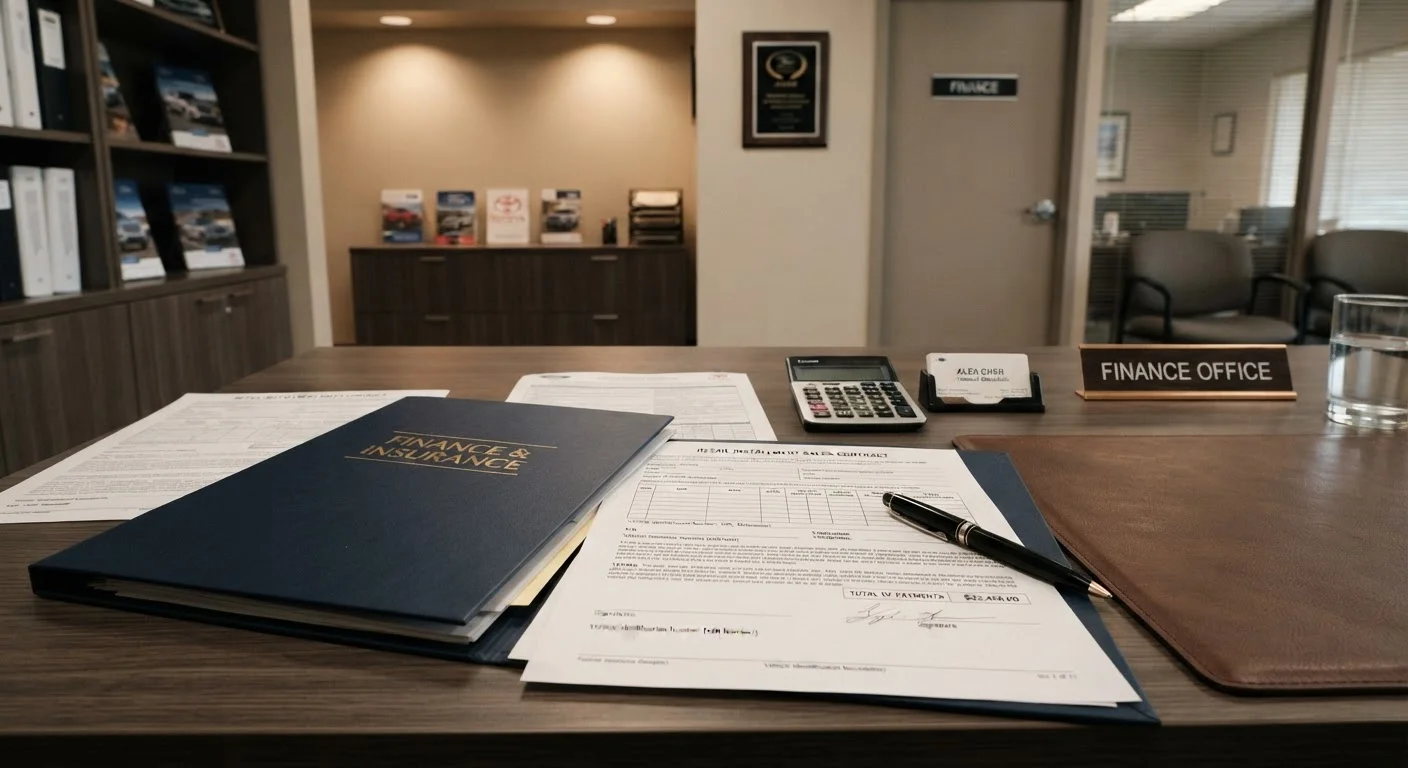
Photo: AskSpecialist.net editorial
Key Takeaways
- The F&I office is a profit center - every product offered there earns the dealership a margin.
- Extended warranties sold at dealerships are typically third-party contracts, not manufacturer coverage.
- Most F&I add-ons are optional; you are not required to purchase them to complete the sale.
- The same products are often available elsewhere, sometimes at lower cost, after the sale.
- Reading the contract terms matters - coverage limits and exclusions vary widely between products.
What Happens in the F&I Office
After you've agreed on a vehicle price, a dealership employee will walk you into the finance and insurance office to handle the paperwork. This is where your loan gets finalized - interest rate, loan term, monthly payment. It's also where the finance manager will present a series of optional products, often one by one, as part of a structured sales process.
The presentation is usually smooth and low-pressure on the surface, but the products are deliberately introduced after you've already committed emotionally to the car. That's not an accident. Being aware of this dynamic is the first step to making a clear-headed decision. For a fuller picture of costs that extend beyond the dealership visit, see the hidden costs of owning a car.
The Most Common Products You'll See
Finance managers typically offer some combination of the following:
- Extended Service Contract (often called an "extended warranty"): Covers certain mechanical repairs after the factory warranty expires. These are almost always third-party contracts, not manufacturer guarantees. Coverage terms, deductibles, and exclusions vary significantly - read carefully before signing. For a clearer understanding of what these contracts actually promise, warranty coverage is commonly misunderstood in ways that can cost you later.
- GAP Insurance: Pays the difference between your loan balance and the car's actual cash value if it's totaled. Most relevant when financing a high percentage of the car's value or on a long loan term.
- Credit Life/Disability Insurance: Pays your loan if you die or become disabled. These are generally considered expensive relative to equivalent standalone policies.
- Paint, Fabric, or Appearance Protection: Coatings or treatments to protect interior and exterior surfaces. Value varies; some consumers feel this is available more affordably elsewhere.
- Tire and Wheel Protection: Covers damage to tires and wheels from road hazards. Potentially useful depending on where you live and drive.
- Key Replacement: Covers the cost of replacing lost or damaged smart keys, which can be expensive on newer vehicles.
$1,000-$3,000+
Typical dealership extended warranty markup
Industry estimates suggest dealerships commonly mark up extended service contracts by 50% to 100% or more over their wholesale cost.
~80%
Share of dealership profit from F&I vs. vehicle sale
Industry observers note that F&I products often account for the majority of a dealership's per-vehicle profit, though figures vary by dealership and market conditions.
3-7 years
Typical extended service contract duration
Most extended service contracts sold at dealerships cover repairs for three to seven years or up to a specified mileage limit, whichever comes first.
How These Products Are Priced - and Why It Matters
Dealerships mark up F&I products significantly. An extended service contract that costs the dealership a few hundred dollars might be presented to you at two or three times that price. The finance manager often has discretion over pricing, which means these items are generally negotiable - though that's rarely stated outright.
A common tactic is rolling everything into the monthly payment. A product that adds $1,200 to your loan sounds less significant when it's framed as "just $25 more per month" over a 48-month term. Always think in total cost, not just payment impact. Fine print in contracts often contains clauses that limit when and how you can actually use coverage you paid for.
Bring a Simple Rule Into the F&I Office
How to Approach These Decisions Practically
You don't need to decide anything in the F&I office on the spot. Here's a practical framework:
- Ask for the full menu in writing before the finance manager starts the pitch. This lets you review products and prices without time pressure.
- Separate each product from your monthly payment. Evaluate the total cost of each item individually.
- Ask what's excluded - not just what's covered. For extended warranties in particular, exclusions often matter more than inclusions. Warranty language can be misleading when you only read the highlights.
- Know you can shop later. Third-party extended service contracts and GAP insurance can typically be purchased after the sale. You're not locked into the dealership's version.
- Don't feel obligated. Declining F&I products does not affect your loan approval in most cases, and the dealership cannot legally make a sale conditional on purchasing optional add-ons.
This article is for general informational purposes only and does not constitute financial, legal, or insurance advice. Product terms, costs, and availability vary by dealership, lender, and state. Consult a licensed professional and read all contract documents carefully before making purchasing decisions.
Frequently Asked Questions
The content on this site is provided for informational purposes only and should not be considered a substitute for professional advice. While we strive to provide accurate and up-to-date information, we make no guarantees regarding its completeness or accuracy. Always consult a qualified professional for advice specific to your circumstances before making any decisions.