
Private Seller vs. Dealership: How Each Route to a Used Car Differs

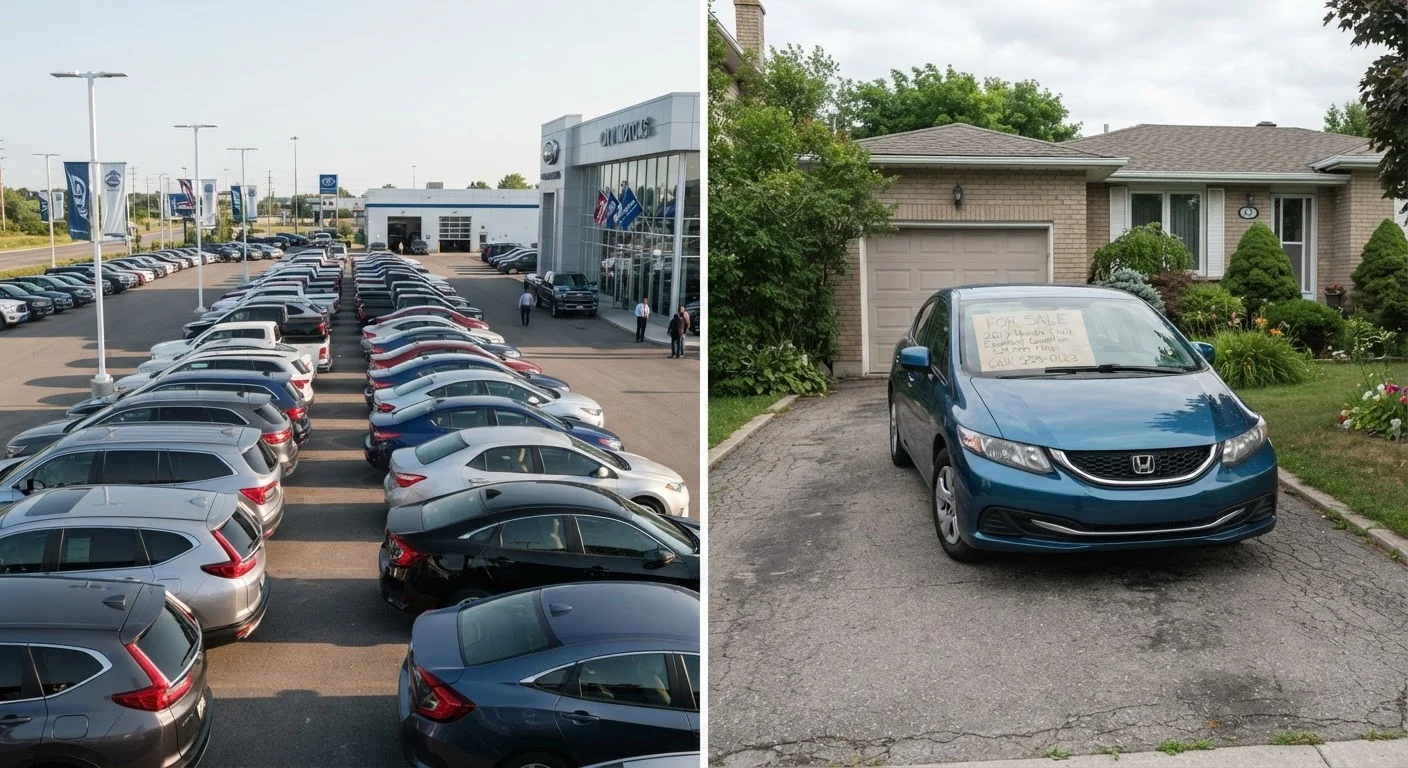
Photo: AskSpecialist.net editorial
Key Takeaways
- Private sellers typically offer lower prices but provide no consumer protections or warranties.
- Dealerships add fees and markup but offer title guarantees, financing options, and often a limited warranty.
- A pre-purchase inspection by an independent mechanic is essential regardless of which route you take.
- Financing a private-party purchase is possible but requires more legwork than dealer financing.
- Paperwork is simpler with a private seller, but both routes require a clean title transfer to protect you legally.
What You're Actually Comparing
When you buy a used car from a private seller, you're dealing directly with an individual - typically through platforms like Craigslist, Facebook Marketplace, or Autotrader's private listings. There's no middleman, no finance office, and usually no warranty. When you buy from a dealership, you're working with a licensed business that must comply with state consumer protection laws, carry proper title documentation, and in many cases offer some form of limited warranty.
Neither route is without trade-offs. The gap between them shows up in price, legal protection, financing access, and the condition of what you're buying. Understanding each dimension makes it easier to match the route to your situation. For a broader view of the entire purchase process, see The Car-Buying Process, Start to Finish.
| Private Seller | Dealership | |
|---|---|---|
| Price | Generally lower | Higher due to overhead and fees |
| Warranty | None (as-is) | Limited or CPO warranty available |
| Consumer protections | Minimal legal recourse | Regulated; FTC Buyers Guide required |
| Financing options | Requires external lender | In-house financing available |
| Trade-in accepted | No | Yes |
| Title handling | You manage transfer yourself | Dealer handles paperwork |
| Negotiation style | Direct, one-on-one | Structured, professional sales process |
Price and Negotiation
Private sellers typically price vehicles below dealer retail because they have no overhead - no reconditioning costs, no lot fees, no sales staff. That gap can be meaningful, sometimes several hundred to a few thousand dollars on the same make, model, and mileage. Negotiation is also more direct: you're talking to one person who has a personal reason to sell, not a trained sales professional working within a structured pricing system.
Dealerships, on the other hand, build margin into their prices to cover inspections, reconditioning, advertising, and staff. They may also add documentation fees, dealer prep charges, or certification fees - all of which are negotiable to varying degrees. Before walking into any lot, review how to negotiate at a dealership without feeling outmatched so you understand which charges are standard and which are optional.
Always Get an Independent Inspection
Consumer Protections and Legal Risk
This is where the two routes diverge most sharply. Private-party sales in most states are considered "as-is" transactions, meaning once you drive away, any mechanical problems are yours to deal with. There's no implied warranty, no return policy, and little legal recourse if the car has hidden issues the seller didn't disclose.
Dealerships are regulated businesses. They are legally required to provide a clean, lien-free title (meaning no outstanding loans attached to the car), and many must follow the FTC's Used Car Rule, which requires a Buyers Guide disclosing warranty terms. Certified pre-owned (CPO) vehicles sold by franchised dealers carry manufacturer-backed warranties, adding another layer of protection. That said, dealer warranties vary widely - always read the actual terms before assuming you're covered.
Watch for Title Red Flags in Private Sales
Financing Your Purchase
If you need a loan, dealerships make the process simpler - they have in-house finance departments and relationships with multiple lenders. The convenience comes with a caveat: dealer-arranged financing doesn't always offer the sharpest interest rates. Getting pre-approved through a bank or credit union before you visit gives you a benchmark. Dealership finance vs. outside financing breaks down exactly how those two paths compare on rate and total cost.
Financing a private-party purchase is possible through banks and credit unions that offer personal auto loans, but not all lenders participate, and the process takes more coordination. You'll typically need the vehicle's VIN for a valuation, and the lender may place limits on the age or mileage of the car. If the seller still has a loan on the vehicle, the payoff process becomes more complex and requires careful handling to ensure the lien is properly released before you take ownership.
Paperwork and the Title Transfer
Title transfer - the legal process of moving ownership from seller to buyer - is required in both scenarios, but the experience differs. In a private sale, you and the seller complete the title transfer directly, then register the vehicle at your state's DMV. The risk: sellers occasionally have title problems they're unaware of (or, rarely, aren't disclosing). Running a vehicle history report and verifying the VIN on the title matches the car are non-negotiable steps.
Dealerships handle most of the paperwork for you, which reduces errors but also means more documents to review carefully before signing. Understand what you're agreeing to - particularly around add-ons like extended service contracts or paint protection packages, which are often presented in the finance office and can significantly raise your total cost.
Regardless of route, use a pre-purchase checklist to make sure you've covered your bases before any money changes hands.
The content on this site is provided for informational purposes only and should not be considered a substitute for professional advice. While we strive to provide accurate and up-to-date information, we make no guarantees regarding its completeness or accuracy. Always consult a qualified professional for advice specific to your circumstances before making any decisions.