
Synthetic vs. Conventional Motor Oil

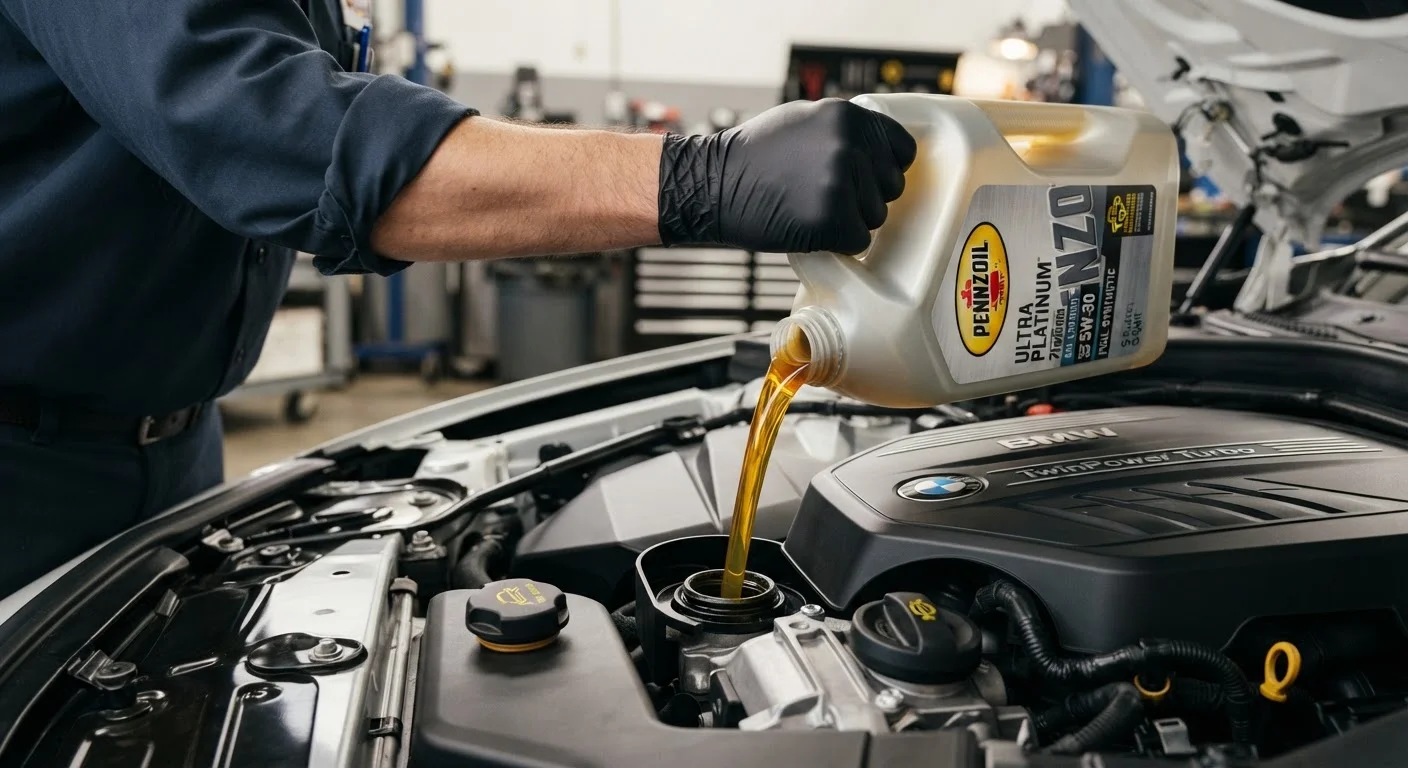
Photo: AskSpecialist.net editorial
Key Takeaways
- Synthetic oil lasts significantly longer between changes - typically 7,500 to 15,000 miles versus 3,000 to 5,000 for conventional.
- Conventional oil costs less upfront but may cost more over time due to more frequent changes.
- Your vehicle's owner's manual is the most reliable guide to which oil type your engine actually needs.
- Switching from conventional to synthetic is generally safe but check your manual before changing oil types.
- Extreme temperatures and stop-and-go city driving favor synthetic oil's more stable chemical structure.
What's the Actual Difference?
Motor oil does one essential job: it lubricates your engine's moving metal parts to reduce friction and heat. Both synthetic and conventional oil do this - but they're made very differently, and that matters for how well they perform.
Conventional motor oil is refined directly from crude oil. It works, but because crude oil is a natural substance with variable molecular structures, conventional oil breaks down faster under heat and stress.
Synthetic motor oil is chemically engineered - either built from scratch or more extensively refined than conventional oil. That process produces more uniform molecules, which makes it more resistant to breakdown, more stable across temperature extremes, and better at protecting engine components under load.
Think of it this way: conventional oil is the original tool, and synthetic is a precision-engineered upgrade. Neither is "wrong" - the question is which your engine needs.
| Criterion | Synthetic Oil | Conventional Oil |
|---|---|---|
| Origin | Chemically engineered | Refined from crude oil |
| Change interval | 7,500-15,000 miles (typical) | 3,000-5,000 miles (typical) |
| Cost per quart | Higher upfront | Lower upfront |
| Temperature performance | Stable across extremes | More variable |
| Engine compatibility | Required for many modern engines | Suited to older, simpler engines |
| Breakdown resistance | High | Moderate |
Change Intervals and Long-Term Cost
One of the most practical differences comes down to how often you need to change the oil. Conventional oil typically requires a change every 3,000 to 5,000 miles. Synthetic oil generally lasts 7,500 to 15,000 miles per change, depending on the product and your driving conditions - though you should always follow your vehicle manufacturer's recommendation over any general guideline.
That extended interval means fewer trips to the shop, which offsets synthetic's higher per-quart price for many drivers. Over the course of a year, the total cost difference between oil types is often smaller than it looks on the shelf.
For a deeper look at how to interpret change intervals and what your dipstick is actually telling you, see our guide to oil change intervals.
2x-5x
Longer drain intervals vs. conventional oil
Industry guidance generally places synthetic oil change intervals at two to five times longer than conventional, depending on driving conditions and manufacturer specs.
~70%
New vehicles specifying synthetic oil
A substantial majority of new passenger vehicles sold in the U.S. are factory-filled with synthetic or synthetic-blend oil, reflecting shifts in engine design requirements.
Which Oil Does Your Car Actually Need?
The single most important step is checking your owner's manual. Many newer vehicles - especially those with turbocharged engines, direct injection, or high-compression designs - require full synthetic oil to meet manufacturer specs. Using conventional in these engines isn't just suboptimal; it can void your warranty or accelerate wear.
For older vehicles, the picture is more flexible. If your car was built before the mid-2000s and has been running on conventional oil without issue, there's no urgent reason to switch. That said, switching to synthetic is generally safe and may benefit high-mileage engines by providing better seals and cleaner operation.
One thing worth noting: the "3,000-mile rule" that many drivers still follow is largely outdated for modern vehicles. It persisted long after engine and oil technology moved past it. Our article on common car maintenance myths explains why this and other widely held beliefs don't reflect how today's cars actually work.
The bottom line: your manual trumps any general rule, including the ones in this article.
The content on this site is provided for informational purposes only and should not be considered a substitute for professional advice. While we strive to provide accurate and up-to-date information, we make no guarantees regarding its completeness or accuracy. Always consult a qualified professional for advice specific to your circumstances before making any decisions.