
Tire Pressure and Why It Changes With the Weather

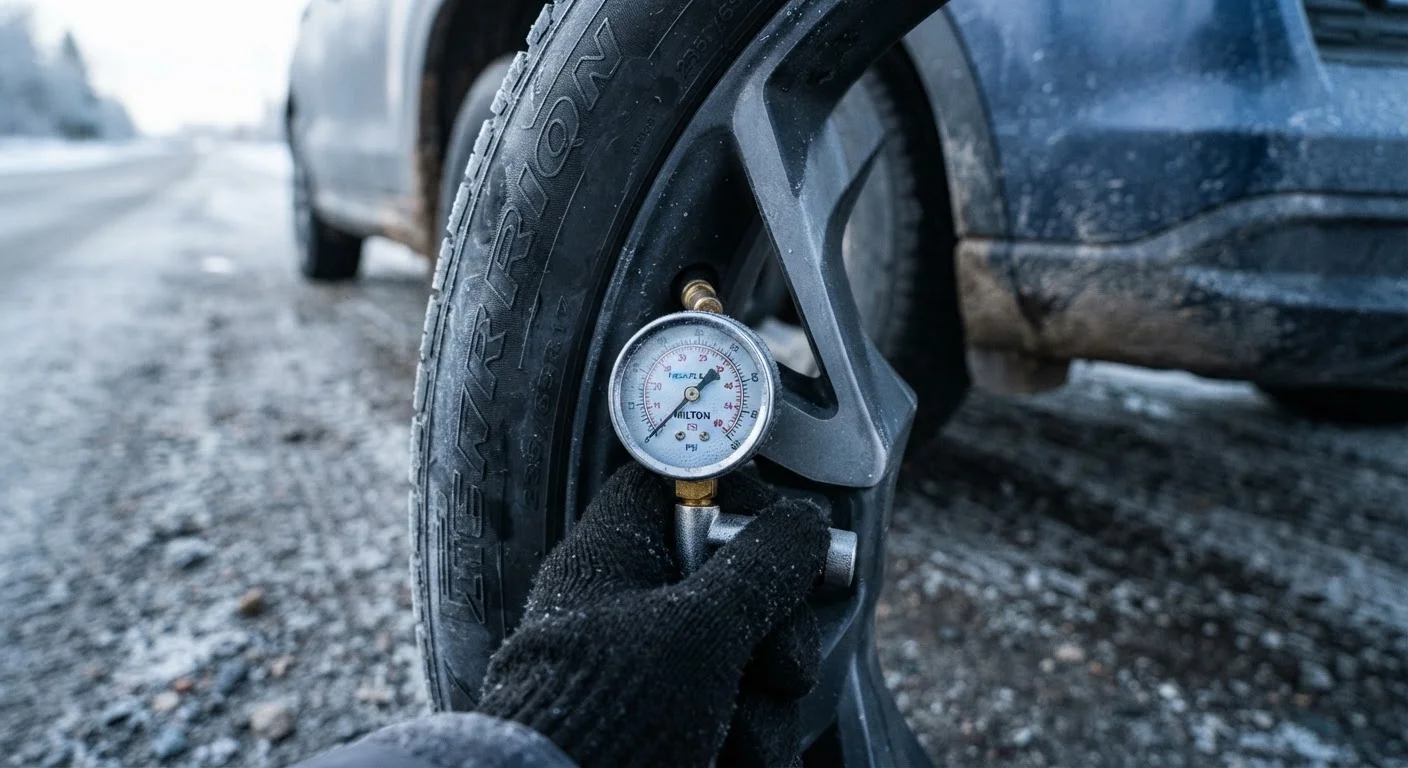
Photo: AskSpecialist.net editorial
Key Takeaways
- Tire pressure drops about 1 PSI for every 10°F drop in temperature.
- Under-inflated tires wear faster, reduce fuel economy, and can affect handling.
- Check tire pressure when tires are cold - before driving more than a mile.
- Your vehicle's recommended PSI is on the driver's door jamb, not on the tire sidewall.
- Seasonal swings can cause tires to lose several PSI without any puncture or leak.
Why Air Pressure Changes With Temperature
Air behaves predictably under heat and cold: warm it up and it expands; cool it down and it contracts. The air sealed inside your tires does the same thing - there's nowhere for it to go, so the pressure reading rises or falls instead. This is basic physics, not a defect or a slow leak.
The rule of thumb most mechanics use: expect roughly 1 PSI of change for every 10°F of temperature shift. That sounds small, but seasonal swings in much of the U.S. can span 50°F or more between summer and winter. That's potentially 4-5 PSI of pressure loss just from the weather - enough to trigger your tire pressure warning light and noticeably affect how your car handles.
1 PSI
Pressure drop per 10°F temperature decrease
This widely-used rule of thumb is consistent with the gas laws that govern how air behaves under temperature changes.
~25%
TPMS warning threshold below recommended PSI
The U.S. NHTSA requires TPMS systems to alert drivers when any tire drops 25% below the vehicle manufacturer's recommended pressure.
0.2%
Fuel economy loss per 1 PSI under-inflation
The U.S. Department of Energy estimates that properly inflated tires can improve fuel economy by a small but meaningful margin over consistently under-inflated tires.
What Happens When Tires Are Under-Inflated
Low tire pressure isn't just a dashboard annoyance. When a tire is under-inflated, more of the tire's surface area contacts the road than was designed. That increases rolling resistance, meaning your engine works harder and you burn more fuel. It also causes the outer edges of the tread to wear down faster, shortening the tire's lifespan.
Handling is affected too. Under-inflated tires can feel sluggish or imprecise in corners and take longer to respond to steering inputs. In emergency situations - a sudden lane change or hard braking - that lag matters. This is one maintenance item where neglect has real consequences, not just theoretical ones. It's also worth checking out common car maintenance myths that can lead drivers to skip checks like this one.
Set a Monthly Reminder in Your Phone
How to Check and Correct Tire Pressure
The right time to check tire pressure is when the tires are cold - meaning the car has been parked for at least three hours or driven less than a mile. Driving heats the tires and temporarily raises pressure, which can make an under-inflated tire look fine.
- Find your target PSI. Check the sticker on the inside of the driver's door jamb. This is the vehicle manufacturer's recommended pressure for your specific car and tire combination. Ignore the number printed on the tire sidewall - that's the tire's maximum pressure, not the target.
- Use a reliable gauge. A simple digital or dial gauge costs a few dollars and is more accurate than the ones built into gas station air pumps.
- Add or release air as needed. Most gas stations have air compressors. If a tire is slightly over-inflated - which can happen in summer - press the center pin on the valve stem with a small tool or the back of the gauge cap to release air.
- Recheck after filling. Air pressure can shift a bit when you remove the hose, so always verify the reading after inflating.
In winter, build a habit of checking tire pressure at least monthly - or anytime overnight temperatures drop significantly.
Seasonal Patterns to Know
In late fall, when temperatures first dip, many drivers notice their TPMS light flickering on in the morning and then going off after a short drive. That happens because the tires warm up slightly from friction, which raises pressure back above the warning threshold temporarily. Don't ignore it - the light is telling you the tires are genuinely low when cold.
The reverse happens heading into summer. If you inflated your tires to the recommended level during a cold morning, the same tires may read higher once the outside temperature climbs. This is generally fine - tire engineers account for this expected rise. What you want to avoid is starting summer with tires that were already over-inflated.
Checking pressure is one of the simplest, fastest maintenance tasks a driver can do, and it directly impacts safety, fuel efficiency, and tire longevity. It doesn't require a mechanic - just a $5 gauge and a few minutes at an air pump.
Frequently Asked Questions
The content on this site is provided for informational purposes only and should not be considered a substitute for professional advice. While we strive to provide accurate and up-to-date information, we make no guarantees regarding its completeness or accuracy. Always consult a qualified professional for advice specific to your circumstances before making any decisions.