
Reading a Hair Care Label Without a Chemistry Degree

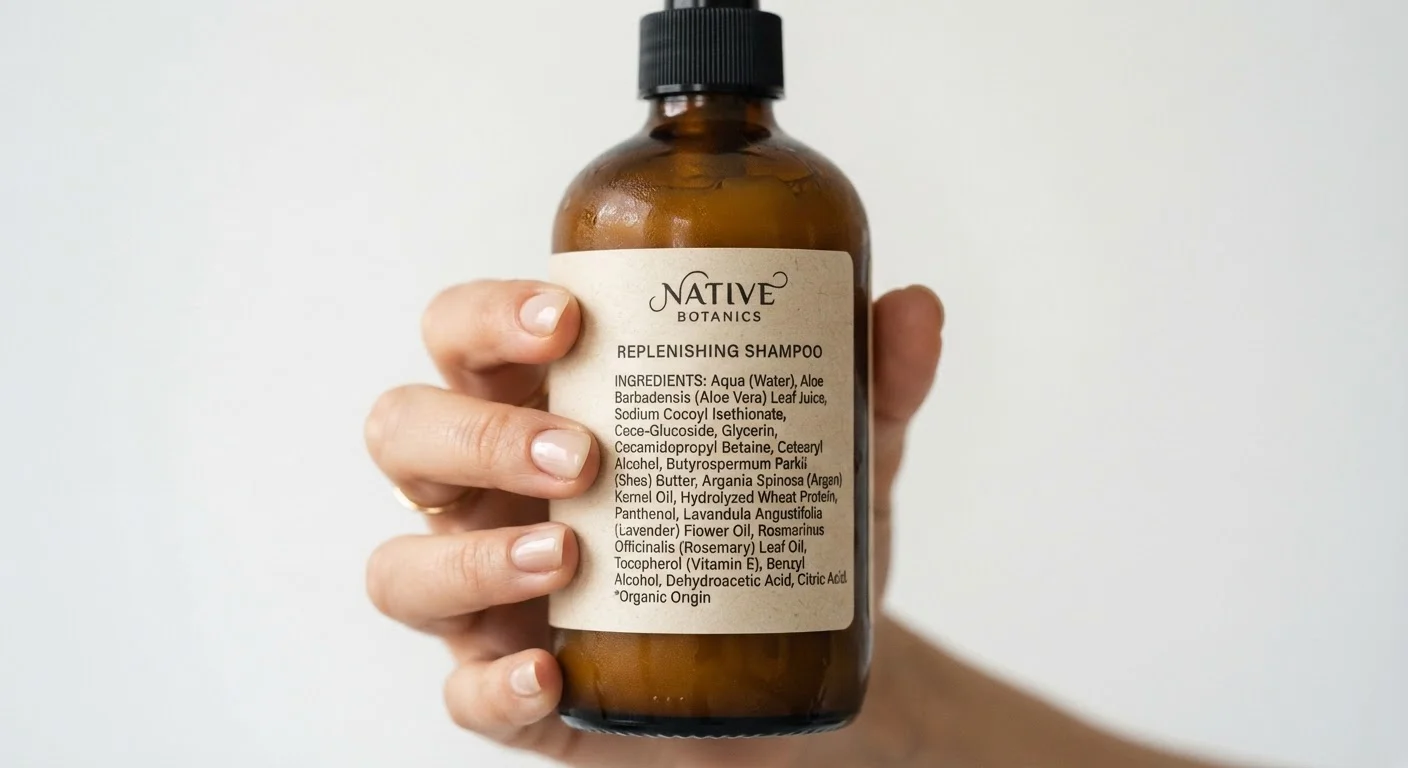
Photo: AskSpecialist.net editorial
Why Ingredient Lists Look So Intimidating
Hair care labels follow the same international naming system used for cosmetics worldwide - called INCI (International Nomenclature of Cosmetic Ingredients). Under INCI, ingredients must appear using their standardized scientific or Latin names, which is why a simple moisturizing ingredient like coconut oil might appear as Cocos nucifera oil. If you've ever tried decoding a shampoo bottle, that system is largely why it feels like reading another language.
The good news: the rules behind ingredient lists are actually quite logical. Ingredients are listed in descending order by concentration - meaning whatever appears first makes up the largest proportion of the formula. Once you hit about 1% concentration (typically somewhere in the bottom third of a long list), manufacturers may list remaining ingredients in any order they choose. That means star ingredients mentioned boldly on the front of a bottle may appear near the very end - present, but in trace amounts.
For a deeper dive into how this same labeling logic works in skincare, see Reading a Skincare Ingredient List Without Getting Lost.
Surfactant
A cleansing agent that lowers the surface tension between water and oil, allowing dirt and sebum to be rinsed away. Sulfates are the most familiar example, though many gentler alternatives exist.
Humectant
An ingredient that draws moisture from its surroundings - either the air or deeper layers of the hair - into the hair shaft. Common examples include glycerin, panthenol, and aloe vera.
Silicone
A synthetic polymer that coats the hair cuticle to reduce friction and frizz and add shine. Identified by names ending in -cone, -conol, or -xane; some forms require clarifying shampoos to fully remove.
INCI
International Nomenclature of Cosmetic Ingredients - the globally standardized system used to name cosmetic ingredients on product labels, typically using Latin or scientific nomenclature.
Preservative
An ingredient added to a formula to prevent microbial growth, mold, and spoilage. Parabens and phenoxyethanol are two widely used examples in rinse-off hair care products.
Hydrolyzed Protein
A protein broken down into smaller fragments that can temporarily bond to the hair shaft, helping to fill gaps in a damaged or porous cuticle and improve texture and strength.
The Ingredient Categories You'll See Most Often
Rather than memorizing hundreds of chemical names, it helps to think in categories. Most hair product formulas draw from the same functional groups.
| Ingredient List Order | Descending by concentration (EU and US cosmetics labeling regulations) |
| 1% Threshold Rule | Ingredients below ~1% may appear in any order (Cosmetic ingredient labeling convention) |
| Common Sulfate-Free Alternatives | Glucosides, betaines, isethionates |
| Fragrance Disclosure | Listed as 'parfum' or 'fragrance' - a blend of multiple compounds (FDA cosmetic labeling guidelines) |
| Silicone Identifier | Look for names ending in -cone, -conol, or -xane |
| Paraben Regulatory Status | Considered safe at cosmetic-use concentrations by major global regulators (FDA, European Commission Scientific Committee) |
Cleansers (Surfactants)
Sulfates - such as sodium lauryl sulfate (SLS) and sodium laureth sulfate (SLES) - are the most common cleansing agents. They're highly effective at removing oil and buildup, but for people with dry, color-treated, or chemically processed hair, they can strip more moisture than is comfortable. Gentler alternatives include cocamidopropyl betaine, sodium cocoyl isethionate, and decyl glucoside. None of these is inherently dangerous; it's a question of how much cleansing power your hair type actually needs.
Conditioning Agents
Conditioning ingredients work in two main ways: some coat the hair shaft (film formers), and some penetrate to reinforce structure. Silicones - identifiable by names ending in -cone, -conol, or -xane - create a smooth, frizz-resistant coating. They're effective, but non-water-soluble silicones can accumulate over time and require a clarifying wash to remove. Proteins such as hydrolyzed keratin or wheat protein help temporarily fill gaps in damaged cuticles. Humectants like glycerin and panthenol draw moisture from the environment into the hair shaft - particularly useful for dry or coarse hair types.
Preservatives
Parabens (methylparaben, propylparaben) are among the most well-studied preservative systems in cosmetics. While ongoing research has examined their effects at high exposure levels, major regulatory bodies currently consider them safe at the concentrations used in rinse-off products. Paraben-free formulas often rely on alternatives like phenoxyethanol, sodium benzoate, or potassium sorbate. All preservatives serve an important function: preventing bacterial and mold growth in water-based products.
Knowing your hair's porosity and structure can help you decide which of these categories to prioritize. Porosity, elasticity, and density all influence how your hair responds to these ingredient types.
Putting It Into Practice
When you pick up a new product, a quick three-step scan can tell you most of what you need to know: look at the first five ingredients (the formula's foundation), identify any category-defining ingredients you're trying to include or avoid, and check where any highlighted ingredients actually fall in the list.
Marketing language on the front of a bottle - words like "nourishing," "strengthening," or "restorative" - carries no standardized regulatory definition for hair care products. The ingredient list on the back is the only part of the label that is legally required to reflect formula content. Fragrance is often listed simply as parfum or fragrance, which can be a catch-all term covering many individual scent compounds. If you have a sensitive scalp or skin, this is worth noting - see what fragrance-free really means for more context.
Once you've built a clearer picture of what's in your current products, you can use that knowledge proactively. A regular hair care audit helps you connect how your hair is actually behaving to the ingredients you've been using - so adjustments feel informed rather than guesswork.
This article is for general informational purposes only and is not a substitute for professional advice from a licensed cosmetologist or dermatologist.
The content on this site is provided for informational purposes only and should not be considered a substitute for professional advice. While we strive to provide accurate and up-to-date information, we make no guarantees regarding its completeness or accuracy. Always consult a qualified professional for advice specific to your circumstances before making any decisions.