
Retinol vs. Retinoids: Sorting Out the Vitamin A Family

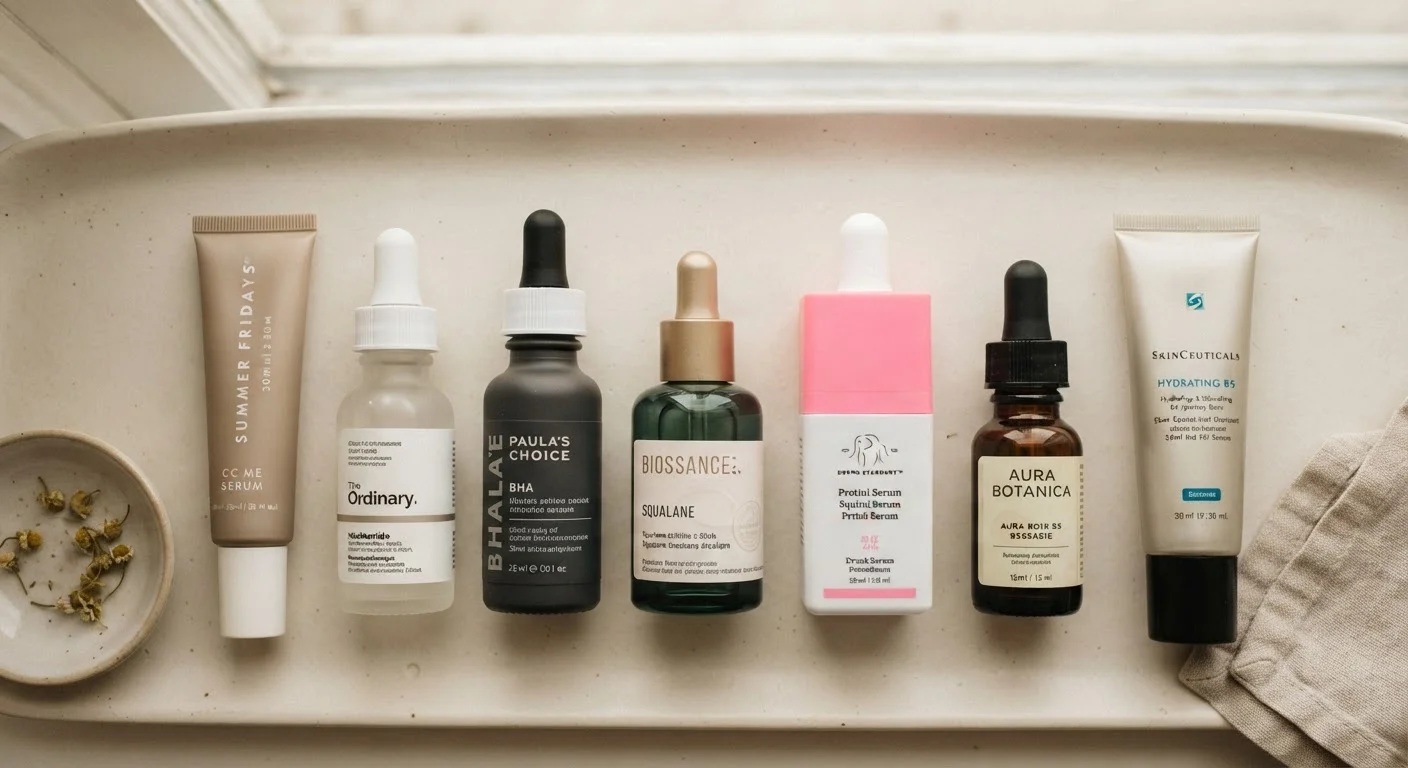
Photo: AskSpecialist.net editorial
Key Takeaways
- Retinol is a type of retinoid - the broader term covers the entire vitamin A derivative family.
- Prescription retinoids like tretinoin are significantly more potent than over-the-counter retinol.
- Retinol must convert to retinoic acid in the skin before it becomes active; tretinoin is already in that active form.
- Stronger retinoids produce faster results but also carry a higher risk of irritation, dryness, and peeling.
- Introduce any retinoid slowly and always use broad-spectrum sunscreen daily while using these ingredients.
What Exactly Is a Retinoid?
The word retinoid is an umbrella term for all compounds derived from vitamin A, including both naturally occurring forms and synthetic versions developed for pharmaceutical use. Retinol, retinal (retinaldehyde), tretinoin, adapalene, and tazarotene are all retinoids - they share the same basic molecular structure but differ in potency, conversion steps required by the skin, and whether they're available over the counter or by prescription only.
The confusion usually starts because people use "retinol" and "retinoid" interchangeably. In everyday consumer language that's understandable, but it obscures meaningful differences. Retinol is one specific retinoid - the form most commonly found in over-the-counter serums and creams. Understanding where each compound sits in the conversion chain is the key to understanding why they produce different results at different speeds.
Where Does Adapalene Fit In?
How the Conversion Chain Works
Skin cells can't use vitamin A compounds directly as purchased - most must be converted into retinoic acid, the biologically active form that actually binds to receptors and influences cell behavior. The further a retinoid sits from retinoic acid in that conversion chain, the more steps are required, and generally the slower and milder the effect.
- Retinol esters (e.g., retinyl palmitate): Two conversion steps to retinoic acid - the mildest and slowest.
- Retinol: One step to retinal, then another to retinoic acid - widely available, beginner-friendly.
- Retinal (retinaldehyde): One step to retinoic acid - more potent than retinol but still available over the counter.
- Tretinoin (retinoic acid): Already in the active form - prescription only, fastest acting.
This explains why over-the-counter products take longer to show results. More conversion steps mean a smaller fraction of the ingredient ultimately reaches its active form, which translates to less irritation but also a more gradual timeline for visible change.
| Criterion | Retinol (OTC) | Tretinoin (Prescription Retinoid) |
|---|---|---|
| Availability | Over the counter | Prescription only |
| Active form? | No - requires 2 conversion steps | Yes - already retinoic acid |
| Speed of visible results | Gradual (months) | Faster (weeks to months) |
| Irritation risk | Lower | Higher |
| Typical use cases | Anti-aging, texture, mild acne | Acne, photodamage, hyperpigmentation |
| Concentration guidance | Self-directed (label guidance) | Physician-supervised |
| Sun sensitivity increase | Yes - SPF required daily | Yes - SPF required daily |
Tolerability, Side Effects, and Who Should Be Cautious
The most commonly reported side effects across the retinoid family - dryness, redness, flaking, and increased sun sensitivity - are predictable and generally manageable with a careful introduction protocol. The principle is the same regardless of the specific retinoid: start low and slow. Begin with a pea-sized amount every two to three nights, then gradually increase frequency as your skin adjusts over several weeks.
Prescription retinoids like tretinoin produce these effects more intensely and more quickly. The so-called "retinization" period - the adjustment phase - can last four to six weeks and often looks worse before it looks better. Over-the-counter retinol and retinal tend to produce a milder retinization, which many people find easier to manage without disrupting their daily routine.
Anyone who is pregnant, planning to become pregnant, or breastfeeding should consult a healthcare professional before using any retinoid product. Oral retinoids (such as isotretinoin, used for severe acne) carry specific safety warnings and are outside the scope of this comparison - those decisions belong entirely with a prescribing physician. If you have rosacea, eczema, or a compromised skin barrier, discuss retinoid use with a dermatologist before starting.
Pairing retinoids with barrier-supporting ingredients like ceramides and, notably, niacinamide can help buffer irritation during the adjustment period, though timing and layering should be approached thoughtfully.
40+ years
Tretinoin's clinical research history
Tretinoin has been studied for acne and photoaging since the 1970s, giving it one of the longest evidence bases of any topical skincare ingredient.
~20x
Approximate potency difference: tretinoin vs. retinol
Due to conversion efficiency, dermatologists generally estimate prescription retinoic acid to be significantly more potent than equivalent-concentration over-the-counter retinol, though exact ratios vary by formulation.
This article is for general informational and educational purposes only and is not a substitute for professional medical or dermatological advice. Consult a qualified healthcare provider before starting any new skincare treatment, especially if you have a medical skin condition or are pregnant.
The content on this site is provided for informational purposes only and should not be considered a substitute for professional advice. While we strive to provide accurate and up-to-date information, we make no guarantees regarding its completeness or accuracy. Always consult a qualified professional for advice specific to your circumstances before making any decisions.