
Intermittent Fasting vs. Traditional Meal Timing: What Research Currently Shows

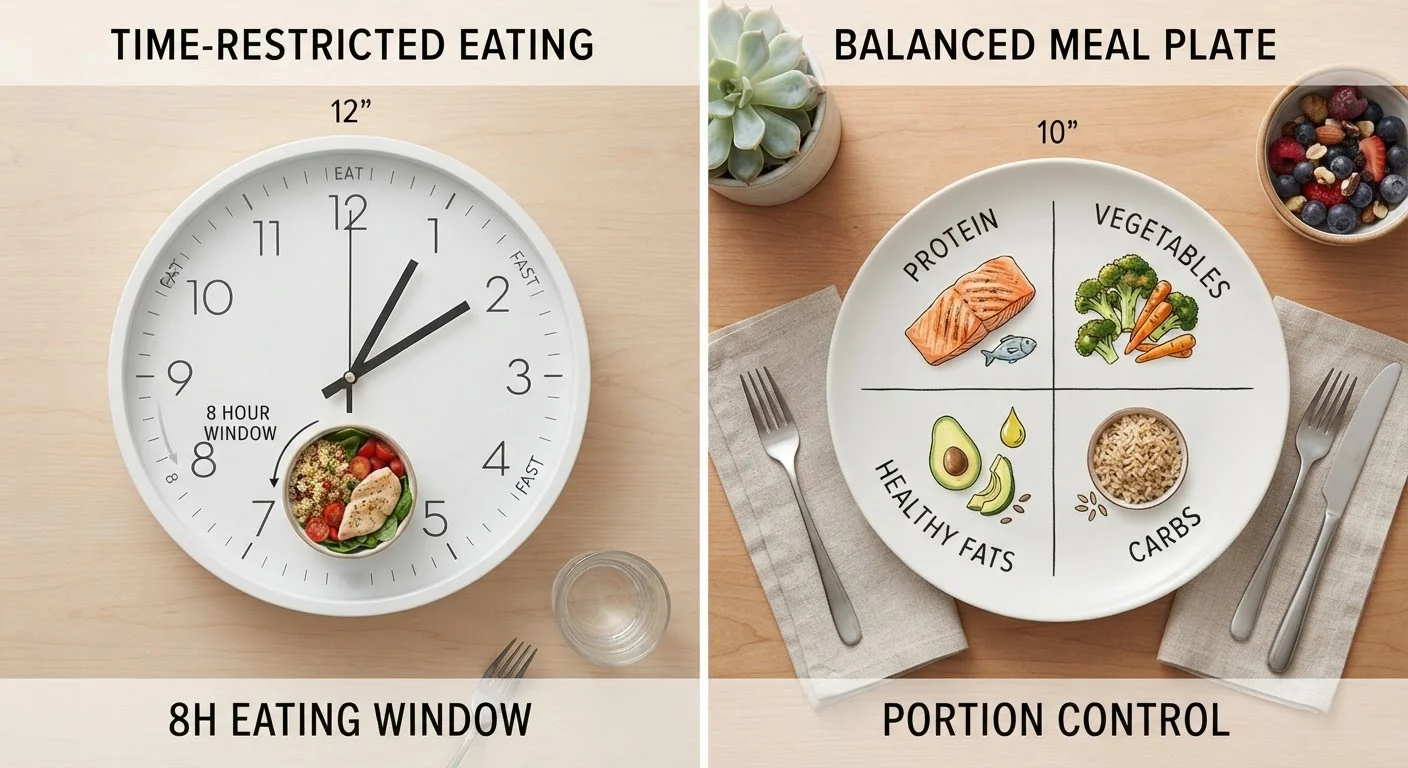
Photo: AskSpecialist.net editorial
Key Takeaways
- Intermittent fasting and traditional meal timing can both support health outcomes - adherence matters most.
- Research on IF shows promising metabolic benefits, but long-term evidence remains limited.
- Traditional meal timing supports stable energy and may be safer for specific populations.
- Neither approach guarantees weight loss without attention to overall diet quality.
- Individual factors like lifestyle, health status, and preferences should guide any eating pattern choice.
- Always consult a healthcare professional before significantly changing your eating schedule.
Understanding the Two Approaches
Intermittent fasting (IF) refers to eating patterns that cycle between periods of fasting and eating - not a specific diet, but a framework for when you eat. The most widely studied form is the 16:8 method, where eating is confined to an 8-hour window each day. Other patterns include the 5:2 approach, in which calorie intake is significantly reduced on two non-consecutive days per week.
Traditional meal timing, by contrast, typically involves eating three structured meals per day - breakfast, lunch, and dinner - sometimes supplemented with snacks. This approach has been the foundation of mainstream dietary guidance in the United States for decades and aligns with guidance from organizations like the American Heart Association around regular, balanced eating.
The key distinction isn't what either approach recommends eating, but when. Both frameworks can accommodate nutrient-dense or poor-quality diets - making food quality a shared variable rather than a differentiating factor. For a deeper look at how meal composition can affect how you feel throughout the day, see how meal choices affect your energy levels.
| Criterion | Intermittent Fasting | Traditional Meal Timing |
|---|---|---|
| Core principle | Restricted eating window each day | Regular meals spread through the day |
| Most studied format | 16:8 time-restricted eating | 3 meals per day, occasional snacks |
| Weight loss evidence | Modest; comparable to calorie restriction | Effective with calorie awareness |
| Blood sugar stability | Variable; may improve insulin sensitivity | Generally more stable throughout day |
| Ease of adherence | Easier for some; challenging for others | Familiar structure, socially compatible |
| Suitability for special populations | Caution advised; consult a professional | Generally safer; still requires guidance |
| Long-term research | Emerging; limited multi-year data | Decades of observational evidence |
What the Research Currently Shows
A growing body of research has examined IF's effects on weight, metabolic health, and cardiovascular risk markers. A 2022 review published in Annual Review of Nutrition found that time-restricted eating can produce modest weight loss and improvements in insulin sensitivity in some adults - though effects were often comparable to continuous calorie restriction when total calorie intake was matched.
Importantly, most IF studies have been conducted over relatively short periods (weeks to months), and longer-term data is still emerging. The New England Journal of Medicine published a frequently cited 2019 review noting potential benefits of intermittent fasting on metabolic markers, but acknowledging the need for larger, longer clinical trials.
Traditional meal timing also carries an evidence base. Regular breakfast consumption, for instance, has been associated with better diet quality and more consistent energy throughout the day in observational studies - though this relationship is complex and influenced by individual factors. Consistent meal schedules have also been linked to better circadian alignment, which may support metabolic function.
~1-3 kg
Average weight loss difference vs. continuous restriction
A 2022 meta-analysis in Annual Review of Nutrition found that time-restricted eating produced similar weight outcomes to standard calorie restriction when calories were matched.
27%
U.S. adults who report skipping breakfast regularly
According to National Health and Nutrition Examination Survey (NHANES) data, meal skipping patterns are common and vary significantly by age and income level.
~8 weeks
Median duration of most IF clinical trials
A review in the New England Journal of Medicine noted that most human IF studies are short-term, limiting conclusions about long-term safety and efficacy.
The honest summary: neither approach has a decisive, across-the-board advantage in current research. Adherence - actually sticking to your chosen pattern - appears to be the strongest predictor of outcomes in dietary intervention studies.
Who Should Be Cautious
Intermittent fasting is not appropriate for everyone. People who are pregnant or breastfeeding, children and adolescents, individuals with a history of disordered eating, and those managing type 1 or type 2 diabetes should approach any significant change in meal timing with particular care. Extended fasting windows can affect blood glucose regulation, medication timing, and energy balance in ways that require medical oversight.
Even for generally healthy adults, starting an IF protocol without preparation can result in fatigue, difficulty concentrating, irritability, or disrupted sleep - especially in the early adjustment period. These effects are often temporary, but they underscore the importance of individualized guidance.
Traditional meal timing carries fewer acute risks for most people, though consistently skipping meals or relying on highly processed snacks between meals can undermine its benefits. Neither approach is a shortcut to better health without attention to overall diet quality.
If you're considering either approach - particularly IF - it's worth discussing with a registered dietitian or your primary care provider. For practical guidance on building eating habits that last, sustainable eating strategies offer a grounded starting point.
This article is for general informational and educational purposes only and does not constitute medical or dietary advice. Please consult a qualified healthcare professional before making changes to your eating pattern, especially if you have an existing health condition.
The content on this site is provided for informational purposes only and should not be considered a substitute for professional advice. While we strive to provide accurate and up-to-date information, we make no guarantees regarding its completeness or accuracy. Always consult a qualified professional for advice specific to your circumstances before making any decisions.