
Nutrition Across Life Stages: How Dietary Needs Shift From Childhood to Later Adulthood

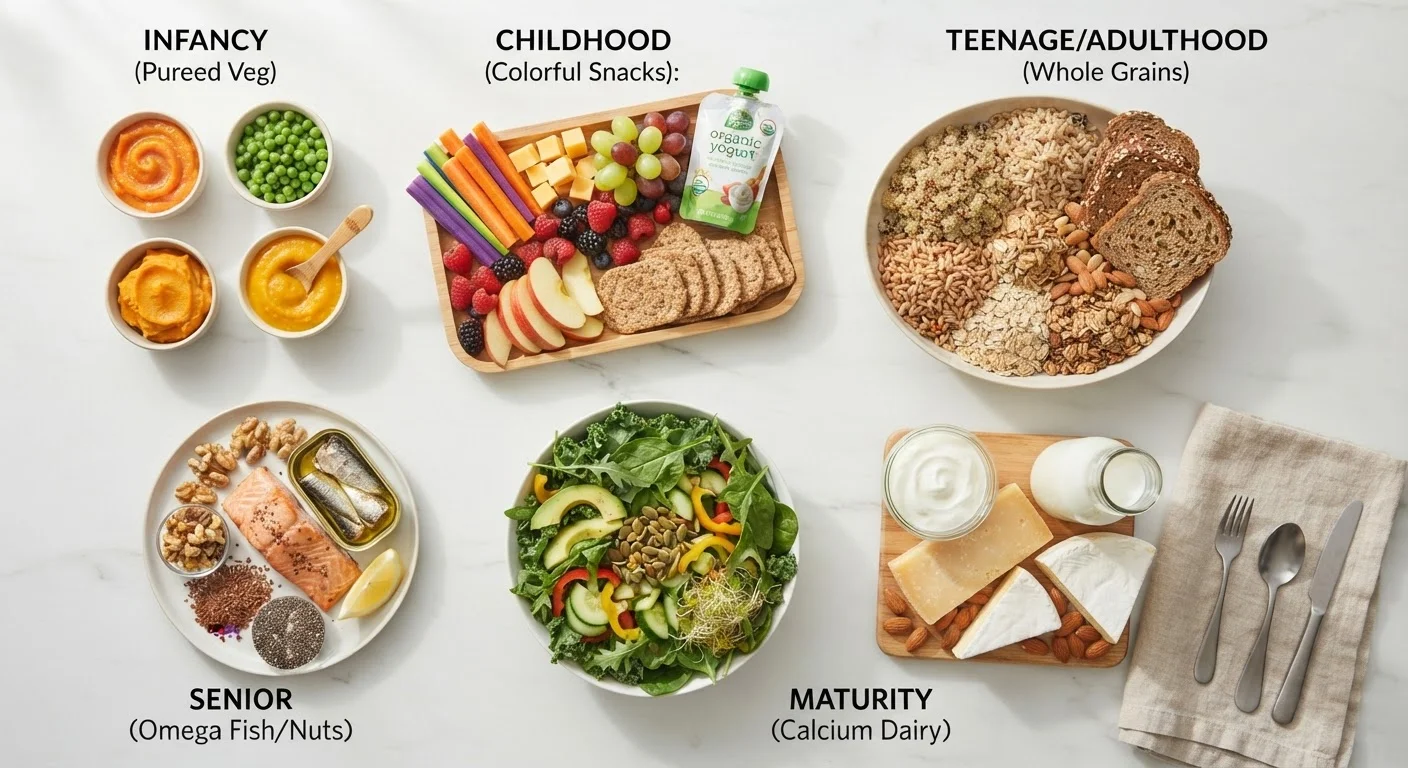
Photo: AskSpecialist.net editorial
Why Nutrition Isn't One-Size-Fits-All
The human body's nutritional needs don't stay static. From the rapid growth of childhood to the hormonal shifts of adolescence, the demands of pregnancy and midlife, and the muscle preservation challenges of later adulthood - each life stage brings distinct priorities. Understanding these shifts can help everyday Americans make more informed food choices for themselves and their families, without needing a nutrition degree to do it.
This reference covers the major life stages recognized by health authorities such as the USDA and the National Institutes of Health, highlighting key nutrients and general patterns - not personal prescriptions. For individualized guidance, always consult a registered dietitian or your healthcare provider.
| Peak bone mass established by | Late twenties for most people (National Institutes of Health, Office of Dietary Supplements) |
| Recommended daily calcium for adults 51+ | 1,200 mg (women); 1,000-1,200 mg (men) (National Academy of Medicine Dietary Reference Intakes) |
| Vitamin B12 absorption concern | Declines with age due to reduced stomach acid (National Institutes of Health) |
| Folate importance during pregnancy | Supports neural tube development in early fetal growth (CDC, Folic Acid Recommendations) |
| Life stages with highest iron needs | Adolescent girls, adult women (pre-menopause), pregnant individuals (USDA Dietary Guidelines for Americans) |
| Protein priority in later adulthood | Increases relative importance to offset sarcopenia risk (Academy of Nutrition and Dietetics) |
This article is for general informational purposes only and does not constitute medical or dietary advice. Consult a qualified healthcare professional for guidance specific to your health needs.
Childhood and Adolescence: Building Blocks for Life
Early childhood (ages 2-8) is a period of rapid physical and cognitive development. Protein, iron, calcium, and vitamin D are particularly important during these years. Iron supports brain development, while calcium and vitamin D lay down bone density that the body draws on for decades. Whole grains, legumes, fruits, vegetables, and dairy or fortified alternatives form a broadly recognized foundation at this stage.
Adolescence (ages 9-18) introduces a surge in caloric and micronutrient needs tied to puberty and the final phase of bone development. Peak bone mass is largely established by early adulthood - making adequate calcium and vitamin D intake during the teen years especially meaningful. Iron needs also rise, particularly for adolescent girls following the onset of menstruation. Zinc supports growth and immune function. One practical challenge during this stage is that eating patterns are often influenced more by social environments and convenience than by nutritional awareness.
See our guide to building a balanced plate for flexible, family-friendly meal structuring principles.
Adulthood and Midlife: Maintenance and Prevention
For most adults (roughly ages 19-50), total caloric needs stabilize - and for many, gradually decline as metabolism slows and physical activity patterns shift. Nutrient density becomes more important: getting adequate vitamins and minerals without excess calories requires intentional food choices rather than volume eating.
Key focus areas in early-to-middle adulthood include fiber for digestive and cardiovascular health, omega-3 fatty acids (found in fatty fish, walnuts, and flaxseed) for heart and cognitive health, and folate - especially critical for people who are pregnant or planning a pregnancy, as it supports fetal neural tube development. Women's iron needs remain elevated through menopause, while men's requirements are generally lower after adolescence.
Sarcopenia
The gradual, age-related loss of muscle mass and strength that typically accelerates after age 50. It can be partially offset through adequate dietary protein and regular physical activity.
Micronutrients
Vitamins and minerals required by the body in relatively small amounts. Despite their small quantities, they are essential for growth, immune function, bone health, and many other processes.
Nutrient Density
A measure of how many nutrients a food provides relative to its calorie content. Foods like leafy greens, legumes, and fish are considered nutrient-dense because they deliver significant vitamins and minerals without excessive calories.
Folate
A B-vitamin found naturally in foods like leafy greens, beans, and citrus. It is especially critical during early pregnancy to support fetal neural tube development. The synthetic form used in supplements and fortified foods is called folic acid.
Peak Bone Mass
The maximum bone density and strength that a person achieves, typically by their late twenties. Calcium and vitamin D intake during childhood and adolescence play an important role in reaching a healthy peak.
Omega-3 Fatty Acids
A type of polyunsaturated fat associated with heart and brain health. Found in fatty fish (like salmon and sardines), walnuts, and flaxseed. The body cannot produce them on its own, so they must come from food or supplements.
Pregnancy and lactation represent distinct nutritional states with substantially increased demands for folate, iron, iodine, choline, and calories overall. If you are pregnant or nursing, individualized guidance from a healthcare provider is essential - general population recommendations don't account for individual variation in this context.
You can build practical habits around these principles with our nutrition-focused grocery shopping guide.
Later Adulthood: Shifting Priorities After 50
After age 50, several interconnected changes shape nutritional needs. Muscle mass naturally declines - a process called sarcopenia - making adequate protein intake increasingly important for preserving strength and mobility. Many health researchers and dietitians suggest that older adults may benefit from distributing protein across meals rather than concentrating it in one sitting, though the optimal approach should be discussed with a professional.
Bone health remains a priority: calcium and vitamin D needs either stay elevated or increase in this stage, while the skin's ability to synthesize vitamin D from sunlight declines with age. Vitamin B12 absorption can also decrease as stomach acid production drops, making fortified foods or supplementation a consideration - again, best evaluated with a clinician.
Caloric needs often decrease in later adulthood, but micronutrient needs do not decrease proportionally. This makes every meal an opportunity to prioritize nutrient-dense choices: colorful vegetables, lean proteins, whole grains, and healthy fats. Hydration also deserves attention - the sense of thirst diminishes with age, raising the risk of dehydration.
For those thinking about building sustainable long-term eating habits, starting with small, realistic adjustments tends to be more effective than sweeping dietary overhauls at any age.
The content on this site is provided for informational purposes only and should not be considered a substitute for professional advice. While we strive to provide accurate and up-to-date information, we make no guarantees regarding its completeness or accuracy. Always consult a qualified professional for advice specific to your circumstances before making any decisions.