
Reading a Nutrition Label Without the Guesswork

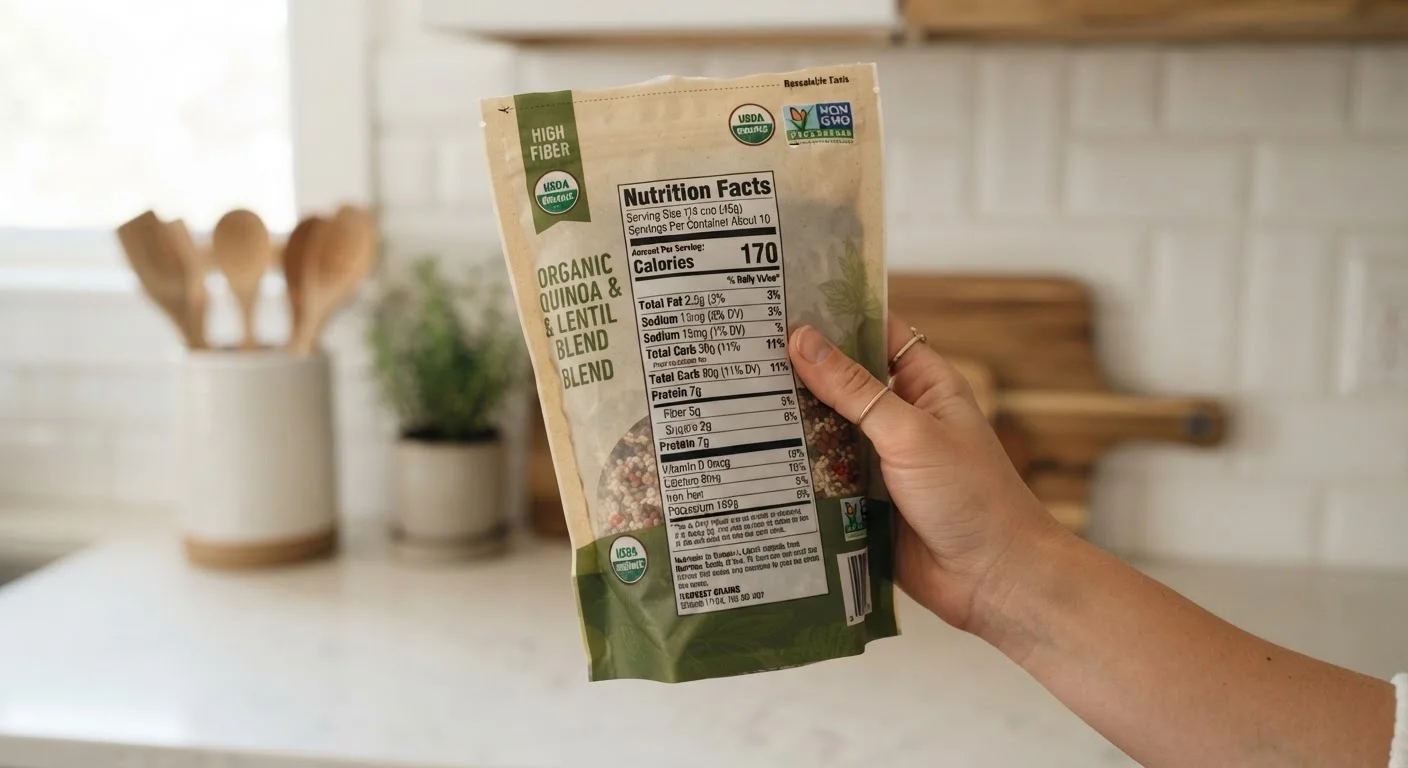
Photo: AskSpecialist.net editorial
Key Takeaways
- Serving size is the foundation of every number on the label - always check it first.
- % Daily Value helps you quickly judge if a nutrient is high or low in a single serving.
- Sodium, added sugars, and saturated fat are the three numbers most Americans benefit from monitoring.
- The ingredient list reveals what's actually in the food, listed by weight from most to least.
- No single food label makes or breaks a healthy diet - context and overall patterns matter most.
Why the Nutrition Facts Label Exists
The Nutrition Facts label is a federally mandated panel that the FDA requires on most packaged foods sold in the United States. It was first introduced in 1994 and underwent a significant update - rolled out between 2020 and 2021 - to reflect newer nutrition science and eating patterns. The label's purpose is straightforward: give consumers standardized, comparable nutritional information so they can make informed choices without having to decode marketing language.
What the label cannot do is account for your individual health history, goals, or medical needs. Use it as a tool for general awareness and comparison, not as a personal nutrition prescription. If you're working toward specific dietary goals, a registered dietitian can help translate label information into personalized guidance.
This Is Education, Not Medical Advice
Once you understand the label's structure, it becomes a genuinely useful reference - not just a wall of numbers. The steps below walk through each section in the order it appears on the panel.
Food package or product label
The actual label you are practicing reading - any packaged grocery item works.
FDA Nutrition Facts label reference guide
The FDA publishes a free, up-to-date plain-language guide to the label format at fda.gov - useful as a cross-reference.
Calculator or smartphone
Helpful for quickly multiplying per-serving numbers when a package contains multiple servings.
How to Read the Label, Section by Section
Work through a label from top to bottom using the steps below. Each section builds on the one before it - skipping serving size, for example, makes every other number meaningless.
What you will need
Start With Serving Size and Servings Per Container
Every number on the Nutrition Facts label is calculated for one serving - not the whole package. The serving size appears at the very top of the panel and reflects an amount the FDA considers a typical single portion, standardized across similar products for easy comparison.
Check how many servings are in the container. A bag of chips might list 1 oz as a serving, but contain 2.5 servings total. If you eat the whole bag, multiply every number by 2.5. This single step catches most label-reading errors.
Read the Calories Line
Calories measure the total energy provided by one serving. The number is printed large and bold for visibility. Keep in mind that calorie needs vary significantly by age, sex, activity level, and health status - a number that's appropriate for one person may not suit another.
Rather than fixating on a single number, use calories as one data point alongside the quality of the nutrients in the food.
Scan the Nutrients to Limit
Below calories, you'll find fats, cholesterol, sodium, and carbohydrates. Within those, the FDA specifically flags saturated fat, sodium, and added sugars as nutrients most Americans consume in excess.
- Saturated fat is listed separately from total fat. Diets high in saturated fat are associated with elevated LDL cholesterol, according to the American Heart Association.
- Sodium is linked to blood pressure concerns at high intake levels. Many processed foods carry a significant portion of the daily recommended limit in a single serving.
- Added sugars were added to the label update in 2020 to distinguish sugars added during processing from those naturally present in fruit or dairy.
Look for Nutrients to Get Enough Of
The lower portion of the label lists nutrients many Americans fall short on: dietary fiber, vitamin D, calcium, iron, and potassium. Choosing foods with higher % Daily Values for these can help support a more balanced overall diet.
Fiber in particular is worth attention - it supports digestive health and satiety, yet the average American intake falls well below recommended levels, according to data from the Dietary Guidelines for Americans.
Decode the % Daily Value Column
The % Daily Value (% DV) column on the right side of the label tells you how much of a nutrient one serving contributes toward general daily recommendations, based on a 2,000-calorie reference diet. This is a standardized benchmark, not a personalized target.
Use it comparatively: scanning % DV lets you quickly compare two similar products side-by-side, or decide whether a food is a meaningful source of a given nutrient.
[tip_callout]Read the Ingredient List
Ingredients are listed in descending order by weight - the first ingredient makes up the largest proportion of the product. If sugar (under any of its many names: corn syrup, dextrose, maltose, cane juice) appears in the first few positions, the product is predominantly sweetener.
A shorter ingredient list generally indicates less processing, though length alone isn't the whole story. Understanding what's in your food - not just the nutrients - gives a more complete picture. For more on how to think about this spectrum, see Whole Foods vs. Processed Foods.
Front-of-Package Claims Can Mislead
Once you're comfortable reading labels, the skill transfers directly to smarter shopping. See Grocery Shopping With Nutrition in Mind for a practical checklist that puts label-reading into action in the store. And for a broader look at how to structure meals using what you learn from labels, Building a Balanced Plate offers flexible, non-restrictive principles to get started.
This article is for general informational and educational purposes only and does not constitute medical or dietary advice. Always consult a qualified healthcare professional or registered dietitian for guidance specific to your health needs.
The content on this site is provided for informational purposes only and should not be considered a substitute for professional advice. While we strive to provide accurate and up-to-date information, we make no guarantees regarding its completeness or accuracy. Always consult a qualified professional for advice specific to your circumstances before making any decisions.