
Lawn & Garden

Why Your Tomatoes Keep Cracking, Yellowing, or Failing to Fruit

Why Your Tomatoes Keep Cracking, Yellowing, or Failing to Fruit

Photo: AskSpecialist.net editorial

Tomato troubles explained — from blossom drop to blight. Understand the causes behind the most common growing problems and how to address them.

Key Takeaways

  • Inconsistent watering is the leading cause of cracked tomato skin — steady moisture prevents it.
  • Yellowing leaves often signal nutrient deficiencies or overwatering, not disease.
  • Blossom drop is usually triggered by temperature extremes or low pollinator activity.
  • Calcium deficiency causes blossom end rot, but watering habits are the root fix.
  • Early blight and septoria leaf spot are fungal — proper spacing and airflow help prevent both.

Understanding Why Tomatoes Struggle

Tomatoes are one of the most rewarding crops a home gardener can grow — but they're also one of the most frustrating when things go wrong. Cracked skin, yellowing foliage, flowers that drop before setting fruit, and dark patches on the bottom of developing tomatoes are all common complaints. The good news is that most of these problems trace back to a handful of preventable mistakes.

Understanding what's actually happening inside the plant helps you respond more effectively. Tomatoes are sensitive to fluctuations in water, temperature, nutrients, and airflow. When any of these conditions go off balance — even briefly — the plant signals its distress in visible ways. The following mistakes are the most common causes gardeners encounter, along with practical steps to address each one.

1

Watering inconsistently — flooding plants after long dry spells rather than maintaining steady soil moisture.

Why it happens: Gardeners often rely on rainfall or water on a loose schedule, especially during busy weeks. This feast-or-famine cycle stresses the plant at a critical stage.
How to avoid: Aim for deep, consistent watering — typically 1 to 2 inches per week, adjusted for heat and rain. Using a soaker hose or drip system helps maintain even soil moisture. A 2- to 3-inch layer of mulch slows evaporation significantly between waterings.
2

Planting tomatoes in soil that hasn't been amended, leading to nutrient-poor conditions and yellowing leaves.

Why it happens: Beginners often assume garden soil is ready to grow anything. Tomatoes are heavy feeders and deplete nutrients — especially nitrogen, phosphorus, and calcium — quickly.
How to avoid: Before planting, work compost into the top 12 inches of soil. Side-dress plants with a balanced vegetable fertilizer once they begin flowering, and again when fruit begins setting. A soil test from your local cooperative extension office can pinpoint exactly what your soil is missing.
3

Planting too early in spring when nighttime temperatures are still below 50°F (10°C).

Why it happens: Eager gardeners want a head start and transplant seedlings as soon as frost risk passes. But tomatoes need warm soil and air to thrive — cold temperatures halt growth and cause blossom drop.
How to avoid: Wait until nighttime temperatures are reliably above 55°F before transplanting outdoors. If you plant during a cool snap, use row covers to retain warmth at night. Soil temperature should ideally be at least 60°F for healthy root establishment.
4

Overcrowding plants, which reduces airflow and creates conditions where fungal disease takes hold.

Why it happens: Seed packets and transplant labels are easy to misread, or gardeners want to maximize yield from a small space by planting too close together.
How to avoid: Most indeterminate tomato varieties need at least 24 to 36 inches between plants. Determinate (bush) types can be slightly closer. Proper spacing improves airflow, reduces humidity around the foliage, and makes it easier to spot and remove diseased leaves early.
5

Skipping or incorrectly pruning suckers on indeterminate varieties, leading to unruly growth and reduced fruiting.

Why it happens: Pruning can feel counterintuitive — removing growth seems like it would reduce yield. Some gardeners also don't know the difference between indeterminate and determinate types, applying the wrong care approach.
How to avoid: On indeterminate varieties, pinch off suckers — the shoots that sprout in the joint between the stem and a branch — when they are small. This directs the plant's energy toward fruit production. Determinate varieties generally don't require suckering.

Diagnosing the Symptoms You're Seeing

Different problems produce distinct visual clues. Here's a quick reference to match symptoms to likely causes:

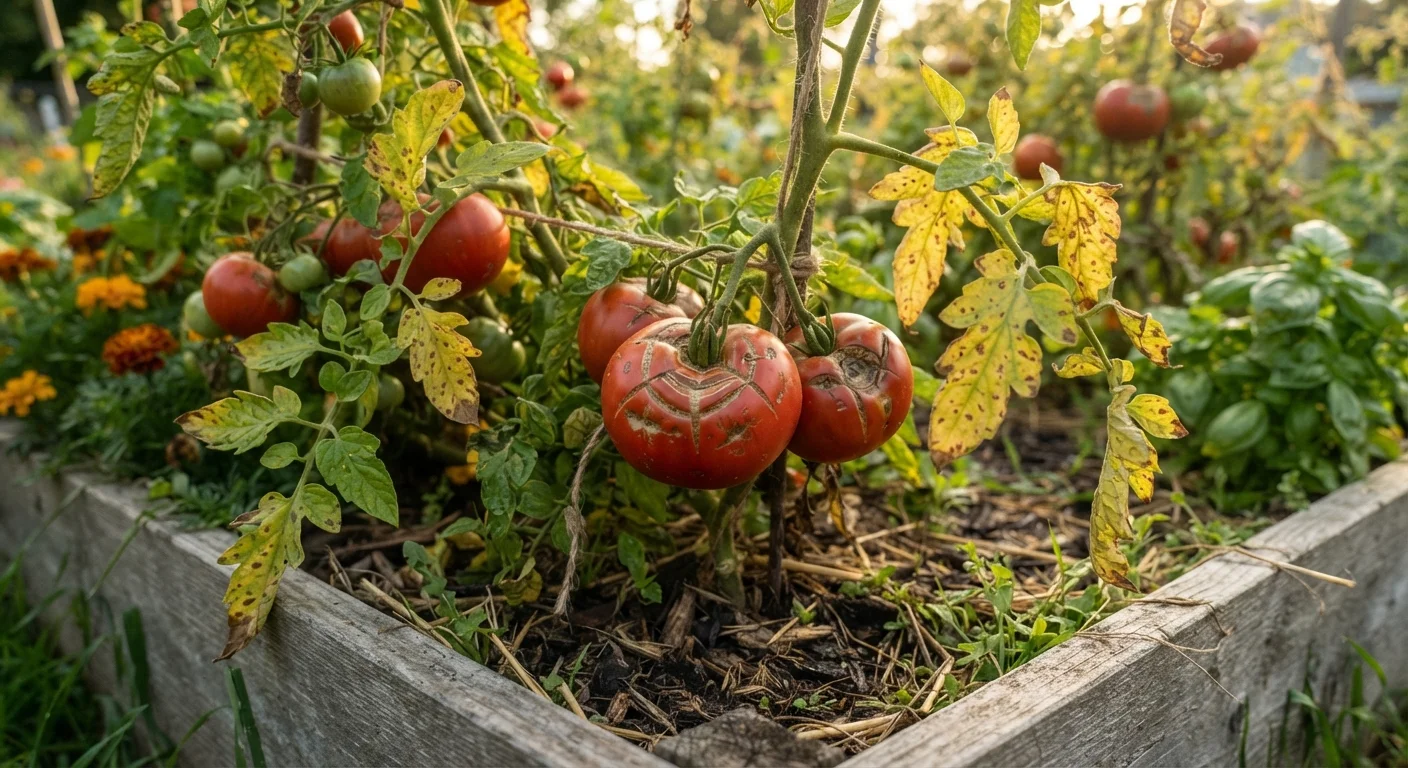
  • Cracked or split fruit: Almost always caused by irregular watering. Rapid moisture uptake after drought causes the fruit to expand faster than the skin can stretch.
  • Yellow leaves (starting from the bottom): Often indicates nitrogen deficiency, overwatering, or the early stages of a fungal infection like septoria leaf spot.
  • Dark, sunken patch on the blossom end: Blossom end rot — a calcium uptake issue tied to inconsistent soil moisture.
  • Flowers dropping without fruiting: Temperature stress is the most common culprit. Extreme heat above 95°F or nights below 55°F both prevent pollination.
  • Brown rings or spots on leaves: Likely early blight (dark concentric rings) or septoria leaf spot (small spots with lighter centers). Both are fungal.

Fungal Disease Spreads Quickly

Once early blight or septoria leaf spot appears on lower leaves, it can move up the plant rapidly in humid conditions. Remove infected leaves immediately and dispose of them in the trash — never in your compost pile. Avoid watering foliage in the evening, which extends the damp conditions fungi need to spread.

When diagnosing your plants, check for multiple symptoms together — overlapping issues are common, particularly when poor watering combines with nutrient stress. Addressing the root cause rather than treating each symptom individually will produce better, longer-lasting results.

Blossom End Rot Is Not a Disease

Many gardeners assume blossom end rot — the dark, sunken patch on the bottom of the fruit — means the plant is infected. It is actually a calcium uptake problem caused by irregular watering. Adding calcium supplements without fixing your watering schedule rarely solves it. Focus on consistent, deep irrigation first.

Home & Garden Editorial Team

AskSpecialist.net

Home & Garden Editorial Team is the collective byline for our editorial team and contributor network. Articles published under this byline or an editorial pen name are researched, written, and reviewed according to our editorial standards for clarity, consistency, and independence before publication.

Home ImprovementLawn & GardenHome Maintenance
View author profile

The content on this site is provided for informational purposes only and should not be considered a substitute for professional advice. While we strive to provide accurate and up-to-date information, we make no guarantees regarding its completeness or accuracy. Always consult a qualified professional for advice specific to your circumstances before making any decisions.