
What Product Specifications Actually Tell You (And What They Leave Out)

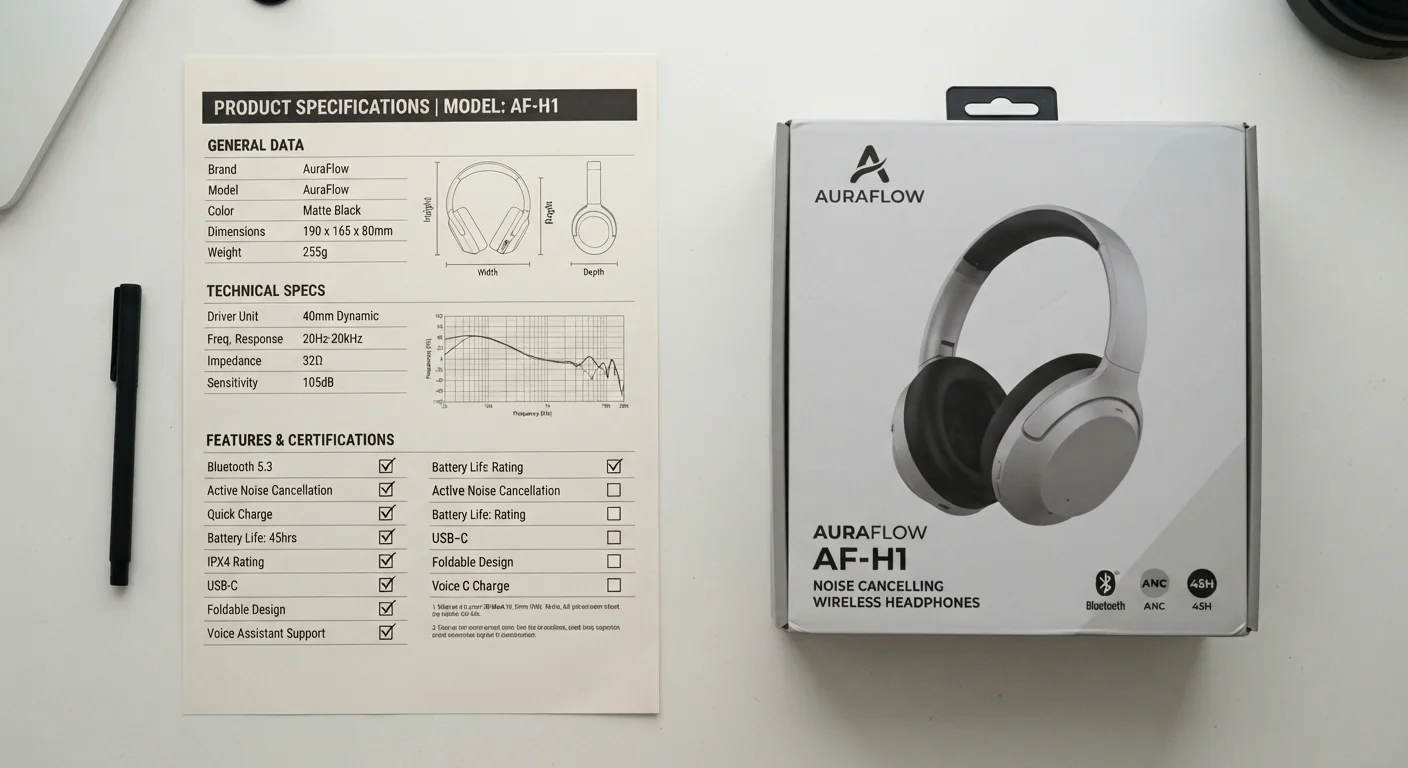
Photo: AskSpecialist.net editorial
Key Takeaways
- Specs describe a product under ideal or controlled conditions, not real-world use.
- Manufacturers choose which metrics to publish and which to omit.
- Identical spec values from different brands may reflect different testing methods.
- Missing specs are often just as revealing as the ones that are listed.
- Pair spec sheets with independent testing data and user reviews for a complete picture.
What Specs Actually Measure - And What They Don't
A spec sheet answers a narrow question: what does this product measure or weigh or consume under a specific set of conditions? It does not answer the question most shoppers actually have - will this product do what I need it to do, reliably, over time?
Battery life ratings are a clear example. A laptop rated for "up to 12 hours" of battery life is typically measured at low screen brightness running a simple productivity loop - conditions that rarely match a workday that includes video calls and multiple browser tabs. The headline number is technically accurate; it just isn't your number.
The same logic applies across categories. A vacuum cleaner's suction figure may be measured on a bare floor, not carpet. A blender's wattage tells you about the motor, not how well it actually processes ice. An air conditioner's BTU rating assumes a standard room size and insulation level that may not match your space.
When Methodology Isn't Disclosed
Specs are most useful when you understand the conditions under which they were measured. If a brand doesn't disclose test methodology, that absence itself is worth noting - and is often a signal to dig deeper before purchasing. See our guide to product quality red flags for other warning signs worth catching early.
The Information Manufacturers Choose Not to Include
Spec sheets are marketing documents as much as technical ones. Manufacturers decide which metrics to publish and how to present them - which means the omissions are deliberate, not accidental.
Long-term durability is one of the most consistently missing data points. A product might list the materials used in its construction but say nothing about expected lifespan, wear rates, or what happens after the warranty period ends. Noise levels, heat output, and real-world energy draw under load are also commonly left off, even though they directly affect daily satisfaction.
Compatibility limitations are another gap. Electronics in particular may list broad compatibility claims - "works with most devices" - without specifying the versions, protocols, or configurations where performance degrades. You may only discover the limitation after purchase.
Cross-Reference Before You Commit
To round out what the spec sheet skips, combine it with patterns in user reviews and independent testing. Each source fills in different blind spots the others miss.
How to Read Specs More Critically
Start by identifying which specs are actually relevant to your use case rather than scanning every number on the sheet. A spec that doesn't connect to how you'll use the product isn't a meaningful decision factor, regardless of how impressive the number looks.
Next, look for the test conditions. Reputable manufacturers disclose the methodology behind performance claims. When conditions aren't listed, treat the figure as a ceiling, not an average.
Then look at what's missing. If a product category typically publishes certain data - water resistance ratings for outdoor gear, sound levels in decibels for appliances, cycle counts for rechargeable batteries - and this listing doesn't include it, ask why. Missing specs can signal that the product underperforms in that area or that the manufacturer wants to avoid scrutiny.
Finally, cross-reference against independent sources. Third-party reviewers, trade publications, and consumer organizations test products under conditions closer to real-world use. Their findings often diverge meaningfully from manufacturer specs - and that gap is exactly the information you need. For a parallel exercise in reading disclosures critically, the same discipline applies when reading retailer fine print.
~30%
Real-world battery life vs. rated battery life
Consumer electronics reviewers frequently document real-world battery performance running 20-35% below manufacturer-rated figures when tested under moderate, realistic usage conditions.
10-25%
Typical fuel economy gap for vehicles
Studies by automotive research organizations have found that drivers commonly achieve fuel economy 10-25% below EPA estimates under real-world driving conditions.
1 in 3
Consumers who check independent test data before buying
Consumer research surveys suggest fewer than a third of shoppers consult independent lab or third-party testing data when evaluating major purchases, relying primarily on manufacturer-provided specs.
Putting Specs in Context Across Categories
The spec-to-reality gap varies by product category. In automotive, for example, fuel economy estimates are generated through standardized EPA test cycles that don't mirror typical driving patterns - most drivers see lower real-world figures, particularly in city stop-and-go traffic. Understanding that context is essential when evaluating a vehicle purchase.
In food and supplement products, the numbers on a nutrition label operate under their own regulatory framework with specific rounding rules and serving-size conventions - knowing how to interpret those correctly requires a different read than a hardware spec. The logic of reading critically transfers across categories even if the details differ.
In-store evaluation adds another dimension specs can't cover: texture, build feel, noise, and actual size in context. These are things a data sheet simply cannot communicate, which is why evaluating a product in person remains valuable even in a research-heavy purchase process. Treat specs as a filter for narrowing options, not a final verdict - the full picture requires multiple inputs used together.
This article is for general informational and educational purposes only. It does not constitute professional advice for any specific purchase or category. Always verify claims through independent sources before making purchasing decisions.
Frequently Asked Questions
The content on this site is provided for informational purposes only and should not be considered a substitute for professional advice. While we strive to provide accurate and up-to-date information, we make no guarantees regarding its completeness or accuracy. Always consult a qualified professional for advice specific to your circumstances before making any decisions.