
What a Vehicle History Report Actually Tells You - and What It Doesn't

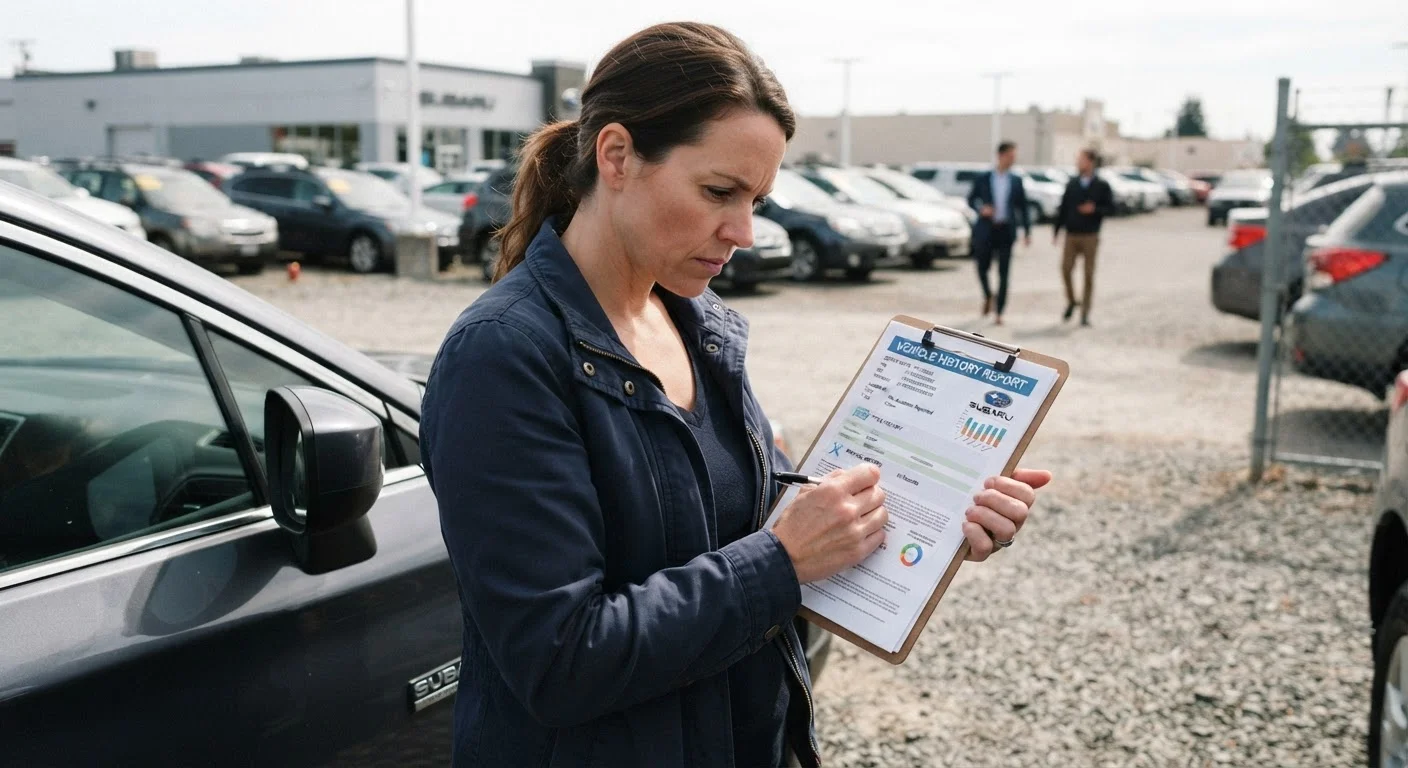
Photo: AskSpecialist.net editorial
Key Takeaways
- A vehicle history report shows documented events - not everything that has ever happened to a car.
- Title problems, odometer rollbacks, and major reported accidents are the most reliable things a report can flag.
- Unreported accidents, private repairs, and flood damage can all be invisible to these reports.
- A clean report does not mean a clean car - always pair it with a physical inspection.
- A pre-purchase inspection by an independent mechanic is the most reliable complement to any report.
What a Vehicle History Report Actually Contains
A vehicle history report pulls data from a network of sources: state DMV records, insurance company claims databases, auto auction records, rental and fleet company records, and in some cases dealer service departments. That data gets organized around the car's VIN to produce a timeline of documented ownership and events.
Here's what a report reliably shows when the information has been properly reported:
- Title history: How many owners the car has had, and whether the title carries any brands - salvage, rebuilt, flood, lemon law buyback, or odometer rollback.
- Reported accidents: Collisions that were reported to an insurer or flagged at an auction inspection.
- Odometer readings: Mileage recorded at registration renewals and inspections, which can expose rollback fraud.
- Structural or airbag damage: If flagged by an insurer or auction.
- Use history: Whether the car was used as a rental, fleet, or commercial vehicle.
This information has real value. Title brands in particular are objective legal facts that a seller cannot easily hide. A salvage or rebuilt title should immediately change how you think about a price and what you're willing to accept.
~1 in 5
Used cars with undisclosed prior damage
Industry estimates suggest roughly one in five used vehicles has prior damage that doesn't appear in any vehicle history report, based on auction and inspection data.
17 characters
Length of every vehicle's unique VIN
Every vehicle sold in the U.S. since 1981 carries a standardized 17-character VIN used to track title, registration, and insurance history.
The Real Blind Spots - What Reports Won't Show You
This is where buyers get into trouble. A vehicle history report only knows what was reported to the data sources it draws from. A significant portion of what actually happens to used cars never enters those databases.
Unreported accidents are probably the biggest gap. If someone bumped a parking lot pillar, got a fender straightened at a small body shop, and paid cash, that damage is invisible to any report service. No insurer was notified; no claim was filed.
Private-party mechanical work doesn't show up either. An engine replacement, a rebuilt transmission, or a timing chain repair done outside a franchised dealership leaves no trace in most report databases.
Flood damage is notoriously underreported. Vehicles that are damaged in floods and sold quickly - particularly across state lines - often avoid getting a flood-branded title. Water intrusion causes long-term electrical and corrosion problems that develop slowly and don't announce themselves on paper.
Cosmetic reconditioning - repaints, rust treatment, interior refurbishment - is never in these reports. A car can look showroom-fresh while hiding significant prior damage underneath.
Reports Are Only as Good as Their Data Sources
The absence of bad news in a report isn't the same as good news. It means no bad news was officially recorded. That's a meaningful but limited distinction.
How to Use a Report Without Overrelying on It
Think of a vehicle history report as a background check, not a physical exam. It tells you about documented history; it cannot tell you about the car's current mechanical condition or the full truth of its past.
Use the report to screen for deal-breakers first. A salvage title, a branded odometer, multiple reported accidents, or a history as a rental fleet vehicle are all legitimate reasons to walk away or negotiate hard. These are objective red flags.
Then use the report to generate questions. A gap in ownership history, a mileage inconsistency between reported readings, or a state transfer that doesn't fit the seller's story are worth pressing on. Honest sellers won't be bothered by direct questions. Sellers with something to hide often are.
Finally - and this cannot be overstated - pair every used car purchase with a physical inspection by an independent mechanic. A pre-purchase inspection is the single best complement to any vehicle history report. A trained technician can identify signs of prior damage, assess current mechanical condition, and spot the kinds of problems that never show up in any database. The cost is modest relative to the protection it provides.
A vehicle history report and a pre-purchase inspection together give you a much more complete picture than either does alone. Relying on just one - especially just the report - leaves real gaps in what you actually know before you sign anything.
Frequently Asked Questions
The content on this site is provided for informational purposes only and should not be considered a substitute for professional advice. While we strive to provide accurate and up-to-date information, we make no guarantees regarding its completeness or accuracy. Always consult a qualified professional for advice specific to your circumstances before making any decisions.