
Hair Care

Building a Minimalist Hair Routine That Actually Holds Up

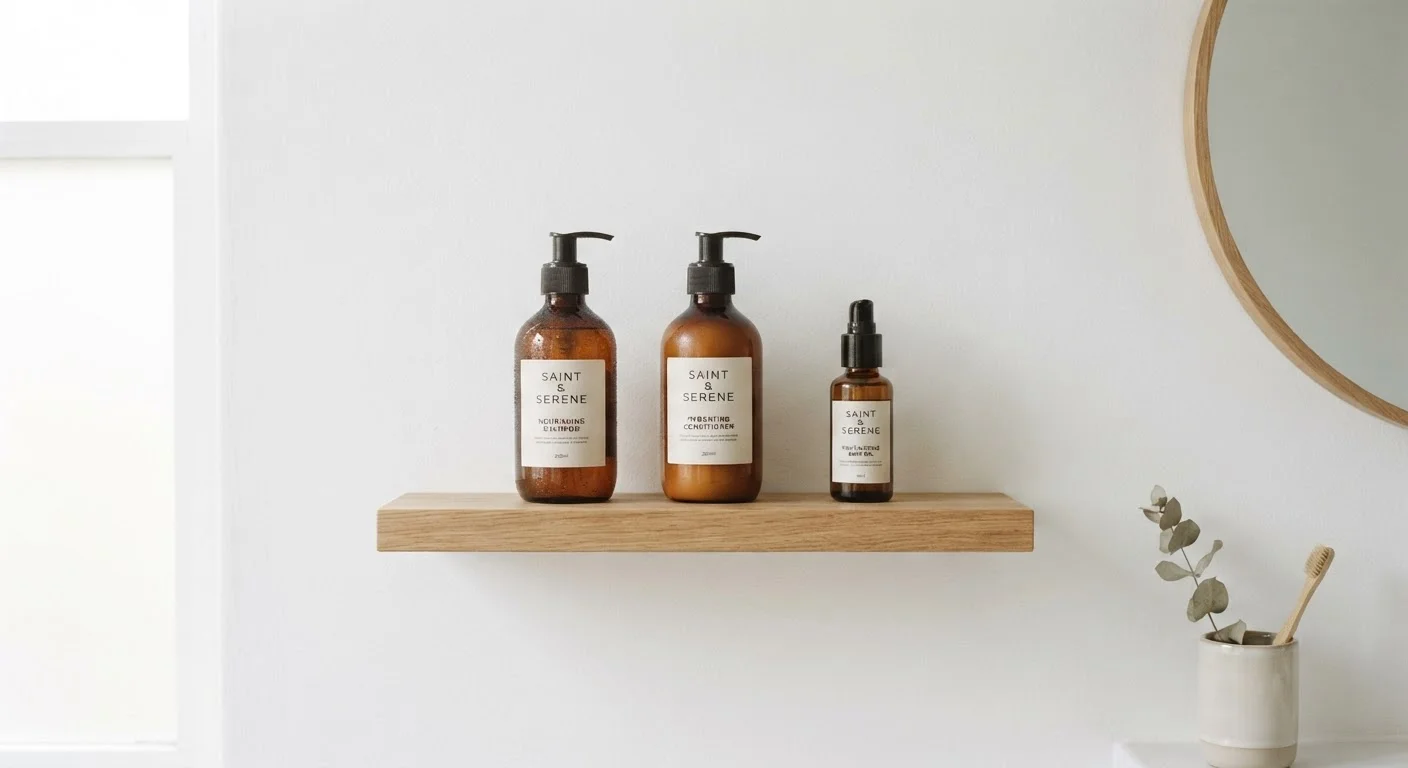
Building a Minimalist Hair Routine That Actually Holds Up

Photo: AskSpecialist.net editorial

More products don't mean better results. This guide helps you identify what your hair genuinely needs and cut everything else.

Key Takeaways

  • Most hair types need only three to four core products to stay healthy and manageable.
  • Understanding your hair's porosity and texture guides smarter product choices than trial and error.
  • Overloading your routine with products often causes buildup that mimics the problems you're trying to solve.
  • Consistency with a simple routine outperforms an elaborate one followed inconsistently.
  • Regular observation of how your hair responds is the most reliable feedback tool you have.

Why Less Usually Works Better

The beauty industry benefits when you believe your hair has a dozen separate problems requiring a dozen separate solutions. In reality, most common hair concerns — dryness, frizz, dullness, breakage — share a handful of root causes: compromised moisture balance, excess manipulation, product buildup, or scalp neglect. Stacking products on top of each other rarely addresses these causes. More often, it introduces new ones.

A minimalist hair routine isn't about deprivation. It's about precision. When you use fewer products, you can actually observe how each one affects your hair, adjust with clarity, and stop spending money on things that aren't pulling their weight. The goal is a routine you'll follow consistently — because consistency is what drives results, not complexity.

If you're trying to build a complete picture of your hair's current condition before streamlining, the weekly hair care audit is a practical starting point for assessing moisture levels, scalp health, and buildup.

The Core Practices of a Minimalist Hair Routine

These practices apply broadly across hair types and textures. Adapt the specific products and frequencies to your own hair — but the underlying logic holds regardless.

1

Anchor your routine to three product categories: cleanser, conditioner, and one leave-in or styler.

Every additional product adds potential for buildup, ingredient conflict, or over-manipulation of the hair shaft. A cleanser removes debris and excess oil, a rinse-out conditioner restores surface smoothness and temporary moisture, and a single leave-in or lightweight styler manages texture and frizz. This trio covers the functional bases for the vast majority of hair types without overcomplicating wash day.
Example: Someone with medium-porosity, wavy hair might use a sulfate-free shampoo once a week, a moisturizing conditioner every wash, and a light curl cream applied to damp hair — nothing more.
2

Shampoo according to your scalp's needs, not a fixed calendar schedule.

Scalp sebum production varies by individual, season, activity level, and hair density. Washing too frequently strips natural oils and triggers compensatory overproduction; washing too infrequently allows buildup that clogs follicles and dulls the hair. Calibrating wash frequency to actual scalp condition — rather than a default like 'every two days' — prevents both extremes.
Example: An active person with a finer, oilier scalp may genuinely need to shampoo every other day, while someone with thick, coarser hair and a drier scalp may thrive washing once every seven to ten days.
3

Protect hair from heat and mechanical damage before reducing or changing products.

Many of the symptoms people try to fix with more products — chronic dryness, frizz, breakage — are caused or worsened by heat tool damage and rough handling. No conditioner fully repairs a compromised cuticle; prevention is more effective than correction. Addressing heat protection and detangling habits first often reduces the perceived need for multiple repair-focused products.
Example: Switching from fine-tooth combing on dry hair to wide-tooth combing on wet, conditioned hair, and applying a heat protectant before blow-drying, can measurably reduce split ends within a few wash cycles.
4

Do a product elimination test before adding anything new to your routine.

Adding a new product to an already crowded routine makes it nearly impossible to determine what's helping and what isn't. Eliminating products one at a time and observing results for two to three weeks gives you reliable, actionable information. This approach also prevents the compounding confusion of overlapping ingredients and formulations.
Example: If your hair feels weighed down, remove your pre-shampoo oil treatment for three wash cycles and assess whether texture and volume improve — before purchasing a new 'volumizing' product.
5

Deep condition regularly but not reflexively — match frequency to your hair's actual moisture state.

Deep conditioning treatments deliver concentrated humectants and emollients to the hair shaft, which is genuinely beneficial for chemically processed, heat-styled, or high-porosity hair. However, over-conditioning — particularly with heavily emollient masks — can leave hair limp, hygral-fatigued, or slow to absorb moisture. Frequency should be guided by how your hair actually feels between washes, not a standard prescription.
Example: Hair that feels elastic, soft, and manageable after regular conditioning likely doesn't need a deep mask weekly; hair that remains rough or tangled after rinse-out conditioning is signaling it would benefit from one.

Start With What You Know About Your Hair

Before you can simplify, you need a working understanding of two key characteristics: your hair's porosity and its texture.

Porosity refers to how readily your hair absorbs and retains moisture. High-porosity hair (often caused by chemical processing or heat damage) absorbs quickly but loses moisture just as fast — it responds well to heavier, sealing products like butters or oils applied after a water-based moisturizer. Low-porosity hair repels water initially and can be prone to product sitting on the surface rather than absorbing — it benefits from lightweight, water-soluble formulas and gentle heat when deep conditioning.

Texture (fine, medium, or coarse) affects how much product weight your strands can handle before they look limp or feel greasy. Fine hair generally needs less product and lighter formulations; coarse hair can tolerate — and often needs — richer ones.

Once you have a working sense of these two factors, you can evaluate any product's ingredients and weight against what your hair actually requires, rather than responding to marketing language.

A Simple Way to Test Your Hair's Porosity

Take a clean, shed hair strand and drop it into a glass of room-temperature water. If it floats for several minutes, your hair is likely low porosity. If it sinks relatively quickly, it's likely high porosity. Medium porosity hair will typically hover in the middle before gradually sinking. This test isn't perfectly precise, but it gives you a reasonable starting point for understanding how your hair responds to moisture and product application.

For a deeper look at managing moisture and protein in balance, see the guide on protein treatments and moisture balance.

Quick Wins to Implement Today

You don't need to overhaul everything at once. These immediate actions will help you move toward a leaner, more effective routine without disruption.

high Count the hair products currently in your shower or bathroom and remove anything you haven't used in the past three wash cycles.
medium Check your current shampoo and conditioner for silicones (look for ingredients ending in '-cone' or '-xane') — if you're not using a clarifying wash periodically, buildup may be the source of dullness or heaviness.
high Do a simple porosity test: drop a clean, shed strand of hair into a glass of room-temperature water and observe whether it floats (low porosity) or sinks (high porosity) — then reconsider whether your current products match that profile.
medium Replace your current brush or comb with a wide-tooth comb and commit to detangling only on wet, conditioned hair for the next month.

If you're also looking to streamline your overall morning grooming sequence, the 20-minute morning grooming routine offers a realistic, time-efficient framework that covers hair alongside skin and hygiene.

This article is for general informational purposes only. For concerns about scalp conditions, hair loss, or other medical hair and skin issues, consult a qualified dermatologist or healthcare professional.

Beauty & Grooming Editorial Team

AskSpecialist.net

Beauty & Grooming Editorial Team is the collective byline for our editorial team and contributor network. Articles published under this byline or an editorial pen name are researched, written, and reviewed according to our editorial standards for clarity, consistency, and independence before publication.

Skincare BasicsHair CarePersonal Grooming
View author profile

The content on this site is provided for informational purposes only and should not be considered a substitute for professional advice. While we strive to provide accurate and up-to-date information, we make no guarantees regarding its completeness or accuracy. Always consult a qualified professional for advice specific to your circumstances before making any decisions.