
Skincare Myths That Dermatologists Frequently Correct

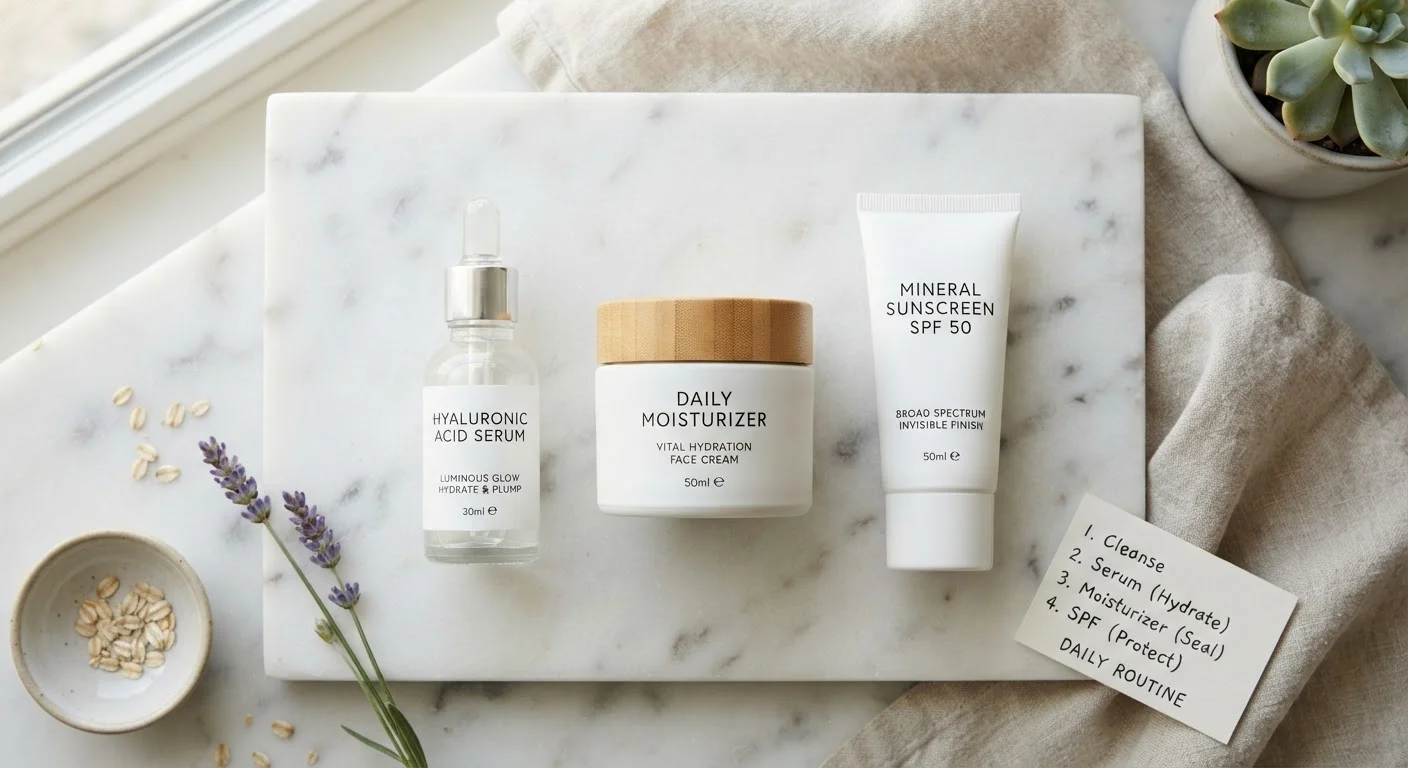
Photo: AskSpecialist.net editorial
Key Takeaways
- "Natural" ingredients are not automatically safe or gentle for all skin types.
- Sunscreen is necessary every day, not only on sunny or beach days.
- Feeling a tingle or sting from a product does not mean it is working better.
- Oily skin still needs moisturizer - skipping it can make oiliness worse.
- Pores do not open and close in response to temperature.
- More exfoliation is not better; overdoing it damages your skin barrier.
Why Skincare Myths Are So Persistent
Skincare advice travels fast - through social media, family wisdom, and marketing copy - and much of it sounds plausible enough that it sticks. The problem is that plausibility is not the same as accuracy. Several widely repeated beliefs are not supported by dermatological science, and acting on them can quietly work against your skin health over time.
The myths below are among those dermatologists most often address in clinical settings. Understanding why each one is wrong gives you a more reliable foundation for building a routine that actually holds up. For a broader look at warning signs that a routine is causing harm rather than helping, see our guide to when skincare does more harm than good.
Myth
Natural or organic ingredients are always safer and gentler than synthetic ones.
Fact
The source of an ingredient - natural or lab-made - does not determine its safety or gentleness. Many natural substances are potent allergens or irritants.
Poison ivy is natural. So is the urushiol that causes its rash. The word "natural" on a label is a marketing descriptor, not a safety certification. Common plant-derived ingredients such as essential oils, citrus extracts, and certain botanicals are among the more frequent causes of contact dermatitis documented in dermatology literature. Synthetic ingredients, by contrast, are often developed specifically to be stable, predictable, and well-tolerated. What matters is the ingredient itself, its concentration, and how your individual skin responds - not whether it came from a plant or a laboratory.
Myth
If a product stings or tingles, it means it's working.
Fact
Stinging and tingling are signals of irritation, not efficacy. A well-formulated product suited to your skin type should not cause significant discomfort.
Some active ingredients - such as low-concentration alpha hydroxy acids or vitamin C - may produce a mild, brief sensation on first use. That is different from persistent burning or stinging, which typically indicates that a product is disrupting your skin barrier rather than improving it. Equating discomfort with effectiveness can lead people to tolerate products that are actively causing harm. If something consistently stings, that is a reason to stop using it and reassess, not a sign to push through.
Myth
People with oily skin don't need moisturizer.
Fact
Oily skin and dehydrated skin are not mutually exclusive. Skipping moisturizer on oily skin often prompts the skin to produce more oil to compensate.
Sebum (oil) and water content are two separate things. Skin can be both oily and dehydrated at the same time - a state sometimes called combination-dehydrated skin. When moisture is stripped away by harsh cleansers or left unreplenished, the skin may increase sebum output to try to compensate. Using a lightweight, non-comedogenic moisturizer helps maintain the skin's water balance without adding a heavy feel. The goal is to select a formulation appropriate for oily skin, not to skip hydration entirely. Our article on why your moisturizer might not be hydrating your skin covers formulation mismatches in detail.
Myth
You only need sunscreen on sunny days or when you're outdoors for a long time.
Fact
UVA radiation - the type most associated with skin aging and DNA damage - penetrates clouds and glass and is present year-round at significant levels.
UV exposure is cumulative. The brief minutes of daily incidental exposure - walking to your car, sitting near a window - add up over years and contribute meaningfully to photoaging and skin cancer risk. Dermatological organizations consistently recommend broad-spectrum SPF 30 or higher as part of a daily routine regardless of weather or planned outdoor time. For a more detailed look at why daily SPF matters, see our article on sunscreen every day.
Myth
Steam or hot water opens your pores, and cold water closes them.
Fact
Pores do not have muscles and cannot open or close. Temperature affects blood flow and surface feel, not pore size.
The idea that pores behave like doors - swinging open with heat and snapping shut with cold - is anatomically inaccurate. Pores are follicular openings in the skin; they have no mechanism for dilation or constriction. What steam can do is soften the debris inside a clogged pore, making manual extraction easier. What cold water can do is temporarily reduce redness or puffiness. Neither changes actual pore diameter. Perceived pore size is influenced by genetics, skin tone, sebum production, and sun damage - not rinse water temperature.
Myth
Exfoliating more frequently gives you better, faster results.
Fact
Over-exfoliation strips the skin barrier, leading to redness, sensitivity, breakouts, and long recovery times - the opposite of the intended effect.
Exfoliation - whether physical scrubs or chemical acids - accelerates the removal of dead skin cells. Used appropriately, it can improve texture and allow other products to penetrate better. Used too often, it removes cells faster than the skin can replace them, compromising the barrier and triggering inflammation. Frequency depends on the exfoliant type and your skin's tolerance, but most people find that two to three times per week is the upper limit before diminishing returns set in. For a full breakdown of what over-exfoliation does to skin, our article on why exfoliating too often makes your skin worse is a useful resource.
Building a Routine on Evidence, Not Folklore
The through-line across these myths is the same: skincare decisions made on feel, appearance, or marketing language rather than on how skin biology actually works tend to backfire. Your skin barrier - the outermost layer that keeps moisture in and irritants out - is the foundation everything else rests on. Practices that compromise it, like over-exfoliating or skipping moisturizer on oily skin, create the very problems they are meant to solve. For a deeper look at how that barrier functions, our article on the science behind your skin barrier is a useful companion read.
1 in 5
Americans who develop skin cancer in their lifetime
According to the American Academy of Dermatology, skin cancer is the most common cancer in the United States, underscoring the importance of consistent sun protection.
~80%
Of UV rays that penetrate cloud cover
Dermatologists note that significant UVA and UVB radiation reaches the skin even on overcast days, making year-round sunscreen use essential.
A practical evidence-based routine does not need to be complicated. Consistent cleansing, a targeted moisturizer suited to your skin type, and daily broad-spectrum sunscreen address the majority of skin-health needs for most people. Adding active ingredients - such as retinoids or chemical exfoliants - can be worthwhile, but only when introduced gradually and used as directed. When in doubt about a specific ingredient or reaction, a board-certified dermatologist is the appropriate resource, not a product label or social media trend.
This article is for general informational purposes only and is not a substitute for professional medical or dermatological advice. Consult a qualified dermatologist for concerns about your individual skin health.
The content on this site is provided for informational purposes only and should not be considered a substitute for professional advice. While we strive to provide accurate and up-to-date information, we make no guarantees regarding its completeness or accuracy. Always consult a qualified professional for advice specific to your circumstances before making any decisions.