
The Science Behind Your Skin Barrier - and Why It Matters

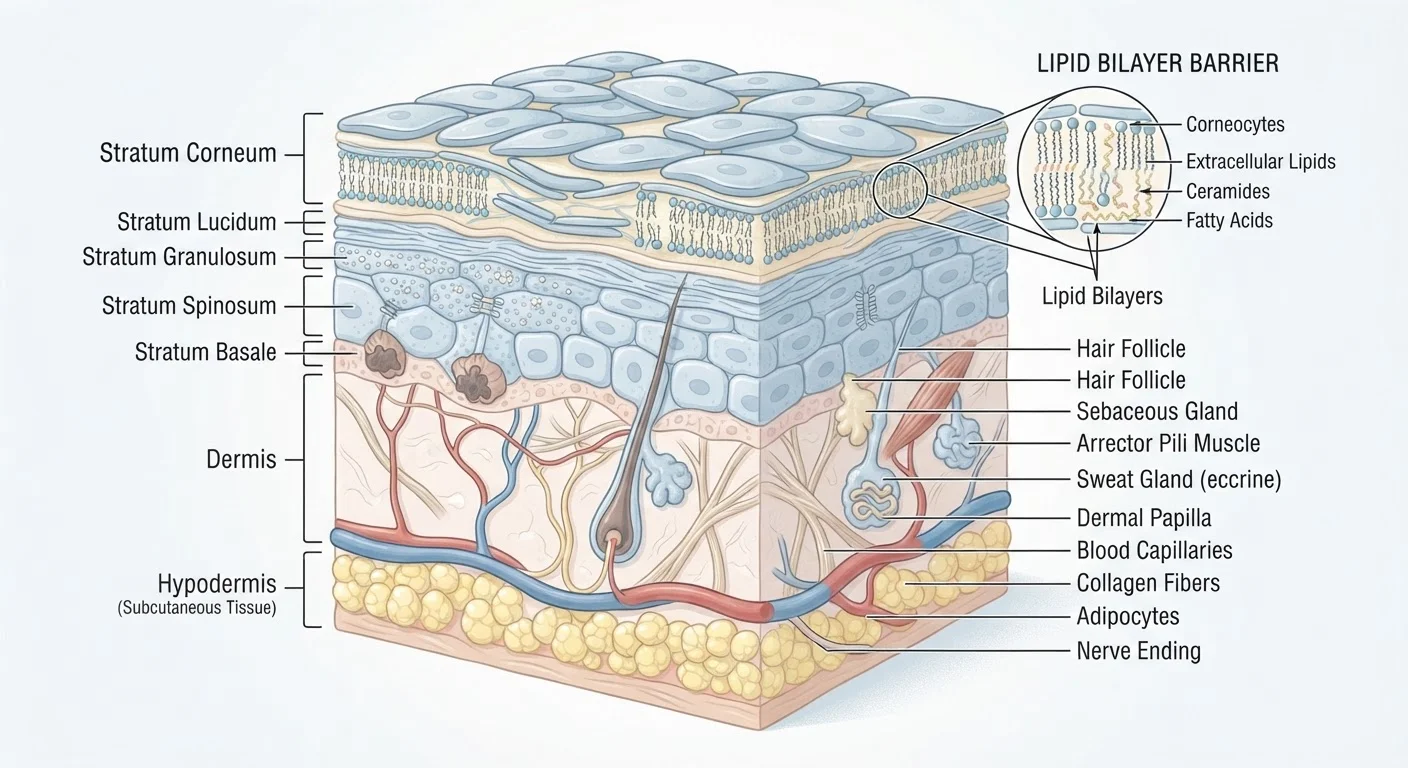
Photo: AskSpecialist.net editorial
Key Takeaways
- The skin barrier is the outermost skin layer and your body's first line of defense.
- Ceramides, cholesterol, and fatty acids form the lipid 'mortar' that holds the barrier together.
- A damaged barrier causes moisture loss, sensitivity, redness, and increased breakout risk.
- Harsh cleansers, over-exfoliation, and UV exposure are leading causes of barrier damage.
- Barrier repair focuses on gentle ingredients: ceramides, humectants, and occlusives.
- Protecting your barrier is the foundation of any effective, long-term skincare routine.
What the Skin Barrier Actually Is
The phrase "skin barrier" gets used constantly in skincare marketing, but it refers to something precise and well-understood in dermatology. Your skin is organized into layers, and the outermost one - the stratum corneum - is what scientists mean by the skin barrier. It is roughly 10-20 cell layers thick, yet it performs the critical job of regulating what passes in and out of your body.
Dermatologists often describe its structure using a bricks-and-mortar analogy. The "bricks" are corneocytes: tough, flattened cells packed with a structural protein called keratin. The "mortar" is a precise mixture of lipids - ceramides, cholesterol, and free fatty acids - that fills the spaces between those cells. This lipid matrix is what creates the barrier's sealing effect. Disrupt the mortar, and the wall begins to fail.
It's worth noting that the skin barrier is not a static shield. It renews itself continuously through a process called desquamation, where older cells shed from the surface and newer ones migrate upward. Healthy barrier function depends on this cycle operating at the right pace - not too fast, not too slow.
Why the Barrier Breaks Down
Barrier damage is extremely common and usually cumulative. Some of the most frequent culprits are habits that seem harmless - or even beneficial.
- Harsh cleansers: Surfactants that strip oil from the skin also remove lipids from the barrier. Soap bars with high pH and foaming cleansers with aggressive detergents are frequent offenders.
- Over-exfoliation: Both physical scrubs and chemical exfoliants (AHAs, BHAs, retinoids) thin the stratum corneum when overused, accelerating water loss before the barrier can regenerate.
- Environmental factors: Cold, dry air lowers ambient humidity; UV radiation degrades lipid structure; pollution deposits particles that trigger inflammation. All three impair barrier integrity over time.
- Hot water and steam: Prolonged hot showers or steam exposure dissolves lipids and temporarily compromises the barrier's seal.
The result of a compromised barrier is transepidermal water loss (TEWL) - water escaping through the skin faster than it should. TEWL is the mechanism behind the tight, dry, reactive feeling that accompanies a damaged barrier. See our guide to recognizing when your routine is causing harm for specific warning signs to watch for.
~50%
Ceramide proportion of skin's lipid barrier
Research published in dermatology literature consistently identifies ceramides as the single largest lipid component of the stratum corneum, making up roughly half of its total lipid content.
2-4 weeks
Typical skin renewal cycle duration
The stratum corneum naturally replaces itself approximately every two to four weeks in healthy adults, a cycle that slows with age and disruption from aggressive skincare.
3-5x
Increased TEWL in compromised skin
Studies in dermatology research have shown that transepidermal water loss can increase several-fold when the skin barrier is damaged compared to intact, healthy skin.
How to Support and Rebuild a Healthy Barrier
Barrier repair doesn't require a complex arsenal of products. It requires the right categories of ingredients, applied consistently, without further disruption.
Humectants - such as glycerin, hyaluronic acid, and panthenol - draw moisture into the skin from the environment and deeper skin layers. They help rehydrate cells but don't seal in that moisture on their own.
Ceramides, cholesterol, and fatty acids replenish the lipid mortar directly. Research suggests these three work best in combination, mimicking the skin's natural ratio, rather than ceramides used alone.
Occlusives - including petrolatum, squalane, and dimethicone - form a physical film on the surface that slows water evaporation. Applied as the final step, they lock in everything underneath.
Equally important is what you stop doing: pulling back on exfoliants, switching to a low-pH gentle cleanser, and reducing the number of active ingredients in rotation. More product isn't better when the barrier is compromised. Understanding the right order to layer skincare products ensures that barrier-supporting ingredients are applied where they can do the most good.
The Simplest Barrier-Repair Routine
The Barrier and the Rest of Your Routine
Almost every skincare concern - sensitivity, acne, hyperpigmentation, premature aging - is either caused or worsened by barrier dysfunction. This makes barrier health less of a niche concern and more of a prerequisite for everything else in your routine.
Active ingredients like retinoids, vitamin C, and exfoliating acids are useful tools, but they're most effective when introduced carefully and never at the expense of the barrier. A skin barrier that's perpetually inflamed or dehydrated cannot process actives efficiently - and is more likely to react to them negatively. This is why dermatologists routinely advise building and stabilizing the barrier first before adding potent actives. Our companion article on common skincare myths addresses several misunderstandings that lead people to inadvertently damage their barrier in pursuit of results.
Sunscreen also plays a direct role: UV exposure degrades both ceramides and the corneocyte structure over time, making daily broad-spectrum protection a genuine barrier-preservation strategy - not just an anti-aging add-on. Readers with naturally reactive skin will find that building a sensitive-skin routine around barrier principles offers a practical framework for moving forward.
This article is for general informational and educational purposes only and is not a substitute for professional medical or dermatological advice. Consult a qualified healthcare provider for concerns about your skin health.
Frequently Asked Questions
The content on this site is provided for informational purposes only and should not be considered a substitute for professional advice. While we strive to provide accurate and up-to-date information, we make no guarantees regarding its completeness or accuracy. Always consult a qualified professional for advice specific to your circumstances before making any decisions.