
What 'Progressive Overload' Means and How to Apply It Without a Personal Trainer

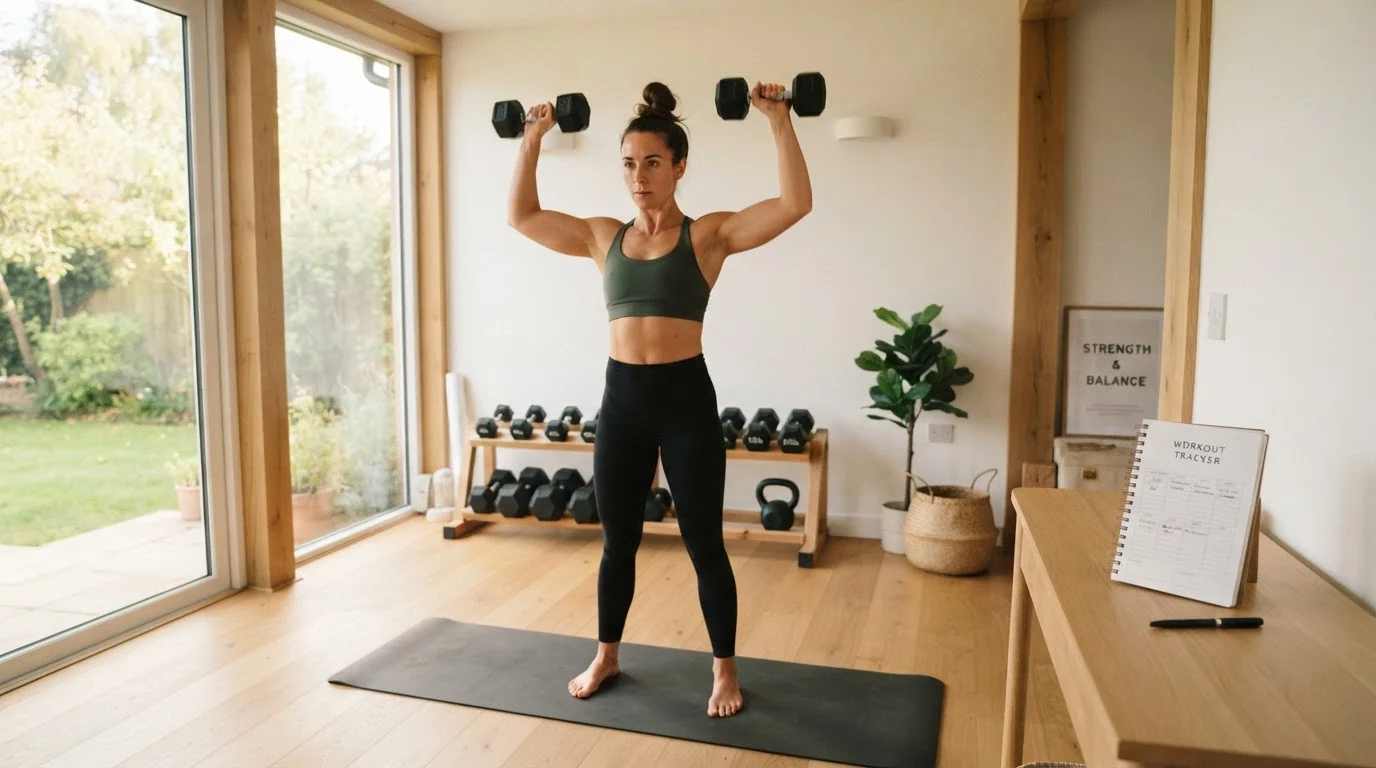
Photo: AskSpecialist.net editorial
Key Takeaways
- Progressive overload means gradually increasing training demands so your body keeps adapting.
- You can apply it by adjusting weight, reps, sets, rest time, or exercise difficulty.
- Tracking your workouts is essential for making intentional, measurable progress.
- Increases should be small and gradual - rushing overload is a common cause of injury.
- The principle works for bodyweight, free weight, and cardio training alike.
Why Your Body Stops Changing Without It
Your body is remarkably efficient at adapting to stress. When you begin a new exercise routine, the physical demands feel challenging - your muscles, cardiovascular system, and nervous system all work harder than they're used to. Over a matter of weeks, though, your body catches up. What once felt difficult starts to feel routine.
This adaptation is actually the goal of training - but it also creates a problem. Once your body has adjusted to a given workload, that same workload no longer provides enough stimulus to drive further change. You can maintain your current fitness level, but you won't build on it. This is the plateau that many exercisers hit after a few months.
Progressive overload is the solution. By systematically increasing the challenge - even in small increments - you give your body a reason to keep adapting. The adaptation cycle restarts, and progress continues.
~4-8 weeks
Time before initial fitness adaptations plateau
Exercise physiology research consistently shows that early strength and endurance gains - often called 'newbie gains' - tend to level off within roughly four to eight weeks without progressive challenge.
2-5%
Recommended weekly training volume increase
Sports medicine guidelines generally suggest limiting week-to-week increases in training load to around two to five percent to reduce overuse injury risk, a concept also called the '10 percent rule' in endurance sports.
The Variables You Can Actually Control
One of the most common misconceptions about progressive overload is that it means adding weight every single session. In practice, there are several variables you can manipulate, and cycling through them is often smarter than fixating on load alone:
- Load (weight): The most familiar form - adding more resistance when your current weight feels manageable across multiple sessions.
- Repetitions: Doing more reps with the same weight. If you're performing three sets of eight and it feels solid, try three sets of ten before adding weight.
- Sets: Adding an extra set increases total training volume without changing weight or reps.
- Rest intervals: Shortening the time between sets makes your cardiovascular and muscular systems work harder under the same load.
- Tempo: Slowing the lowering phase of a movement (the eccentric phase) increases time under tension, intensifying the stimulus without adding any weight.
- Exercise complexity: Progressing from an easier to a harder variation - for example, moving from a knee push-up to a standard push-up to a deficit push-up - is a well-established overload strategy in bodyweight training.
Start Smaller Than You Think You Need To
How to Track and Apply It Without a Trainer
The single most practical tool for self-directed progressive overload is a workout log. Without recording what you did last session - weight, reps, sets, and how it felt - you're relying on memory and guesswork. A simple notebook or a free phone app works well.
A straightforward approach for beginners is to pick a rep range (for example, 8-12 reps per set) and stay at the same weight until you can comfortably complete the top of that range with good form across two to three consecutive workouts. At that point, increase the load slightly - often 2.5 to 5 pounds for upper body movements, a little more for lower body - and work back up through the rep range again.
For those just beginning resistance exercise, it's worth reading a foundational resource like this guide to resistance training for beginners before building a progression plan.
If progress stalls despite consistent effort, that's a signal worth paying attention to. Fatigue, poor sleep, under-eating, or programming errors can all interfere. The article on signs your routine needs adjusting covers this in more detail.
This article is for general informational purposes only and is not a substitute for personalized advice from a qualified fitness professional or healthcare provider. Always consult a professional before beginning or significantly changing an exercise program, especially if you have existing health conditions or injuries.
Frequently Asked Questions
The content on this site is provided for informational purposes only and should not be considered a substitute for professional advice. While we strive to provide accurate and up-to-date information, we make no guarantees regarding its completeness or accuracy. Always consult a qualified professional for advice specific to your circumstances before making any decisions.