
How Cooking Methods Change the Nutritional Value of Food

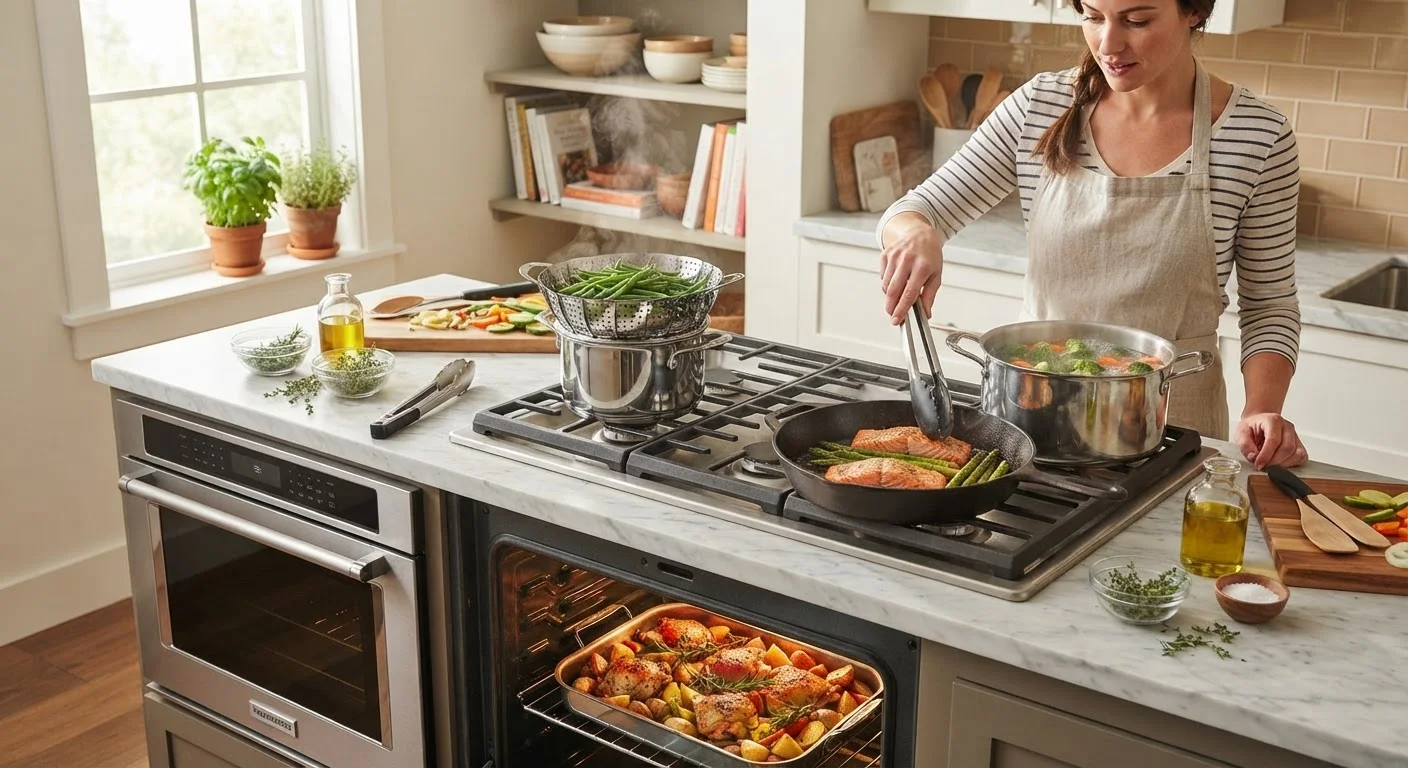
Photo: AskSpecialist.net editorial
Key Takeaways
- Boiling leaches water-soluble vitamins like C and B vitamins into the cooking water.
- Steaming preserves more nutrients than boiling because food has less contact with water.
- Roasting and frying can create beneficial browning reactions but may degrade heat-sensitive vitamins.
- Cooking actually increases the bioavailability of certain nutrients, like lycopene in tomatoes.
- No single cooking method is perfect - variety in your cooking approach supports overall nutrition.
- Using cooking liquids (e.g., in soups or stews) recaptures nutrients lost from vegetables.
Why Heat Changes What's in Your Food
Every time you apply heat to food, a series of chemical changes unfolds. Proteins unfold and restructure. Starches gelatinize. Fats render. And vitamins - depending on their chemistry - either survive, degrade, or become easier for your body to use.
Nutrients generally fall into two vulnerability categories. Water-soluble vitamins - vitamin C and the B vitamins - are the most susceptible to heat and water exposure. Fat-soluble vitamins - A, D, E, and K - are more stable under heat but can be lost if cooking fat is discarded. Minerals are generally resilient to heat but can leach into water. Understanding this framework helps explain why different cooking methods have such varied effects.
Raw Isn't Always Superior
Boiling, Steaming, and Water-Based Methods
Boiling is one of the most common cooking methods in American kitchens - and one of the most nutrient-depleting for vegetables. Studies have found that boiling can reduce vitamin C content in vegetables by 50% or more, with B vitamins seeing comparable losses. The nutrients don't disappear; they migrate into the cooking water. This is why soups and stews, which retain the liquid, are nutritionally friendlier than draining and discarding boiling water.
Steaming significantly limits this loss. Because vegetables are suspended above water rather than submerged, far fewer water-soluble vitamins leach out. Research comparing steaming to boiling consistently finds steaming retains more vitamin C, folate, and potassium in common vegetables like broccoli and spinach.
Pressure cooking, which uses steam at higher pressure, can further reduce cooking times - and shorter exposure to heat generally means less nutrient degradation.
50%+
Vitamin C loss from boiling vegetables
Research published in peer-reviewed nutrition journals has found boiling can reduce vitamin C in vegetables by more than half compared to raw.
~25%
Vitamin C retained better with steaming vs. boiling
Studies comparing steaming and boiling consistently find steaming retains significantly more heat-sensitive vitamins in common vegetables.
3x
Increase in lycopene bioavailability after cooking tomatoes
Research has shown that cooking tomatoes - particularly with a small amount of fat - can increase lycopene absorption substantially compared to raw consumption.
Roasting, Baking, and Dry Heat
Roasting and baking use dry heat without added water, which helps retain many minerals and fat-soluble nutrients. However, the higher temperatures involved - typically 375°F to 450°F - do degrade some heat-sensitive vitamins, particularly vitamin C and certain B vitamins.
On the positive side, dry heat triggers the Maillard reaction, a chemical process between amino acids and sugars that creates the appealing browned surface on roasted vegetables and meats. This doesn't significantly reduce protein nutritional value. More importantly, roasting tomatoes and other lycopene-rich vegetables actually increases lycopene bioavailability - your body can absorb more of this antioxidant from cooked tomatoes than raw ones.
Roasting is also relatively oil-efficient, meaning the added fat can help your body absorb fat-soluble vitamins without dramatically increasing calorie load, provided portions are reasonable.
Frying, Sautéing, and Fat-Based Methods
Frying is often framed as nutritionally problematic, and high-temperature deep frying does come with real trade-offs: heat-sensitive vitamins degrade rapidly, and food absorbs varying amounts of oil. However, cooking with fat isn't inherently detrimental to nutrition. Sautéing vegetables in a small amount of olive oil, for example, has been shown to increase the absorption of fat-soluble vitamins and carotenoids like beta-carotene and lutein.
The key variables are temperature, time, and the type and amount of fat used. Quick sautéing at moderate heat preserves more nutrients than prolonged deep frying at very high temperatures. The choice of oil also matters: oils with higher smoke points are more stable at higher temperatures and produce fewer potentially harmful compounds when heated.
Quick Tips for Preserving Nutrients While Cooking
The Case for Cooking Variety
No single cooking method maximizes every nutrient. A well-rounded approach - steaming some vegetables, roasting others, eating some foods raw, and occasionally using quick stir-frying - naturally diversifies your nutrient intake. This mirrors what nutrition research consistently supports: dietary patterns matter more than individual food choices or single cooking decisions.
One practical takeaway: don't discard cooking liquids unnecessarily. The water from boiled or blanched vegetables retains B vitamins and minerals; adding it to soups, grains, or sauces recaptures nutrition that would otherwise go down the drain.
Cooking is also not purely about nutrients in isolation. The way you prepare food affects digestibility, food safety (cooking eliminates many pathogens), and even how satisfying a meal feels - all of which factor into your overall health. Just as heat affects food, it similarly transforms other materials - the concept of structural change through heat applies in surprising contexts, like what heat styling does to hair over time.
This article is for general informational purposes only and is not a substitute for personalized nutrition or medical advice. Consult a registered dietitian or qualified healthcare professional for guidance tailored to your health needs.
Frequently Asked Questions
The content on this site is provided for informational purposes only and should not be considered a substitute for professional advice. While we strive to provide accurate and up-to-date information, we make no guarantees regarding its completeness or accuracy. Always consult a qualified professional for advice specific to your circumstances before making any decisions.