
The Full Picture on Heat Styling: What It Does to Your Strands Over Time

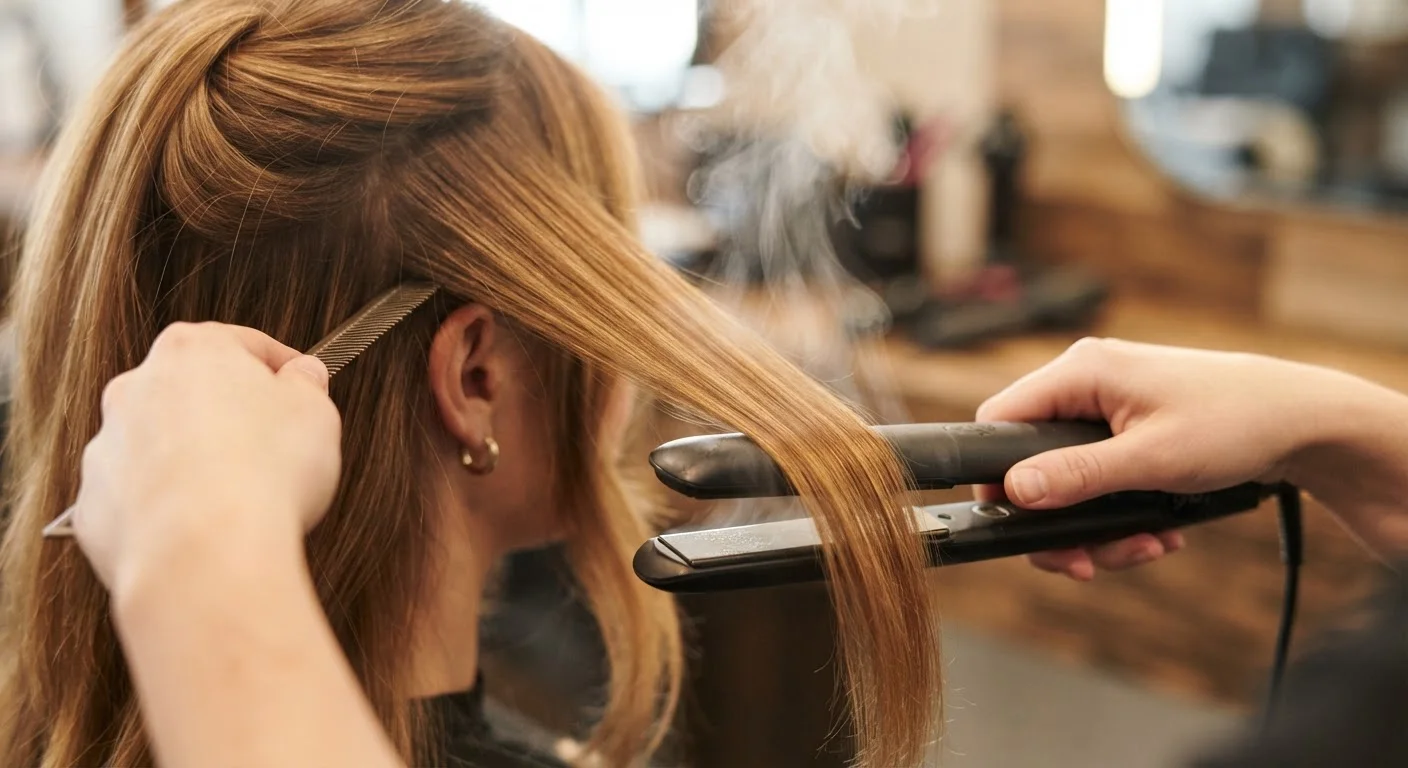
Photo: AskSpecialist.net editorial
Key Takeaways
- Heat styling affects the internal protein structure of hair, not just its surface moisture.
- Damage accumulates gradually - a single session rarely causes visible harm, but repetition does.
- High porosity hair and chemically treated hair are especially vulnerable to heat exposure.
- Heat protectants reduce - but do not fully eliminate - thermal stress on the strand.
- Some heat-related changes are reversible with conditioning; true structural damage is permanent.
- Lowering tool temperature and reducing frequency are the most effective protective strategies.
What Heat Actually Does Inside the Hair Shaft
Each strand of hair is made up of three layers: the outer cuticle (overlapping scales that protect the strand), the cortex (the thick inner layer containing keratin proteins and bonds that determine strength and shape), and for thicker strands, the medulla at the center. Heat styling tools act on all three.
When heat is applied, moisture inside the shaft rapidly vaporizes. The cuticle scales lift, making the strand temporarily more porous. More significantly, sustained high temperatures begin to weaken the hydrogen bonds within the cortex - the bonds responsible for holding your hair's natural wave or curl pattern. This is the mechanism behind straightening: you are temporarily disrupting these bonds and resetting them in a new shape as the hair cools.
Repeated disruption without adequate recovery time prevents those bonds from fully re-forming. Over time, the cortex becomes structurally compromised, and the cuticle - once lifted repeatedly - begins to crack and erode rather than lying flat. This is when you start to notice changes you cannot condition away: persistent frizz, reduced elasticity, a rough or gummy texture when wet.
Understanding your hair's baseline properties matters here. Porosity, elasticity, and density each influence how quickly heat damage accumulates. High-porosity hair, which already has gaps in the cuticle layer, absorbs heat stress faster than low-porosity hair with tightly closed scales.
The Difference Between Temporary Stress and Permanent Damage
Not all heat-related changes are permanent, and distinguishing between them helps you respond appropriately rather than overreacting to a single bad styling session.
Temporary effects include surface dryness, mild frizz, and slight cuticle lifting. These can be addressed with a moisturizing conditioner, a light protein treatment, or a proper deep conditioning session. If your hair returns to its normal texture and behavior within a wash or two, the stress was largely superficial.
Permanent damage occurs when the keratin proteins in the cortex have been degraded or when the cuticle has been so severely eroded that it no longer protects the interior of the strand. Signs include: hair that has permanently lost its natural curl or wave pattern, strands that stretch and do not spring back (a sign of elasticity loss), and hair that feels gummy or mushy when wet. These changes cannot be reversed by any topical treatment - that portion of the strand must be cut away as new growth replaces it.
Chemically Treated Hair Needs Extra Caution
Chemically processed hair - whether relaxed, permed, colored, or bleached - has already undergone structural changes that reduce its thermal tolerance. If your hair has been chemically treated, using lower temperatures and increasing the interval between heat styling sessions is especially important. Consult a licensed stylist for guidance specific to your chemical service history.
How Cumulative Damage Builds Over Time
One of the most misunderstood aspects of heat damage is that it is rarely the result of a single session. Instead, it compounds. Each time you apply heat without adequate recovery - meaning sufficient moisture, protein replenishment, and rest from manipulation - you are working with a slightly weaker strand than before.
~150°C
Temperature at which keratin protein begins to degrade
Research in hair science generally identifies approximately 150°C (302°F) as the threshold where thermal degradation of hair proteins begins, though exact values vary by hair type and condition.
3 layers
Structural layers in each hair strand
The cuticle, cortex, and medulla each respond differently to heat - the cortex, containing keratin bonds, is where the most consequential and permanent changes occur.
~6 inches/year
Average rate of human hair growth
Hair grows roughly 6 inches per year on average, meaning heavily heat-damaged sections take one to several years to grow out and be replaced by undamaged strands.
Think of it as a material stress test. Hair can withstand a certain number of thermal cycles before its structural integrity deteriorates noticeably. The variables that determine that threshold include: your starting hair health, the temperature you use, the frequency of styling, whether you use a protectant, and whether you address dryness between sessions.
Seasonal factors also play a role. Winter conditions and summer humidity can compromise the hair's moisture balance before you even pick up a tool, meaning your starting point each session is already stressed. Paying attention to these patterns helps you adjust frequency and prep accordingly.
Protective styles are one way some people reduce cumulative heat exposure, though they carry their own considerations. Protective styling done well can meaningfully reduce the number of heat sessions your hair undergoes over months and years.
Practical Steps to Reduce Heat Damage Going Forward
Reducing heat damage does not require abandoning your tools entirely. It requires being deliberate about how and when you use them.
- Lower the temperature before increasing it. Start at a lower setting than you think you need. Many styling goals are achievable at 300°F or below, particularly for fine or medium hair.
- Apply a heat protectant consistently. Use it on hair that is fully dry or nearly dry - applying it to soaking-wet hair dilutes its effectiveness and can cause the steam-cooking effect that accelerates interior damage.
- Reduce passes. Each additional pass of a flat iron or curling wand over the same section adds compounding stress. Slow, single passes are preferable to multiple fast ones.
- Prioritize moisture and protein balance between sessions. Hair that enters a heat session adequately conditioned tolerates thermal stress better than depleted hair. Incorporate regular conditioning into your routine and monitor how your hair responds.
- Check in on your hair's condition regularly. A simple weekly audit of elasticity, texture, and breakage can catch early signs of damage before they become difficult to address.
Many misconceptions about what heat styling does - and doesn't do - persist in popular advice. For a broader look at what the evidence actually supports, common myths corrected by dermatologists and trichologists is worth reviewing alongside this material.
This article is for general informational and educational purposes only and does not constitute medical or dermatological advice. If you have concerns about hair or scalp health, consult a licensed dermatologist or trichologist.
Frequently Asked Questions
The content on this site is provided for informational purposes only and should not be considered a substitute for professional advice. While we strive to provide accurate and up-to-date information, we make no guarantees regarding its completeness or accuracy. Always consult a qualified professional for advice specific to your circumstances before making any decisions.