
Plant-Based Protein vs. Animal Protein: Similarities, Differences, and Trade-Offs

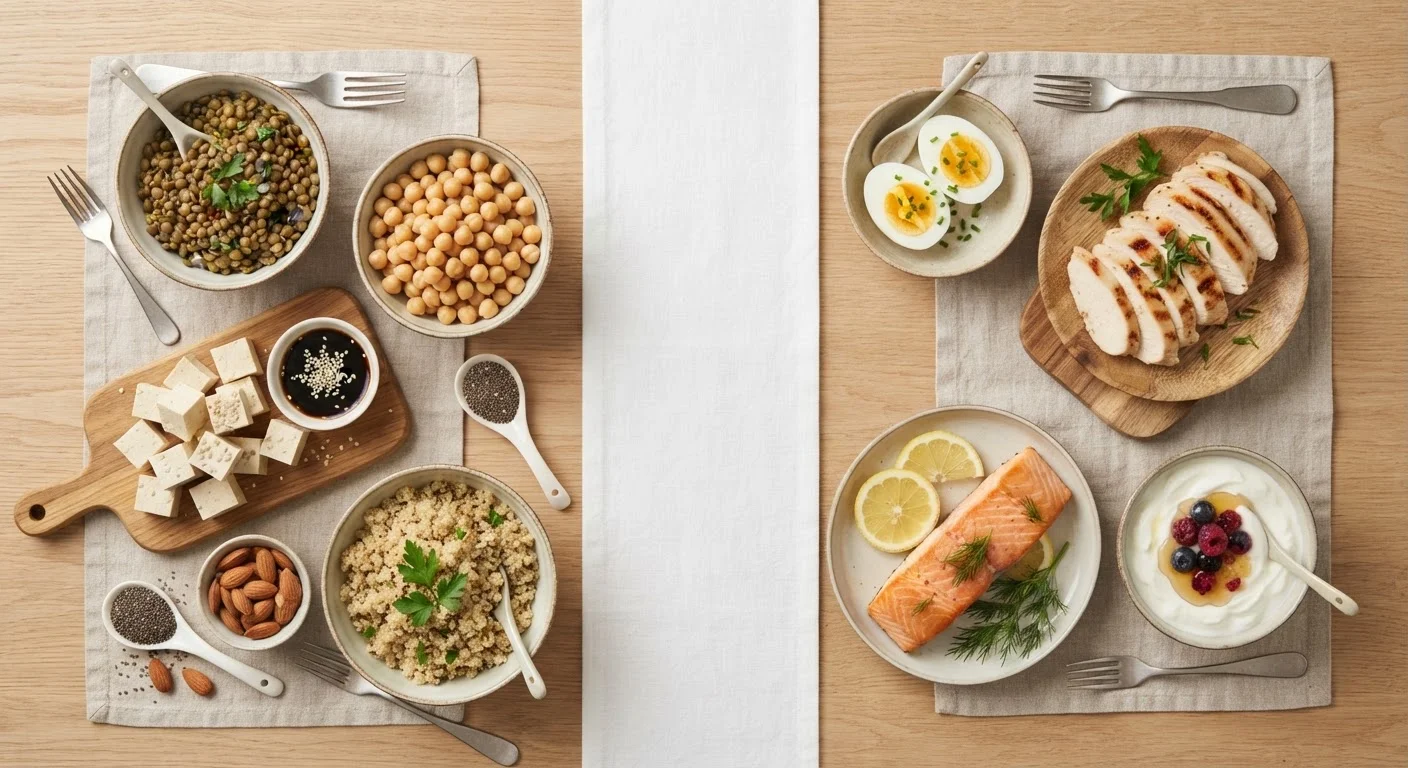
Photo: AskSpecialist.net editorial
Key Takeaways
- Animal proteins are generally 'complete,' containing all nine essential amino acids in adequate amounts.
- Most plant proteins are 'incomplete,' but combining different plant foods across the day fills the gaps.
- Bioavailability - how well the body absorbs and uses protein - is typically higher for animal sources.
- Both protein types fit within a healthy, balanced diet; the best choice depends on individual health context and food preferences.
- Nutrient co-packaged with protein matters: animal foods bring B12 and heme iron; plant foods bring fiber and phytonutrients.
What Makes a Protein 'Complete' or 'Incomplete'?
Proteins are built from amino acids - organic compounds the body uses to repair tissue, support immune function, and synthesize hormones. Of the 20 amino acids, nine are considered essential, meaning the body cannot make them and must obtain them from food.
Animal proteins - found in meat, poultry, fish, eggs, and dairy - contain all nine essential amino acids in proportions that closely match human needs. This earns them the label complete proteins. Most plant proteins, by contrast, are low in at least one essential amino acid, making them incomplete on their own. Lysine tends to be limited in grains; methionine is low in legumes.
The good news: you don't need to eat a complete protein at every single meal. Eating a varied diet across the day - combining legumes, grains, nuts, and vegetables - naturally supplies all essential amino acids. Decades of nutrition research support this approach for people who choose plant-forward eating.
Bioavailability: How Much Protein Does Your Body Actually Use?
Having protein in food is one thing; how efficiently the body digests and absorbs it is another. Bioavailability refers to the proportion of a nutrient that reaches the body's tissues in a usable form.
Animal proteins score high on standardized measures like the Digestible Indispensable Amino Acid Score (DIAAS), which the Food and Agriculture Organization of the United Nations uses as a benchmark. Plant proteins generally score lower - partly because plant cell walls and naturally occurring compounds like phytates and tannins can reduce digestibility.
Cooking, soaking, fermenting, and sprouting plant foods can meaningfully improve their protein bioavailability. Tofu, for example, is more digestible than whole soybeans because processing breaks down some of those inhibiting compounds.
| Plant-Based Protein | Animal Protein | |
|---|---|---|
| Amino acid completeness | Usually incomplete (varied combinations needed) | Complete in a single source |
| Bioavailability | Moderate; improved by cooking/processing | Generally high |
| Fiber content | High (in whole-food sources) | None |
| Key micronutrients | Iron (non-heme), zinc, phytonutrients | B12, heme iron, zinc, omega-3s (fish) |
| Saturated fat | Generally low | Varies; higher in red/processed meats |
| Typical cost | Often lower (legumes, tofu) | Varies widely; some sources are expensive |
This gap in bioavailability matters most for people with elevated protein needs - older adults preserving muscle mass, pregnant individuals, or those recovering from illness. Consulting a registered dietitian is the most reliable way to assess whether your current protein intake meets your personal needs.
The Nutrients That Come Along for the Ride
Protein rarely travels alone. The other nutrients packaged with a protein source can meaningfully influence overall diet quality.
Animal protein sources supply vitamin B12 (found almost exclusively in animal foods), heme iron (absorbed more efficiently than plant-based non-heme iron), zinc, and omega-3 fatty acids - particularly in fatty fish like salmon and sardines. Some sources, however, also deliver saturated fat and dietary cholesterol, which is relevant context for people managing cardiovascular risk factors.
Plant protein sources bring fiber, which most Americans consume well below recommended amounts, along with phytonutrients - plant compounds associated with reduced inflammation and chronic disease risk in observational research. They are also generally lower in saturated fat.
This nutrient context is a key reason nutrition scientists often look at dietary patterns rather than single nutrients. Whole food sources of protein, whether plant or animal, tend to outperform heavily processed alternatives regardless of category.
Variety Is Your Best Tool
Building Your Plate: Practical Considerations
For everyday Americans, the most useful frame is not "which type of protein is better" but rather "how does protein fit into my overall eating pattern?" Building a balanced plate starts with variety - and protein is one piece of that puzzle.
- Mixing sources is a sound strategy for omnivores: rotating between chicken, fish, eggs, lentils, beans, and tofu across the week captures the strengths of both categories.
- Plant-forward eaters benefit from pairing complementary protein sources - rice and beans, hummus and whole-grain pita - and may want to pay attention to B12 and iron intake, potentially with guidance from a healthcare provider.
- Cost and access are real factors: dried legumes and canned beans are among the most affordable protein sources available, while some animal proteins (particularly fatty fish) can be expensive or less accessible depending on location.
Individual health conditions, cultural food traditions, and personal values all play legitimate roles in these choices. There is no single correct protein strategy that applies to every person.
This article is for general informational and educational purposes only and is not a substitute for professional medical or nutritional advice. Speak with a qualified healthcare provider or registered dietitian before making significant changes to your diet, especially if you have an underlying health condition.
The content on this site is provided for informational purposes only and should not be considered a substitute for professional advice. While we strive to provide accurate and up-to-date information, we make no guarantees regarding its completeness or accuracy. Always consult a qualified professional for advice specific to your circumstances before making any decisions.