
Whole Foods vs. Processed Foods: What the Difference Really Means for Your Diet

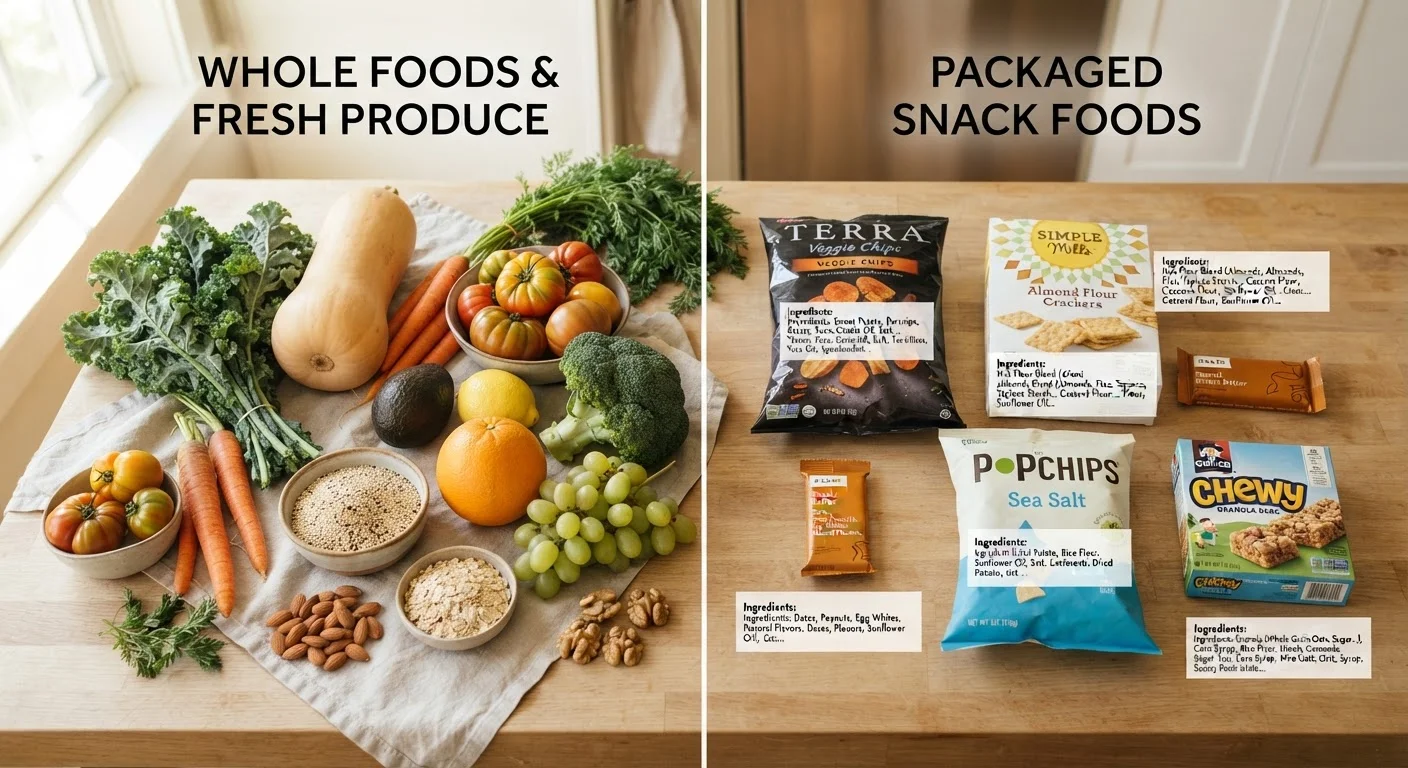
Photo: AskSpecialist.net editorial
Key Takeaways
- "Processed" covers a wide spectrum - canned tomatoes and cheese puffs are not nutritionally equivalent.
- Whole foods tend to offer more fiber, vitamins, and minerals with fewer additives.
- Ultra-processed foods, not all processed foods, are most consistently linked to poorer health outcomes in research.
- Practical factors like cost, time, and access make some processing a reasonable part of most American diets.
- Reading nutrition labels helps you evaluate processed foods more accurately than relying on packaging claims.
Defining the Terms: It's a Spectrum, Not a Binary
The phrase "whole foods" typically refers to foods eaten in or close to their natural state - think an apple, a handful of lentils, or a piece of salmon. Minimal transformation has occurred between harvest and your plate. "Processed foods," by contrast, describes anything that has been altered from its original form - a category so broad it spans plain frozen peas and heavily engineered snack cakes.
Nutrition researchers often use the NOVA classification system, developed by Brazilian researchers, to sort foods into four groups by degree of processing. Group 1 covers unprocessed or minimally processed foods (fresh vegetables, plain meats, eggs). Group 2 covers processed culinary ingredients like oils, flour, and salt. Group 3 includes processed foods - canned fish, aged cheese, cured meats. Group 4, ultra-processed foods, involves industrial formulations with many additives, preservatives, flavor enhancers, and little recognizable whole-food content.
The distinction matters because "processed" alone tells you very little. Canned chickpeas are processed. So is a brightly colored breakfast cereal engineered to taste like a dessert. Treating them as nutritionally equivalent is one of the most common misconceptions in everyday food thinking.
| Criterion | Whole Foods | Processed Foods |
|---|---|---|
| Definition | Eaten in or close to natural state | Altered from original form - varies widely |
| Fiber content | Generally higher | Often reduced, especially ultra-processed |
| Micronutrient density | Typically higher | Varies; some fortified, many depleted |
| Added sugars / sodium | Naturally occurring only | Often added during manufacturing |
| Shelf life | Usually shorter | Often extended via processing |
| Cost and accessibility | Can be higher; varies by region | Often lower cost and widely available |
| Preparation time | May require more prep | Generally quicker or ready-to-eat |
| Research-linked risk | Associated with better health outcomes | Ultra-processed linked to higher chronic disease risk |
What Research Actually Shows About Each
The nutritional advantages of whole foods are well-supported. Foods eaten close to their natural state tend to be richer in dietary fiber, micronutrients, and phytochemicals (naturally occurring plant compounds associated with various health benefits). Because they're less energy-dense relative to their volume, they may also support satiety more effectively.
The concern with ultra-processed foods - Group 4 in the NOVA framework - is backed by a growing body of observational research. Studies published in journals including The BMJ and JAMA Internal Medicine have associated high ultra-processed food consumption with elevated risks of cardiovascular disease, type 2 diabetes, and other chronic conditions. Importantly, these are associations from population-level data, not proof of direct causation in any individual case.
Moderately processed foods occupy a gray zone. Plain yogurt, canned tomatoes, frozen edamame, and whole-grain bread made with minimal ingredients all undergo processing - but they retain meaningful nutritional value and don't carry the same risk signals as ultra-processed products. Context, ingredients, and what the rest of a person's diet looks like all matter considerably.
~57%
Share of U.S. caloric intake from ultra-processed foods
A study published in BMJ Open estimated that ultra-processed foods account for roughly 57% of daily caloric intake among American adults.
10%+
Higher all-cause mortality association
A study in JAMA Internal Medicine found a greater than 10% higher risk of all-cause mortality associated with each 10-percentage-point increase in ultra-processed food consumption.
Practical Takeaways for Everyday American Eating
No realistic dietary pattern for most Americans consists entirely of whole foods. Cost, time, geography, and cultural eating habits all shape what ends up on the table. The goal isn't perfection - it's informed decision-making.
A few grounding principles help. First, when buying packaged or processed foods, scrutinize the ingredient list more than the front-of-package marketing. Our guide to reading a nutrition label without the guesswork walks through exactly what to look for. Second, look for shorter ingredient lists and recognize whole-food items at the top. Third, frozen and canned vegetables and legumes - while processed - are nutritionally solid choices, particularly when packed without excess sodium or added sugars.
Building meals that anchor around vegetables, legumes, whole grains, and quality proteins - whether plant-based or animal-derived - is a reasonable foundation. For a deeper look at protein trade-offs specifically, see our piece on plant-based vs. animal protein. From there, building a balanced plate offers simple, flexible meal-structuring principles that accommodate real-world eating. And if you're ready to put it into action at the store, grocery shopping with nutrition in mind provides a practical checklist.
The whole foods vs. processed foods conversation is ultimately about proportions and awareness - not rigid categories or guilt. Understanding where your food falls on the processing spectrum gives you a more accurate, useful lens than any blanket label.
This article is for general informational and educational purposes only and is not a substitute for professional medical or dietary advice. Consult a qualified healthcare provider or registered dietitian for guidance specific to your health needs.
The content on this site is provided for informational purposes only and should not be considered a substitute for professional advice. While we strive to provide accurate and up-to-date information, we make no guarantees regarding its completeness or accuracy. Always consult a qualified professional for advice specific to your circumstances before making any decisions.