
Buying a Home

How to Evaluate a Neighborhood Before You Buy

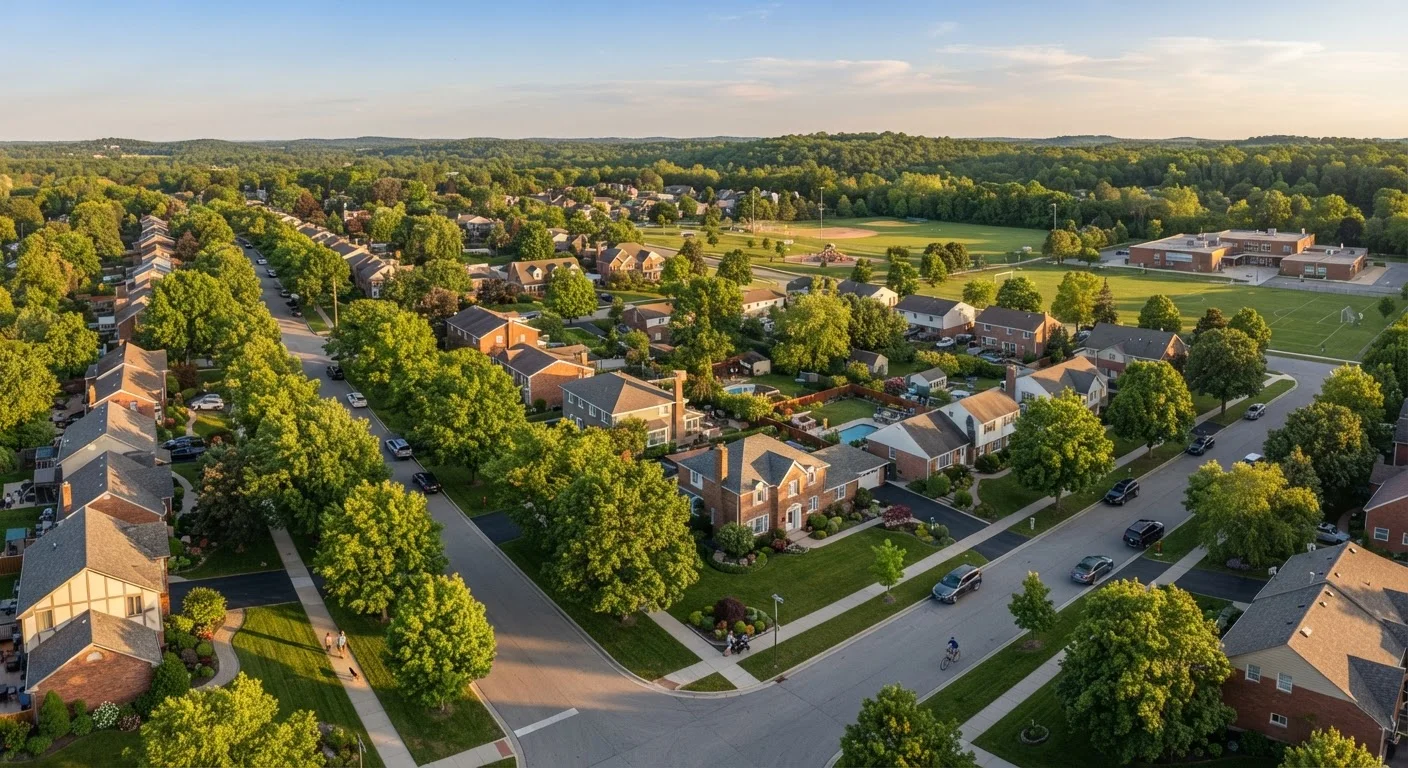
How to Evaluate a Neighborhood Before You Buy

Photo: AskSpecialist.net editorial

Location shapes daily life for years. Learn which factors—schools, walkability, infrastructure, trends—to research before committing.

Key Takeaways

  • School district quality affects resale value even for buyers without children.
  • Walkability scores, transit access, and commute times directly impact daily quality of life.
  • Local crime data, infrastructure age, and zoning trends signal a neighborhood's trajectory.
  • Visiting at different times of day reveals what online research cannot.
  • Market indicators like days-on-market and price trends reflect neighborhood demand.

Why the Neighborhood Matters as Much as the House

A house can be renovated. Its location cannot. Yet many buyers spend far more time scrutinizing countertops than the community surrounding them. A neighborhood determines your commute, your children's schools, your sense of safety, and — critically — how your investment holds its value over time. Before you tour a single property, establish clear criteria for the areas you're considering. The buyer readiness checklist is a useful starting point for getting your priorities in order first.

Location research isn't just a feel-good exercise. It's due diligence that protects one of the largest financial commitments most Americans ever make.

Key Factors to Research Before You Commit

Evaluating a neighborhood systematically means looking beyond curb appeal. Focus your research on the following dimensions:

1

Research school district performance using publicly available data, regardless of whether you have children.

School district ratings are one of the most consistent drivers of residential property values. Buyers without children often overlook this, but strong districts create steady demand that supports long-term appreciation and easier resale.
Example: A family moving to suburban Chicago uses the Illinois State Board of Education's public report cards to compare district performance across three ZIP codes before narrowing their search.
2

Check walkability, transit access, and commute times using mapping tools and public transit schedules.

Daily friction — long commutes, lack of walkable errands, limited transit — compounds over years of homeownership. Neighborhoods with strong transit scores and walkable amenities tend to hold value better as fuel costs and lifestyle preferences shift.
Example: A buyer in the Denver metro tests their realistic commute by driving the route on a weekday morning rather than relying on a mapping app's off-peak estimate.
3

Review local crime statistics through municipal police department reports or official city data portals.

Crime levels affect both quality of life and insurance costs. Official sources — rather than aggregator sites — offer the most accurate, granular data and often break down crime by type and trend over time.
Example: A buyer consults the city's police department dashboard to see whether property crime in a target neighborhood has been declining, flat, or rising over the past three years.
4

Examine infrastructure age, planned development, and zoning changes through local government planning records.

Aging water or sewer systems, nearby industrial rezoning, or large-scale development projects can significantly affect livability and future values. Planning departments are required to make most of this information public.
Example: A buyer discovers through the county planning commission's website that a vacant lot three blocks away is zoned for a mixed-use development, which factors into their offer decision.
5

Visit the neighborhood at multiple times of day and on different days of the week.

A neighborhood on a quiet Tuesday afternoon can look and feel very different on a Friday night or Saturday morning. Traffic patterns, noise levels, street activity, and parking availability are impossible to assess from online data alone.
Example: A buyer who toured a home on a weekday morning returns on a Saturday evening and notices a busy bar two blocks away generates significant foot traffic and noise — a dealbreaker they wouldn't have found otherwise.
6

Track local real estate metrics like days-on-market and price-per-square-foot trends in the target area.

These metrics reveal actual demand, not just listing prices. A neighborhood where homes sell quickly and at or above asking price indicates strong buyer interest; extended days-on-market can signal oversupply or buyer hesitation.
Example: Using publicly available MLS summary data provided by their agent, a buyer compares average days-on-market across three comparable neighborhoods and prioritizes the one showing consistent demand.

Once you've assessed these fundamentals, cross-reference them with broader market signals. The market indicators worth watching can help you understand whether a neighborhood is appreciating, stabilizing, or softening — context that shapes how much risk you're taking on.

Quick Steps You Can Take Right Now

Neighborhood research doesn't require a real estate license or special access. Much of the most valuable information is publicly available and free. Start with these concrete actions:

high Look up the neighborhood's school district on your state's Department of Education website and note the performance trend over three or more years.
medium Enter the property address into a walk score or transit score tool to gauge how car-dependent daily life would be.
high Visit the city or county planning department's website and search for any pending zoning changes or development applications within a half-mile radius.
high Drive the prospective commute route during your actual work-commute hours — not mid-day — to get a realistic time estimate.
medium Ask your real estate agent to pull a 12-month history of list price versus sale price and days-on-market for the target neighborhood.

A Note on Online Crime and Rating Tools

Third-party neighborhood rating and crime aggregator sites vary widely in data quality, update frequency, and methodology. For the most accurate picture, cross-reference any aggregator data with your city or county's official crime statistics portal. Municipal police departments and city open-data platforms are generally the most reliable primary sources.

Keep in mind that renovation choices inside the home also interact with location. Certain upgrades add resale value in high-demand neighborhoods but may not recoup costs in softer markets — a dynamic explored in depth in the piece on renovation decisions that affect resale value.

This article is for general informational and educational purposes only and does not constitute financial, legal, or real estate advice. Consult a licensed real estate professional for guidance specific to your situation.

Real Estate Editorial Team

AskSpecialist.net

Real Estate Editorial Team is the collective byline for our editorial team and contributor network. Articles published under this byline or an editorial pen name are researched, written, and reviewed according to our editorial standards for clarity, consistency, and independence before publication.

Buying a HomeRenting ExplainedMarket Basics
View author profile

The content on this site is provided for informational purposes only and should not be considered a substitute for professional advice. While we strive to provide accurate and up-to-date information, we make no guarantees regarding its completeness or accuracy. Always consult a qualified professional for advice specific to your circumstances before making any decisions.