
Renting vs. Buying a Home

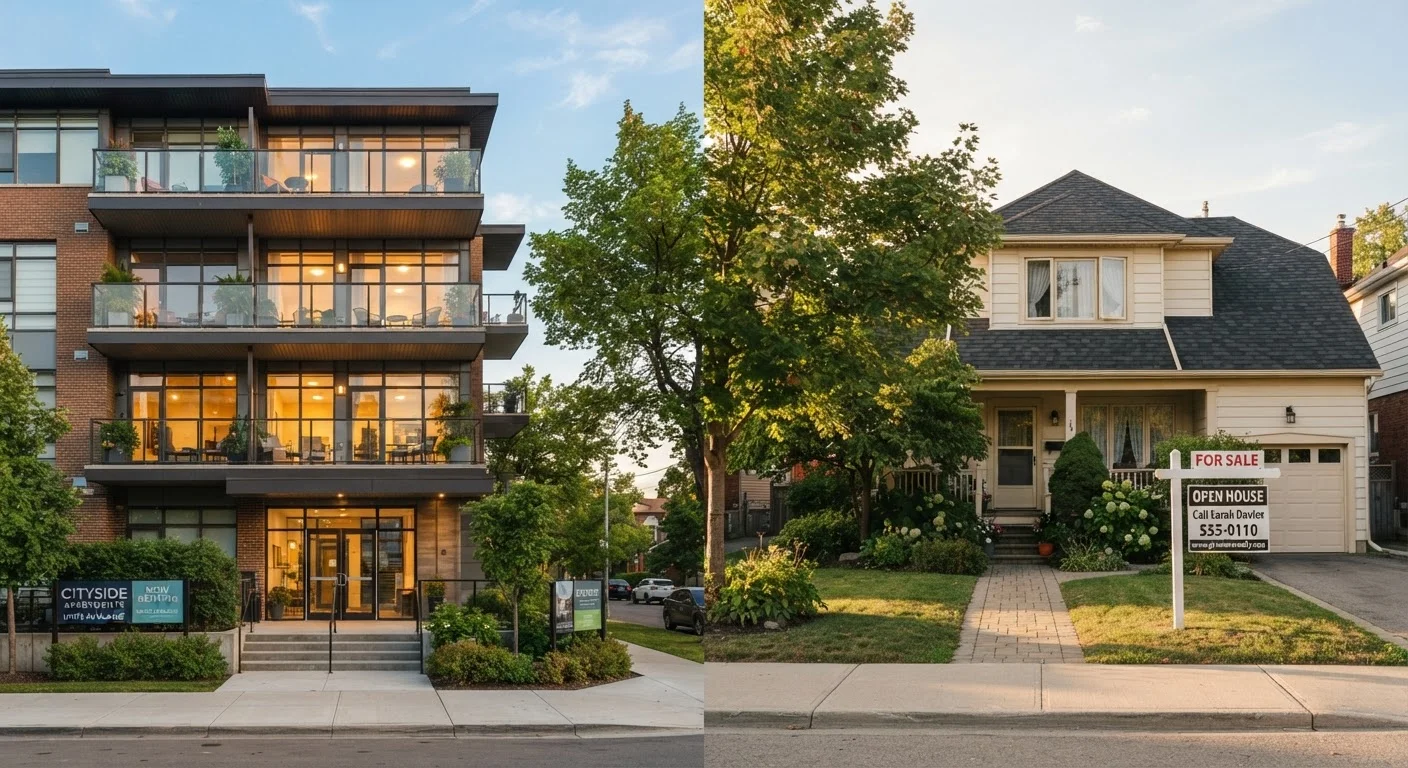
Photo: AskSpecialist.net editorial
Key Takeaways
- Neither renting nor buying is universally better - the right choice depends on your finances, timeline, and lifestyle.
- Buying builds equity over time but requires significant upfront capital and ongoing maintenance costs.
- Renting offers flexibility and lower initial costs but provides no equity accumulation.
- Your expected time in one location is one of the most important factors in the rent-vs-buy calculation.
- Local housing market conditions - not just personal preference - heavily influence which option makes financial sense.
The Financial Basics of Each Option
The rent-vs-buy comparison starts with money, though it rarely ends there. Renting typically requires a security deposit and first month's rent upfront - a far lower barrier than a home purchase, which commonly demands a down payment of 3% to 20% of the purchase price, plus closing costs that can add another 2% to 5%. For a $350,000 home, that means assembling anywhere from $17,500 to $87,500 before you get the keys.
Once you own, your monthly mortgage payment builds equity - the portion of the home's value you actually own outright - while a portion covers interest to the lender. Renters, by contrast, pay for housing without accumulating that asset. However, renting frees up capital that could be invested elsewhere, and it keeps you insulated from sudden repair bills. When an HVAC system fails or a roof needs replacing, those costs fall to the landlord - not you.
For a fuller picture of what renting actually costs month to month, see the true cost of renting an apartment beyond base rent.
| Renting | Buying | |
|---|---|---|
| Upfront cost | Low (deposit + first month) | High (down payment + closing costs) |
| Monthly equity building | None | Yes, through mortgage payments |
| Flexibility to relocate | High (lease-dependent) | Low (transaction costs to exit) |
| Maintenance responsibility | Landlord handles most repairs | Owner responsible for all costs |
| Customization freedom | Limited by lease terms | Full control as owner |
| Exposure to market risk | Minimal | Significant (values can fall) |
| Best time horizon | Short to medium term | Five or more years |
How Long You Plan to Stay Changes Everything
Time horizon is arguably the single most decisive factor in the rent-vs-buy equation. The costs of purchasing and selling a home - agent commissions, closing costs, moving expenses - are substantial. Spreading those costs across a longer ownership period makes buying progressively more financially efficient. Many housing economists and financial planners suggest that buyers who move within two to three years rarely recoup transaction costs through appreciation alone.
If your job, relationships, or personal plans make it likely you'll relocate within a few years, renting preserves optionality without locking in those fixed transaction costs. If you expect to put down roots for five years or more, ownership has historically offered a more favorable financial outcome in most U.S. markets - though past performance does not guarantee future results.
Run the Numbers for Your Specific Market
Market Conditions and the Price-to-Rent Ratio
Local market dynamics can tilt the math significantly. One useful benchmark is the price-to-rent ratio - calculated by dividing a home's purchase price by its annual rent equivalent. A ratio below 15 typically suggests buying is more financially competitive; ratios above 20 suggest renting may be more cost-effective in that market. In many high-cost metropolitan areas, ratios have pushed well above 25, meaning renters can often live in equivalent housing for considerably less each month than a mortgage on the same property would cost.
Interest rates also matter. Higher mortgage rates increase monthly payments substantially, which shifts the comparison toward renting in the short term. Always model the actual monthly numbers for your specific situation rather than relying on general rules.
For those leaning toward ownership, understanding your mortgage options is essential. Our overview of fixed-rate vs. adjustable-rate mortgages explains how each structure affects your long-term costs.
Lifestyle, Stability, and What Ownership Actually Demands
Beyond the numbers, homeownership changes your daily life in concrete ways. Maintenance is your responsibility - the National Association of Realtors has historically suggested budgeting 1% to 2% of a home's value annually for upkeep and repairs. Ownership also ties you to a neighborhood, a property tax bill, and a local school district in ways renting does not.
Renting, on the other hand, can feel limiting. You may face restrictions on pets, renovations, or even décor. Lease renewals can come with rent increases, and landlords can choose not to renew a lease. For renters navigating these realities, the Renting Explained hub covers common questions about leases, rights, and tenant protections.
For those ready to move forward with a purchase, buying a home as a first-timer offers a comprehensive walkthrough of every stage of the process. And if you want a deeper look at ownership's honest trade-offs - beyond the equity argument - see owning a home: the honest trade-offs.
The content on this site is provided for informational purposes only and should not be considered a substitute for professional advice. While we strive to provide accurate and up-to-date information, we make no guarantees regarding its completeness or accuracy. Always consult a qualified professional for advice specific to your circumstances before making any decisions.