
What a Lease Agreement Actually Says - and What to Watch For

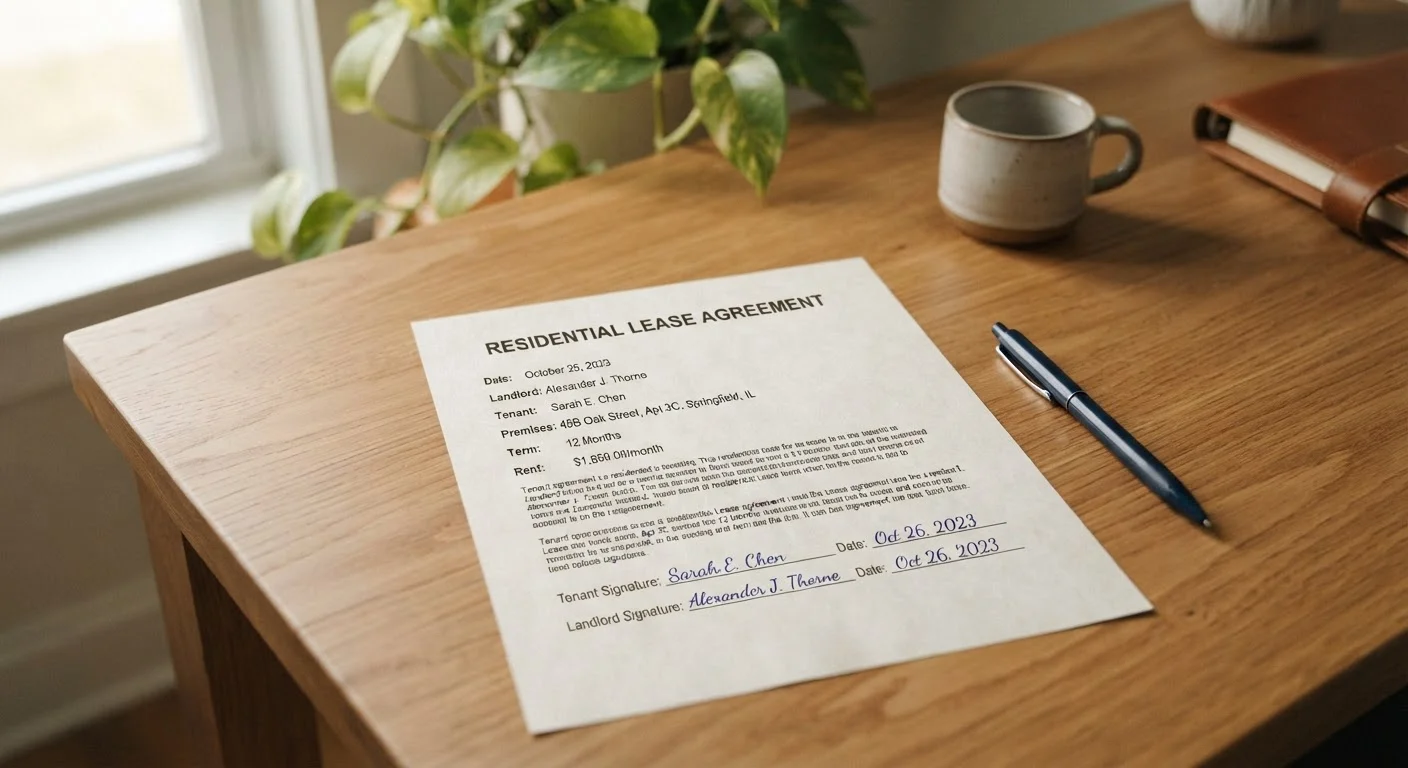
Photo: AskSpecialist.net editorial
Key Takeaways
- A lease is a legal contract - every clause carries weight and can be enforced against you.
- Rent amount, due date, late fees, and grace periods are among the most critical terms to verify.
- Security deposit limits and return timelines are set by state law, not just landlord preference.
- Renewal and early-termination clauses can have significant financial consequences if overlooked.
- Some lease clauses are unenforceable under state law, even when they appear in writing.
The Core Financial Terms You Must Verify
The financial provisions in a lease are where tenants most often encounter unpleasant surprises. Before you sign, confirm the exact monthly rent, when it is due (typically the first of the month), and whether there is a grace period before a late fee applies. Late fees should be clearly stated - a flat dollar amount or a percentage of monthly rent. Some states cap what landlords can charge, so knowing your local rules matters.
Security deposits deserve particular attention. State law - not the landlord - dictates how much can be collected (commonly one to two months' rent) and how long after move-out the landlord has to return it, along with an itemized list of any deductions. Keep a dated, photographic record of the unit's condition at move-in to protect your deposit at the end of your tenancy.
~52%
U.S. renters who did not fully read their lease
A survey by Apartment List found that roughly half of renters admitted to not reading their lease agreement in full before signing.
30-60 days
Typical notice required before lease end
Most standard residential leases require tenants to provide written notice 30 to 60 days before the lease term expires to avoid automatic renewal.
21 days
Common security deposit return window
Many states give landlords 14 to 30 days after a tenant vacates to return the security deposit with an itemized deduction statement; 21 days is a common statutory deadline.
Lease Length, Renewal, and Early-Termination Clauses
Most residential leases run for 12 months, but the provisions governing what happens at the end of that period vary widely. Some leases automatically convert to a month-to-month arrangement once the fixed term expires; others require you to sign a new lease or face automatic renewal for another full year. Read this section carefully - missing a notice deadline (often 30 to 60 days before the end of the term) can obligate you to another year you didn't plan on.
Early-termination clauses outline what happens if you need to leave before the lease ends. Common penalties include forfeiting the security deposit, paying a set number of months' rent as a fee, or remaining liable for rent until a replacement tenant is found. If your state requires landlords to mitigate damages by actively seeking a new renter, the lease's penalty clause may be more limited in practice than it appears on paper. See our comparison of month-to-month and fixed-term leases for more on choosing the right structure from the start.
Rules, Responsibilities, and the Fine Print That Trips Renters Up
Beyond money and timing, leases define how you can use the property. Pet policies, subletting rights, guest policies, and rules about alterations (painting walls, mounting hardware, installing appliances) are standard inclusions. Violating these clauses - even unintentionally - can give a landlord grounds to pursue damages or issue a notice to cure.
Maintenance responsibilities are another frequent source of conflict. Most leases require tenants to keep the unit clean and to promptly report damage. Landlords are generally responsible for maintaining habitable conditions under state law, regardless of what the lease says - a clause stating otherwise is often unenforceable. For a deeper look at commonly misread provisions, including landlord entry rights and noise rules, see what lease fine print usually means in plain English.
Ask Questions Before You Sign
If you're signing a lease with roommates, pay close attention to whether the lease is joint (all tenants share full liability) or individual. Understanding roommate lease structures can prevent serious legal and financial exposure if a co-tenant stops paying or damages the property.
Frequently Asked Questions
The content on this site is provided for informational purposes only and should not be considered a substitute for professional advice. While we strive to provide accurate and up-to-date information, we make no guarantees regarding its completeness or accuracy. Always consult a qualified professional for advice specific to your circumstances before making any decisions.