
Mexico's Pacific Coast vs. Caribbean Coast: Two Very Different Beach Experiences

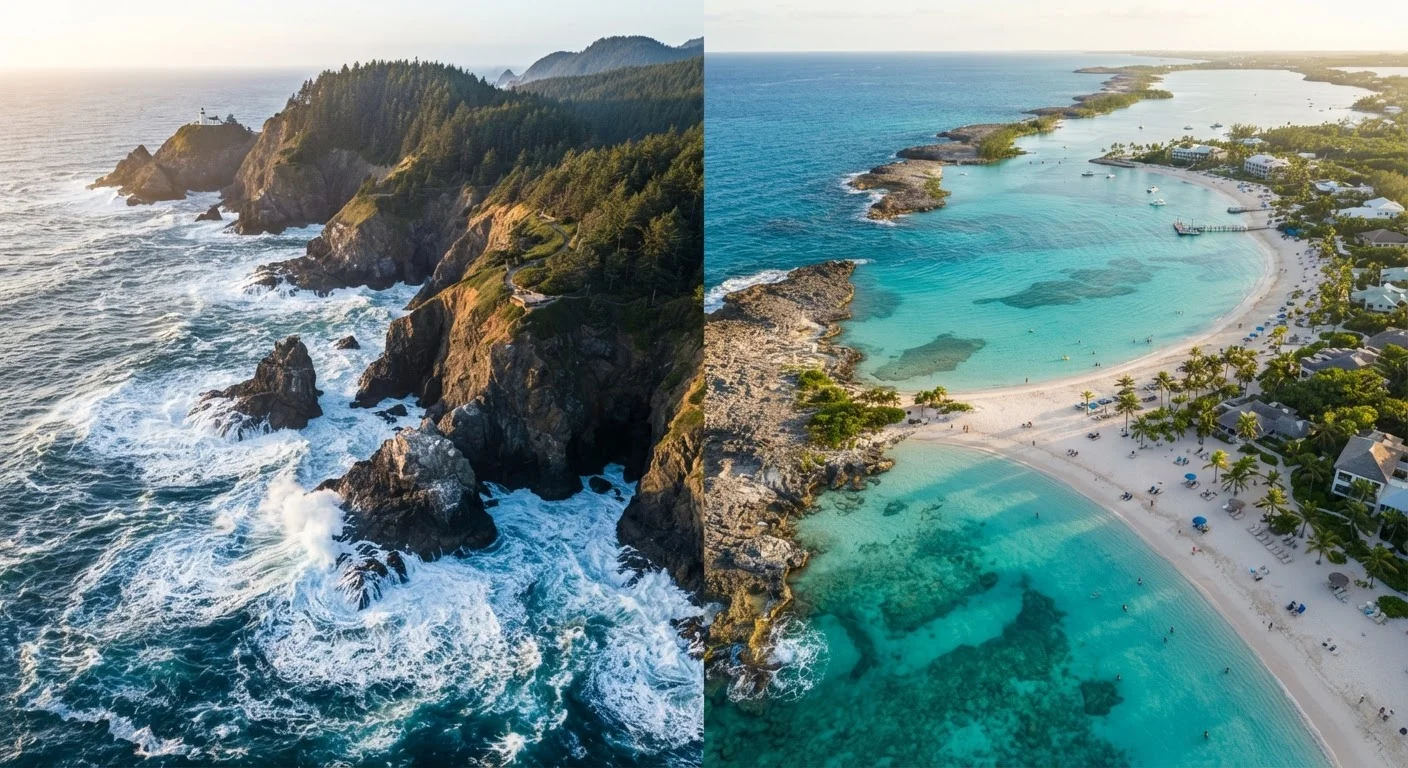
Photo: AskSpecialist.net editorial
Key Takeaways
- The Pacific Coast offers dramatic scenery and surf-ready waves; the Caribbean Coast delivers calm, clear water ideal for swimming and snorkeling.
- Cancún and the Riviera Maya have more direct U.S. flight options and a larger concentration of all-inclusive resorts.
- Puerto Vallarta sits within a bay, giving it calmer Pacific water than most of Mexico's western shoreline.
- Hurricane season (June-November) affects the Caribbean more directly than the Pacific Coast.
- Both coastlines have budget and mid-range accommodation options, but pricing patterns and travel infrastructure differ meaningfully.
- Your choice should hinge on water conditions, travel style, and how you want to spend your time on the ground.
Water Conditions: The Single Biggest Difference
Before anything else, consider the water itself. The Caribbean Coast - stretching from Cancún south through Playa del Carmen and Tulum - sits behind the Mesoamerican Barrier Reef, the second-largest coral reef system in the world. That reef breaks incoming swells and keeps nearshore water unusually flat, warm, and transparent. Visibility frequently exceeds 60 feet, which is why snorkeling here requires almost no experience to enjoy.
The Pacific Coast tells a different story. Open-ocean swells roll in without obstruction, creating the wave energy that surfers travel specifically to find. Beaches around Sayulita and Punta Mita are popular surf breaks for exactly this reason. Puerto Vallarta itself sits inside Banderas Bay - one of the largest bays in North America - so its immediate beachfront is calmer than most Pacific shores, but it still carries moderate chop compared to the Caribbean's flat water.
If your benchmark for a good beach day is floating peacefully in the water with your family, the Caribbean coast is the more predictable choice. If you want waves - or simply striking scenery framed by the Sierra Madre mountains dropping into the sea - the Pacific delivers that in a way the flat Caribbean coastline cannot.
| Criterion | Pacific Coast | Caribbean Coast |
|---|---|---|
| Water Conditions | Moderate waves; bay beaches calmer | Calm, flat; reef-protected |
| Water Clarity | Good, varies by beach | Exceptional; 60+ ft visibility common |
| Surfing | Yes, consistent breaks | Minimal; not a surf destination |
| Snorkeling & Diving | Available; less reef diversity | World-class reef access |
| Hurricane Risk | Lower (outside Atlantic belt) | Higher (June-November) |
| U.S. Flight Access | Good; fewer nonstops | Excellent; widest network |
| Cultural Sightseeing | Colonial city, mountain day trips | Maya ruins, cenotes, Yucatán culture |
| All-Inclusive Options | Available but fewer | Largest concentration in Mexico |
| Landscape Character | Dramatic; mountains meet sea | Flat coastline; lush jungle inland |
Getting There, Getting Around, and Seasonal Timing
Cancún International Airport handles more direct flights from U.S. cities than almost any other destination in Mexico, which matters when you're comparing total trip cost and convenience. Puerto Vallarta's airport is well-connected but has a narrower network of nonstop routes, meaning some travelers from smaller U.S. cities face a connection.
On the ground, the Riviera Maya operates largely along a single highway corridor (Mex-307), making it straightforward to move between resorts, towns, and ruins. Puerto Vallarta requires some navigation of winding mountain roads if you want to reach the quieter beaches north and south of the city.
Seasonality is a meaningful variable. The Caribbean sits squarely in the Atlantic hurricane belt. While storms are unpredictable, June through November carries elevated risk of disruption. Travel insurance becomes a stronger consideration for Caribbean trips booked in those months. The Pacific Coast does see occasional Pacific hurricanes, but with lower frequency and intensity for the corridor between Puerto Vallarta and Riviera Nayarit.
Verify Entry and Safety Requirements Before You Book
High season on both coasts generally runs December through April, when demand - and prices - rise noticeably. Shoulder months like May and early November can offer significantly different crowd levels, though the Caribbean's rainy season overlaps this window.
Culture, Activities, and What's Beyond the Beach
Puerto Vallarta is a functioning Mexican city with a historic center, local restaurants, and a genuine street life that exists independently of tourism. The Malecón boardwalk, the Cathedral of Our Lady of Guadalupe, and the Romantic Zone neighborhood all give travelers an authentic sense of place. Day trips into the Sierra Madre or by boat to hidden beach coves at Las Caletas are logistically easy and distinctly regional experiences.
The Riviera Maya's cultural draw is the Yucatán Peninsula itself. Chichén Itzá is roughly three hours from Cancún; Tulum's clifftop ruins sit directly above the Caribbean. The peninsula also contains thousands of cenotes - natural freshwater sinkholes sacred to the ancient Maya - that offer a swimming experience found nowhere else in the world. If archaeological and ecological variety matters to your itinerary, this region carries significant depth beyond its beaches.
For readers weighing multiple Caribbean destinations beyond Mexico's coastline, this practical framework for choosing a Caribbean island walks through how to separate one destination from another based on your actual priorities.
2nd largest
Coral reef system near Caribbean Coast
The Mesoamerican Barrier Reef, running along Mexico's Caribbean shoreline into Belize, is the second-largest coral reef system in the world.
~25 million
Annual visitors to Cancún area
Cancún is consistently among the most-visited international beach destinations in the Western Hemisphere, according to Mexican tourism data.
Thousands
Cenotes on the Yucatán Peninsula
Geologists estimate the Yucatán Peninsula contains thousands of cenotes - freshwater sinkholes formed by collapsed limestone - many open to visitors.
Neither coast is objectively superior - the right choice depends entirely on what you intend to do once you arrive. Matching the coastline to your travel style, rather than defaulting to the most-marketed option, is what separates a trip that meets expectations from one that doesn't.
The content on this site is provided for informational purposes only and should not be considered a substitute for professional advice. While we strive to provide accurate and up-to-date information, we make no guarantees regarding its completeness or accuracy. Always consult a qualified professional for advice specific to your circumstances before making any decisions.