
New Car vs. Used Car: What Actually Changes Between the Two Decisions

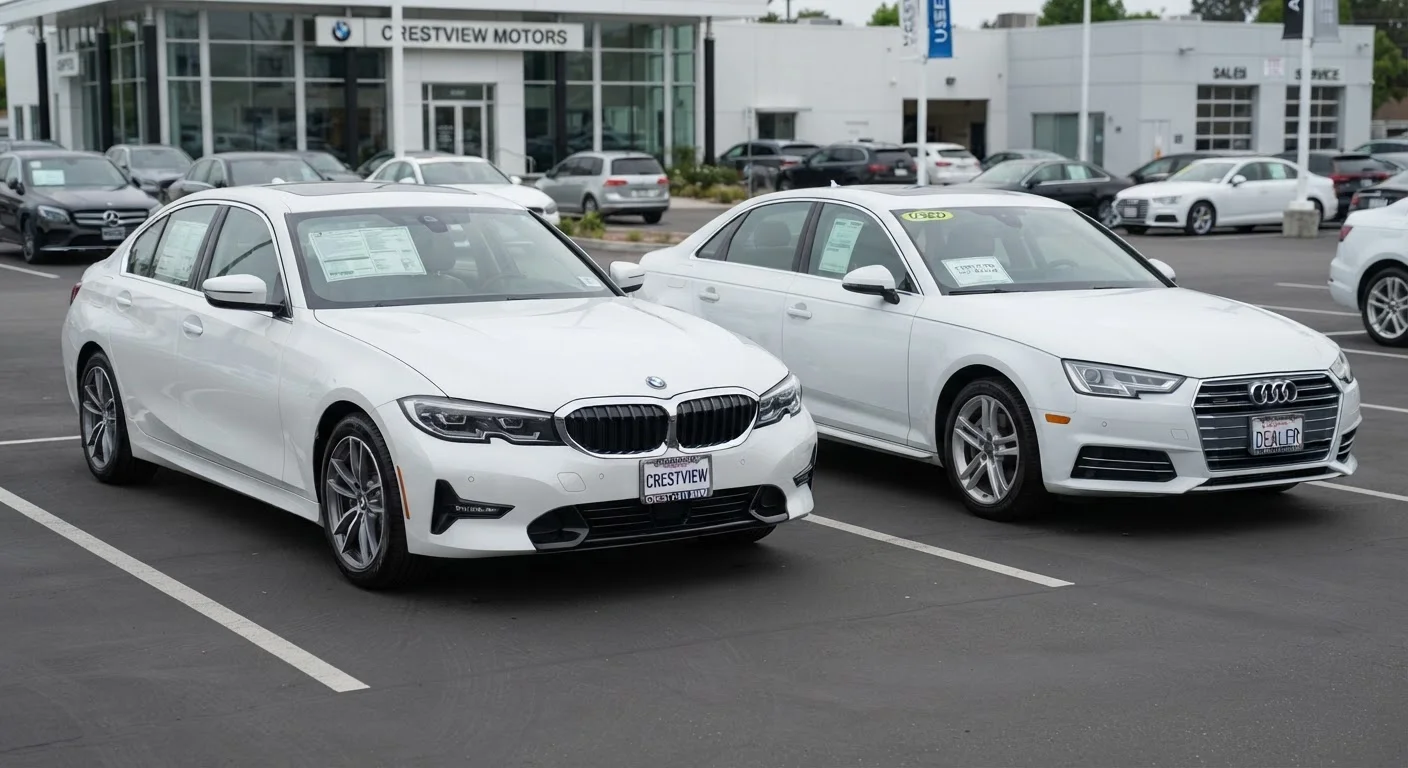
Photo: AskSpecialist.net editorial
Key Takeaways
- New cars lose the most value in the first two to three years - used buyers avoid that steepest drop.
- New cars typically come with manufacturer warranties; used cars may have limited or no coverage remaining.
- Financing rates on new cars are often lower than on used cars, so the sticker price gap can narrow.
- Used cars carry unknown history risk - a vehicle history report and pre-purchase inspection reduce that exposure.
- Your total ownership cost matters more than the purchase price alone.
The Core Difference: What You're Actually Paying For
When you buy a new car, you're paying for known condition, full manufacturer warranty, and no ownership history. When you buy used, you're paying for a vehicle that someone else has already driven - and crucially, one that has already shed a large portion of its original value.
Neither is automatically the smarter move. The right choice depends on how you weigh price, risk, warranty coverage, and financing costs against each other. Understanding how each factor actually shifts between the two decisions is what cuts through the dealership noise.
For a broader look at what the full buying journey looks like, see our step-by-step car-buying walkthrough.
| Criterion | New Car | Used Car |
|---|---|---|
| Purchase price | Higher upfront cost | Lower upfront cost |
| Depreciation exposure | Absorbs steepest drop (years 1-3) | Avoids the sharpest initial drop |
| Financing rate | Typically lower (promotional rates available) | Typically higher |
| Warranty coverage | Full factory warranty included | Often expired; CPO extends some coverage |
| Vehicle history | None - clean slate | Unknown without a report and inspection |
| Customization / trim choice | Full selection available | Limited to existing inventory |
| Insurance cost | Generally higher (higher vehicle value) | Generally lower (lower vehicle value) |
Depreciation: The Number Most Buyers Underestimate
Depreciation - the drop in a vehicle's market value over time - is the single largest cost most buyers never see on a window sticker. A typical new car loses roughly 15-25% of its value in the first year alone, with the steepest drop occurring in years one through three.
Used car buyers sidestep that initial plunge. If a vehicle is two or three years old, the original owner absorbed that loss. You buy in at a lower baseline and experience a flatter depreciation curve from that point forward.
That said, depreciation doesn't disappear entirely on a used car - it just slows. Our companion piece on how car depreciation works walks through the mechanics and what they mean for your specific buying decision.
~20%
Average new car value lost in year one
Industry data consistently shows new vehicles lose roughly 15-25% of their value within the first 12 months of ownership.
3 yrs
Period of steepest new car depreciation
Most vehicles reach a more stable depreciation curve after the first three years, making 3- to 5-year-old used cars a common value window.
~40%
Typical value drop by end of year three
A vehicle purchased new often retains only around 60% of its original value after three years, based on long-term automotive valuation trends.
Financing, Warranties, and Hidden Costs
Financing rates on new cars are typically lower than on used cars - sometimes substantially so. Automakers and lenders offer promotional rates on new models that aren't available on older vehicles. This means the actual gap in your monthly payment between new and used can be smaller than the sticker price difference suggests.
Warranty coverage is where new cars hold a clear structural advantage. A new vehicle comes with a factory warranty - commonly three years or 36,000 miles bumper-to-bumper, plus a longer powertrain warranty - meaning major repairs during that window are the manufacturer's problem, not yours. Most used cars have aged past that coverage, though certified pre-owned (CPO) programs from manufacturers extend some protection.
Don't stop at the sticker price when comparing. Registration fees, insurance premiums, and maintenance schedules all vary by vehicle age and condition. Our guide to the hidden costs of owning a car lays out what to budget for beyond the sale price.
Risk, History, and How to Manage the Unknown
The biggest practical risk with a used car is what you don't know about its past: accidents, deferred maintenance, flood damage, or odometer irregularities. This risk is real but manageable.
A vehicle history report (such as those from Carfax or AutoCheck) gives you reported accident records, title status, and ownership history. A pre-purchase inspection by an independent, licensed mechanic - not the selling dealership - can surface mechanical issues before you sign anything. These two steps together don't eliminate risk, but they significantly reduce your exposure.
If you're buying used and want to go through a dealer, understanding how that process differs from a private-seller transaction matters. See our breakdown of private seller vs. dealership used car routes for a clear-eyed look at both options.
New cars carry virtually no history risk - but they carry financing risk if you borrow more than you can comfortably repay over the loan term. If you're also weighing whether to lease instead of buy outright, our leasing vs. buying comparison covers those trade-offs directly.
Certified Pre-Owned: A Middle-Ground Option
The content on this site is provided for informational purposes only and should not be considered a substitute for professional advice. While we strive to provide accurate and up-to-date information, we make no guarantees regarding its completeness or accuracy. Always consult a qualified professional for advice specific to your circumstances before making any decisions.