
Liability, Collision, and Comprehensive: What Each Coverage Actually Covers

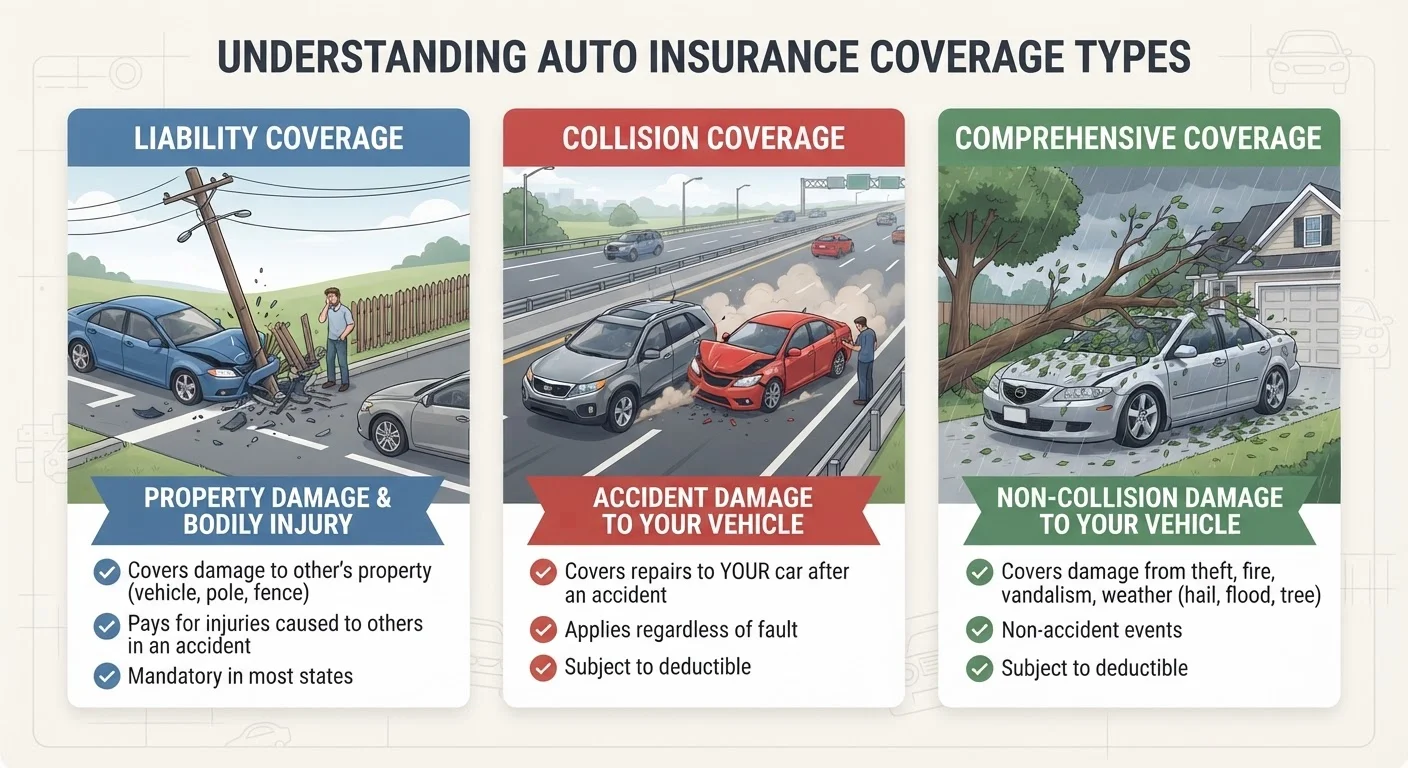
Photo: AskSpecialist.net editorial
Key Takeaways
- Liability coverage pays for damage and injuries you cause to others - not repairs to your own vehicle.
- Collision coverage pays to repair or replace your car after a crash, regardless of who caused it.
- Comprehensive coverage handles losses from non-collision events like theft, hail, or a fallen tree.
- Most states legally require liability coverage; collision and comprehensive are generally optional unless a lender requires them.
- Each coverage type has its own deductible and limit, which directly affects your out-of-pocket costs after a claim.
Liability Coverage: What You Owe Others After an Accident
Liability is the foundation of almost every auto policy in the U.S. - and the only coverage type most states legally require. It pays for the harm you cause to other people when you're at fault in an accident. That means property damage to their vehicle or other property, and bodily injury costs including their medical bills and, in serious cases, legal costs if they sue.
What liability does not cover is your own vehicle or your own medical bills. If you rear-end someone and total your car in the process, liability pays for their car - yours is your problem unless you carry additional coverage.
Liability limits are expressed as a series of numbers on your policy, such as 25/50/25. These represent maximum payouts in thousands of dollars: per-person bodily injury, total bodily injury per accident, and property damage per accident. If the costs of an accident exceed your limits, you're personally responsible for the remainder. That's a meaningful financial risk, especially in accidents involving serious injuries or expensive vehicles.
Coverage Requirements Vary by State and Lender
To understand where your liability limits appear on your policy documents, see our breakdown of the declarations page.
Collision Coverage: Repairs to Your Own Car After a Crash
Collision coverage pays to repair or replace your vehicle after it's damaged in an accident - whether you hit another car, back into a pole, or roll off an icy road. Fault matters less here than it does with liability: collision generally pays out regardless of who caused the crash, minus your deductible.
If someone else is clearly at fault and carries adequate liability insurance, their insurer may pay for your repairs through a third-party claim. But that process takes time and isn't guaranteed. Collision coverage lets you go through your own insurer quickly and sort out fault later.
Collision is optional unless a lender or leasing company requires it - which they typically do, because the vehicle is their collateral. Once you own your car outright, it's your call. The calculus is straightforward: if your car's market value is low and your deductible is high, you may pay more in premiums over time than the coverage would ever pay out. Dropping to liability-only coverage is a real option for older, lower-value vehicles - but it comes with genuine trade-offs worth understanding.
~13%
Estimated uninsured drivers on U.S. roads
The Insurance Research Council has estimated that roughly one in eight drivers lacks auto insurance, underscoring why relying solely on the other party's liability coverage carries real risk.
45 states
States requiring liability insurance to register a vehicle
Most U.S. states mandate at least a minimum level of liability coverage; collision and comprehensive remain optional unless required by a lender or lessor.
Actual Cash Value
Maximum payout for collision and comprehensive claims
Both collision and comprehensive pay out based on the vehicle's market value at the time of loss - not its original purchase price - which can catch drivers off guard after depreciation.
Comprehensive Coverage: Everything Else That Can Happen to Your Car
Comprehensive coverage handles losses that aren't caused by a collision. Think: theft, vandalism, hail damage, a tree branch through the windshield, flooding, fire, or hitting a deer. Insurers sometimes call this "other than collision" coverage, which is actually the clearest description of what it does.
Like collision, comprehensive pays up to the vehicle's actual cash value (ACV) - what the car is worth at the time of loss, not what you paid for it or what it would cost to replace with a new model. Your deductible applies here too.
Comprehensive and collision are almost always sold together, and lenders nearly always require both. For drivers who own their cars outright, these coverages are worth keeping on vehicles that still hold significant value. Common coverage gaps often appear when drivers drop comprehensive prematurely or assume it covers more than it does.
How the Three Work Together - and Where the Gaps Are
Liability, collision, and comprehensive are designed to complement each other, but together they still don't cover every scenario. They generally don't include your medical bills (that's where medical payments or personal injury protection coverage comes in), and none of them automatically covers a rental car while yours is being repaired.
One gap that catches drivers off guard: if an uninsured driver causes an accident, their liability coverage doesn't exist - and your collision coverage would apply, subject to your deductible. Uninsured and underinsured motorist coverage exists specifically to fill that space.
When you're ready to use any of these coverages after an incident, the process matters too. Filing a claim correctly - documenting the scene, notifying your insurer promptly, and understanding what to expect - can make the difference between a smooth resolution and a frustrating one.
This article is for general informational purposes only and does not constitute insurance, legal, or financial advice. Coverage terms, limits, exclusions, and requirements vary by state and insurer. Always read your policy documents and consult a licensed insurance agent for guidance specific to your situation.
Frequently Asked Questions
The content on this site is provided for informational purposes only and should not be considered a substitute for professional advice. While we strive to provide accurate and up-to-date information, we make no guarantees regarding its completeness or accuracy. Always consult a qualified professional for advice specific to your circumstances before making any decisions.