
DIY vs. Shop: Knowing Which Car Maintenance Tasks to Hand Off

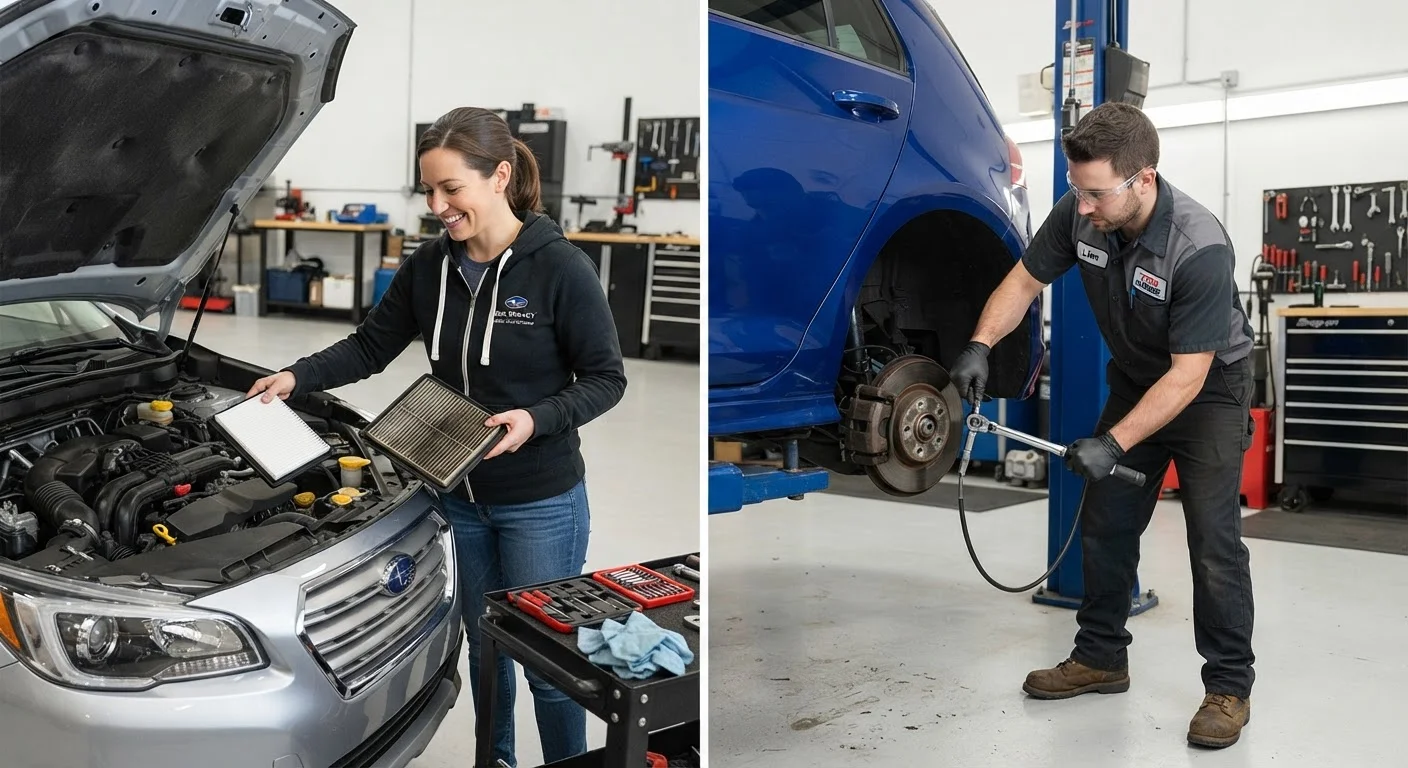
Photo: AskSpecialist.net editorial
Key Takeaways
- Simple tasks like air filter swaps and wiper replacements are genuinely DIY-friendly for most drivers.
- Brake, suspension, and airbag work carries real safety risk and should go to a qualified mechanic.
- A wrong DIY repair can void your warranty or create a bigger, more expensive problem.
- Your owner's manual is the first place to look for your car's actual maintenance intervals.
- Cost savings from DIY only hold up when the job is done correctly the first time.
The Real Question Isn't Pride - It's Risk
A lot of drivers frame DIY maintenance as a question of confidence or cost. But the more useful question is: what happens if this goes wrong? For some jobs, a mistake means a 15-minute redo. For others, it can mean brake failure or an airbag that doesn't deploy in a crash. That gap in consequence is what should drive the decision.
Before you grab a wrench, consider three things: Do you have the right tools? Do you understand the safety implications of getting it wrong? And will a DIY repair hold up to your vehicle's requirements - including any active warranty? If the answer to any of these is uncertain, that's useful information, not a personal failure.
For a broader picture of what your car actually needs and when, see our complete car maintenance guide - it covers schedules, fluids, tires, and when to call a professional.
Jobs Most Drivers Can Handle Themselves
These tasks are genuinely accessible to someone with basic mechanical aptitude, a few common tools, and a willingness to follow instructions carefully.
- Engine air filter: Usually a simple clip or clamp, no special tools. A clogged filter hurts fuel economy and performance.
- Cabin air filter: Typically behind the glove box. Most replacements take under 10 minutes.
- Windshield wiper blades: Nearly every replacement blade comes with clear instructions and fits standard attachment arms.
- Exterior bulbs (some): Many headlight and taillight bulbs are accessible without removing bumpers. Check your specific model first - some require significant disassembly.
- Tire pressure checks and inflation: A quality gauge and a compressor are inexpensive. Correct pressure affects safety, fuel economy, and tire life.
- Fluid top-offs: Windshield washer fluid is straightforward. Engine coolant, brake fluid, and power steering fluid can be topped off carefully, but if a reservoir is consistently low, that signals a leak that needs professional diagnosis.
Start With Your Owner's Manual
Your owner's manual will tell you the correct fluid specifications, filter part numbers, and replacement intervals for your exact vehicle - not just generic estimates.
Jobs That Belong in a Professional Shop
Some tasks appear simpler than they are, and others are straightforwardly beyond the safe reach of a home garage. Here's where the line generally falls.
- Brake pads, rotors, and calipers: Brake work requires torquing fasteners to precise specs, properly compressing calipers, and confirming hydraulic integrity. An improperly bedded rotor or a caliper that wasn't fully seated is a serious safety hazard.
- Suspension and steering components: Control arms, ball joints, tie rods, and wheel bearings all affect vehicle handling and tire wear. Incorrect installation can cause a car to behave unpredictably at speed.
- Airbag system work: Any task involving the supplemental restraint system (SRS) - including steering wheel replacement - risks accidental airbag deployment. This can cause severe injury. Always defer to a certified technician.
- Timing belt or timing chain: On interference engines, a timing belt installed out of spec can cause catastrophic engine damage. The job itself often requires engine disassembly and specialized tools.
- Transmission service: Fluid changes on automatic transmissions are manageable for experienced DIYers, but any internal work or diagnosis of shifting problems requires professional equipment.
- Electrical and module programming: Modern vehicles rely on interconnected control modules. Replacing sensors or modules often requires software programming that only a shop with the right scan tool can perform.
DIY on Safety Systems Can Have Serious Consequences
How to Compare Them Side by Side
When you're weighing a specific task, this framework covers the factors that actually matter.
| Factor | DIY | Professional Shop | |
|---|---|---|---|
| Upfront cost | Lower (parts only) | Higher (parts + labor) | |
| Tools required | Basic hand tools for simple jobs | Specialized equipment often needed | |
| Safety risk if done wrong | Low for simple tasks | Mitigated by training and accountability | |
| Warranty implications | May affect warranty if not documented | Documented service protects warranty | |
| Time investment | Can be significant for first-timers | Efficient with proper workflow | |
| Skill requirement | Low to moderate for basic jobs | High for complex or safety-critical work |
Keep in mind that "cost savings" from DIY disappear quickly if a mistake creates a secondary repair. A stripped drain plug, a rounded lug nut, or an improperly torqued component can easily exceed what a shop would have charged.
Making a Habit That Works for Your Situation
The goal isn't to DIY everything or outsource everything - it's to build a maintenance approach that's consistent, safe, and matched to your actual skills and tools. A reasonable starting point: handle the consumables yourself (filters, wipers, fluid checks), and budget for professional service on anything involving safety systems or precise torque specs.
Keep a simple log of what's been done and when. This helps you stay on schedule, gives a mechanic useful context when something goes wrong, and adds documented service history if you sell the vehicle. Your owner's manual is the right place to start building that schedule - it's more accurate than generic mileage rules you'll find online.
If you're buying a car and wondering how maintenance considerations should factor into that decision, our buying a car hub covers what to look for before you commit.
The content on this site is provided for informational purposes only and should not be considered a substitute for professional advice. While we strive to provide accurate and up-to-date information, we make no guarantees regarding its completeness or accuracy. Always consult a qualified professional for advice specific to your circumstances before making any decisions.