
Caring for Curly Hair: A Ground-Up Guide for Types 3A Through 4C

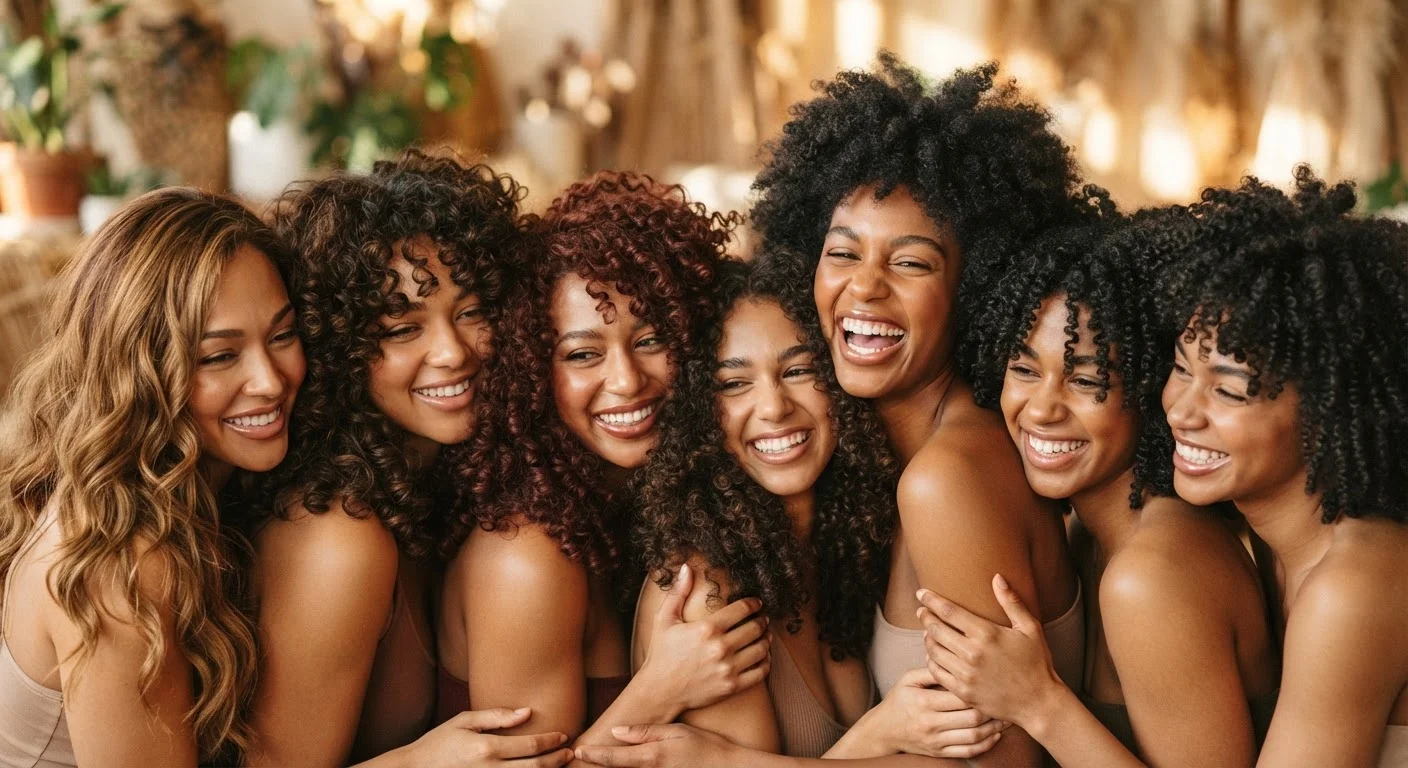
Photo: AskSpecialist.net editorial
Key Takeaways
- Curl types range from 3A (loose waves) to 4C (tight coils), each with distinct porosity and moisture needs.
- Moisture retention - not moisture application alone - is the central challenge for most curl types.
- Sulfate-heavy shampoos can strip natural oils; gentler cleansing methods often work better for curly textures.
- Deep conditioning is a foundation skill, not a luxury add-on, for maintaining curl health.
- Styling products work best when applied to soaking-wet hair to lock in water molecules.
- A simple, consistent routine outperforms a complex one used inconsistently.
Understanding the Curl Typing System
The most widely used curl classification system organizes hair into types 1 through 4, with letter subdivisions (A, B, C) indicating tightness within each category. For naturally curly and coily hair, the relevant range is type 3A through 4C:
- 3A: Large, loose spirals with a circumference roughly the size of a piece of sidewalk chalk. Tends to have shine and is the least prone to dryness in this range.
- 3B: Medium ringlets, springier and denser than 3A, with a higher tendency to frizz in humidity.
- 3C: Tight corkscrews with significant volume; can appear longer when stretched than when dry.
- 4A: Soft S-coils or Z-coils with a visible, defined pattern; retains some moisture naturally but benefits from consistent conditioning.
- 4B: Z-shaped bends with less visible curl definition; shrinkage can be dramatic (up to 70%).
- 4C: The tightest coil pattern, often appearing as a cloud of texture; most prone to dryness and breakage without consistent care.
Important caveat: curl typing is a starting point, not a prescription. Most people carry more than one type across their head, and two people with the same curl type may have completely different porosity levels, density, and strand width - all of which affect how hair responds to products and techniques.
Porosity
How easily your hair absorbs and holds onto water. Low-porosity hair resists water entry; high-porosity hair absorbs water quickly but loses it just as fast.
Humectant
An ingredient that draws water molecules toward the hair shaft. Common examples include glycerin, aloe vera, and honey.
Occlusive
An ingredient that forms a barrier over the hair strand to slow moisture from escaping. Oils, butters, and heavier creams typically serve this role.
Shrinkage
The difference between your hair's stretched length and how it appears when dry and coiled. Type 4 hair can shrink to less than half its actual length.
LOC Method
A layering technique - Liquid, Oil, Cream - designed to lock moisture into curly hair by applying products in a specific order.
Protein-Moisture Balance
The relationship between conditioning (adding softness and hydration) and protein treatments (restoring strength and structure). Both are needed; too much of either causes problems.
Why Moisture Balance Is Everything
Curly and coily hair is structurally different from straight hair. The bends and twists along the strand make it harder for the scalp's natural sebum (oil) to travel down to the ends, which is why curly hair dries out faster. This isn't a flaw - it's simply physics. The practical implication is that moisture retention becomes your primary hair care goal.
Moisture balance involves two distinct tasks: getting water into the hair shaft, and keeping it there. Humectants (ingredients like glycerin and aloe vera) attract water. Emollients and occlusives (oils, butters, creams) seal that water inside. Skipping the sealing step is one of the most common beginner mistakes - you may be conditioning adequately but losing moisture within hours.
Porosity determines how you approach both steps. If your hair is low porosity, use gentle heat (a shower cap with a warm towel on top) to open the cuticle and let conditioner in. If your hair is high porosity, focus more heavily on the sealing step to compensate for how quickly moisture escapes.
Test Your Hair Porosity at Home
Cleansing Your Curls Without Stripping Them
Conventional shampoos often contain sulfates - detergents powerful enough to remove road grime from hair. For type 3-4 curls, that same power can strip away the modest amount of natural oil your hair does produce, leaving strands dry and brittle. Gentler alternatives include:
- Sulfate-free shampoos: Clean effectively without aggressive detergents. A solid default for most curl types.
- Co-washing: Cleansing with conditioner only - no shampoo at all. Works well for very dry 4B-4C hair but can cause buildup in some people. See our comparison of co-washing vs. shampooing for a detailed breakdown.
- Clarifying shampoos: Use once a month or less to remove product buildup. These are intentionally strong, so follow with a deep conditioning session.
Regardless of method, always detangle before or during washing with your fingers or a wide-tooth comb, working from ends to roots. Trying to detangle dry, knotted hair causes far more breakage than wet detangling with slip (conditioner or water).
Conditioning and Deep Conditioning Basics
Curly hair needs two types of conditioning on a regular basis:
- Rinse-out conditioner - applied after every wash, left on for two to five minutes, then rinsed. It smooths the cuticle, reduces tangles, and adds surface softness.
- Deep conditioner - applied after shampooing, left on for 20-45 minutes (often with gentle heat), then rinsed. It penetrates the shaft more thoroughly, restoring elasticity and combating dryness.
For most type 3-4 curl patterns, deep conditioning once a week or every two weeks is a reasonable starting frequency. If your hair feels mushy or over-soft after conditioning, that can be a sign of over-conditioning (protein-moisture imbalance); a protein treatment can help restore structure. Our guide on deep conditioning at home covers timing, heat use, and common mistakes in detail.
Styling: Sealing in Moisture and Defining Curls
The cardinal rule of curl styling is: apply products to soaking-wet hair. Water is the actual moisturizer; styling products' job is to lock that water in and encourage your curl pattern to form. By the time your hair is 50% dry, the window for definition has largely closed.
A foundational approach many curl-focused stylists recommend is the LOC method:
- Liquid: Water or a water-based leave-in conditioner applied to dripping-wet hair.
- Oil: A lightweight oil to seal the moisture layer. Lighter oils (like jojoba or argan) suit finer or lower-density curl types; heavier oils (like castor) work well for thick 4B-4C coils.
- Cream: A curl cream or butter applied last to define and hold the curl pattern.
Looser curl types (3A-3B) may find a lighter LO or LC approach sufficient. Avoid touching your hair while it air-dries - disturbing the curl clumps is the primary cause of frizz.
Building Your Routine From Scratch
Start with the fewest possible steps and add complexity only when you identify a specific need. A beginner-level weekly routine might look like:
- Wash day: Cleanse with a sulfate-free shampoo → detangle with conditioner → rinse out → apply deep conditioner for 30 minutes → rinse → apply leave-in, seal with oil, and style with a curl cream.
- Refresh days: Lightly mist hair with water, scrunch in a small amount of leave-in or cream, and let air-dry. Sleeping on a satin or silk pillowcase (or using a satin bonnet) dramatically reduces frizz and moisture loss overnight.
Resist the urge to try multiple new products at once. Introduce one change at a time so you can tell what's helping and what isn't. Consistency matters more than complexity - a minimal routine done consistently will outperform a ten-step system used haphazardly.
As you gain confidence, use a regular self-check to stay on track. Our weekly hair care audit walks you through evaluating scalp condition, moisture levels, and breakage signs so you can adjust your routine before problems escalate.
This article is for general informational purposes only. If you are experiencing hair loss, scalp irritation, or other concerns, consult a licensed dermatologist or trichologist for personalized guidance.
Frequently Asked Questions
The content on this site is provided for informational purposes only and should not be considered a substitute for professional advice. While we strive to provide accurate and up-to-date information, we make no guarantees regarding its completeness or accuracy. Always consult a qualified professional for advice specific to your circumstances before making any decisions.