
Co-Washing vs. Shampooing: Choosing the Right Cleansing Method for Your Texture

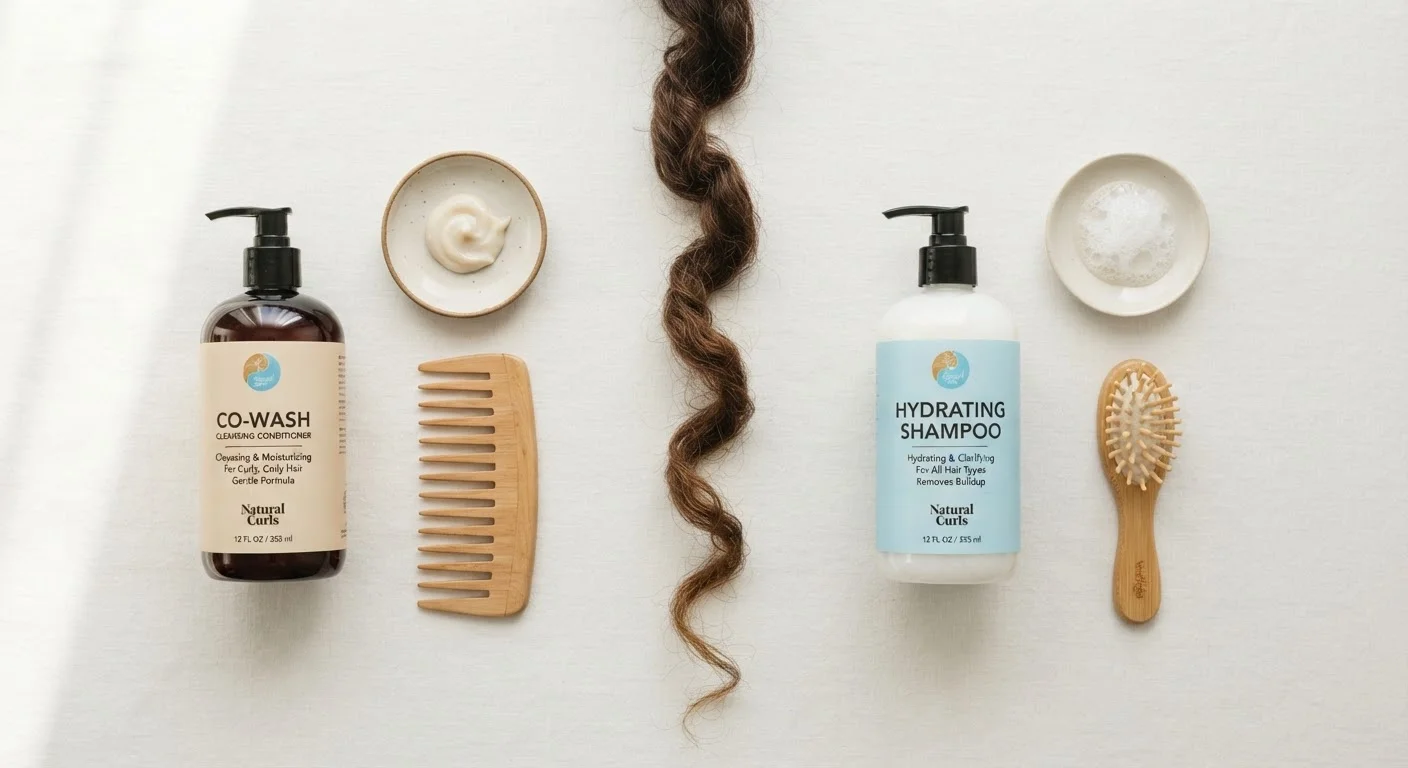
Photo: AskSpecialist.net editorial
Key Takeaways
- Co-washing uses conditioner to cleanse and is gentler on dry or coily hair textures.
- Traditional shampoo contains surfactants that effectively remove oil, sweat, and product buildup.
- Hair porosity and scalp oiliness are key factors in choosing your cleansing method.
- Many people benefit from alternating between both methods rather than committing exclusively to one.
- A healthy scalp requires adequate cleansing - co-washing alone may not suffice for some scalp types.
What Each Method Actually Does
Traditional shampooing relies on surfactants - cleansing agents that attract both water and oil, allowing them to lift dirt, sebum, and product residue from the hair shaft and scalp before rinsing away. This is effective and necessary for a clean scalp, but some surfactants can also strip the natural oils that keep hair flexible and moisturized.
Co-washing (short for conditioner-only washing) replaces shampoo with a rinse-out conditioner or a specially formulated co-wash product. Conditioners contain small amounts of mild cleansing agents alongside emollients and humectants, so they refresh the hair without the aggressive stripping action of traditional surfactants. The result is cleansing that is gentler - but also less thorough.
Neither method is universally superior. The right choice depends on what your hair and scalp actually need, which varies by texture, porosity, lifestyle, and styling habits. For a deeper look at why scalp care and hair cleansing are separate priorities, see why scalp and hair washing are different.
| Criterion | Co-Washing | Shampooing |
|---|---|---|
| Cleansing strength | Mild - removes light buildup | Strong - removes oil, sweat, buildup |
| Moisture retention | High - emollients stay on hair | Lower - surfactants strip some oils |
| Best scalp type | Dry or balanced scalp | Oily or normal scalp |
| Best hair texture | Coily, curly, or coarse | Fine, straight, or wavy |
| Buildup risk over time | Higher without periodic shampoo | Lower with regular use |
| Suited to chemical treatments | Yes - gentler on processed hair | Use sparingly; opt sulfate-free |
| Wash frequency flexibility | Can be used more frequently | May need spacing to avoid dryness |
Hair Types That Respond Well to Each Method
Hair texture and porosity are the most reliable guides for choosing a cleansing approach.
Co-washing tends to work well for:
- Type 3 and type 4 curl patterns - Tighter coils and curls have a natural structural shape that makes it harder for scalp oils to travel down the hair shaft. This leaves the lengths and ends inherently drier, and co-washing helps preserve what moisture exists. If you're new to curl care, this ground-up guide for types 3A through 4C covers the fundamentals well.
- High-porosity hair - Hair that has been color-treated, heat-styled frequently, or chemically relaxed tends to have a rougher cuticle that loses moisture quickly. Gentle cleansing helps manage that loss.
- Dry or brittle hair - When the priority is maintaining softness and reducing breakage, co-washing reduces one source of dryness in the routine.
Shampooing tends to work better for:
- Fine or low-porosity hair - These hair types accumulate product and oil more easily at the scalp, and conditioners can weigh them down further rather than refresh them.
- Oily scalps - Excess sebum requires proper surfactant action. Co-washing is unlikely to fully clear a scalp that produces oil quickly.
- Active lifestyles - Frequent sweating calls for more thorough scalp cleansing. How often you should shampoo is shaped by activity level as much as hair type.
~65%
Americans with textured or curly hair
Hair texture surveys consistently find that a majority of the U.S. population has some degree of wave, curl, or coil - textures that often benefit from reduced surfactant exposure.
3-4x
Greater moisture loss in high-porosity vs. low-porosity hair
Cosmetic science research indicates that chemically processed or heat-damaged hair can lose moisture significantly faster than intact hair, underscoring the value of gentler cleansing.
The Case for Combining Both Methods
Exclusive co-washing carries a real risk for some people: scalp buildup. Without periodic surfactant cleansing, residue from conditioners, styling products, and natural oils can accumulate at the follicle, potentially contributing to scalp irritation or a congested feel. This doesn't mean shampoo must be used frequently - but most hair care professionals suggest incorporating it periodically, even for those who primarily co-wash.
A practical middle-ground approach many people use:
- Co-wash on most wash days to maintain moisture and refresh hair between deeper cleansing sessions.
- Use a gentle or sulfate-free shampoo once or twice a month to fully clear the scalp and prevent buildup.
- Follow either method with appropriate conditioning to support the cuticle.
How to find the right balance for your specific hair is part of building a minimalist hair routine that actually holds up. And if you're unsure whether your current routine is working, a weekly hair care audit can help you read what your hair is signaling before making changes.
This article is for general informational purposes only and does not constitute medical or dermatological advice. If you are experiencing scalp conditions such as persistent irritation, flaking, or hair loss, consult a qualified dermatologist or trichologist.
The content on this site is provided for informational purposes only and should not be considered a substitute for professional advice. While we strive to provide accurate and up-to-date information, we make no guarantees regarding its completeness or accuracy. Always consult a qualified professional for advice specific to your circumstances before making any decisions.