
Protective Styling Done Well: Benefits, Limits, and What to Watch For

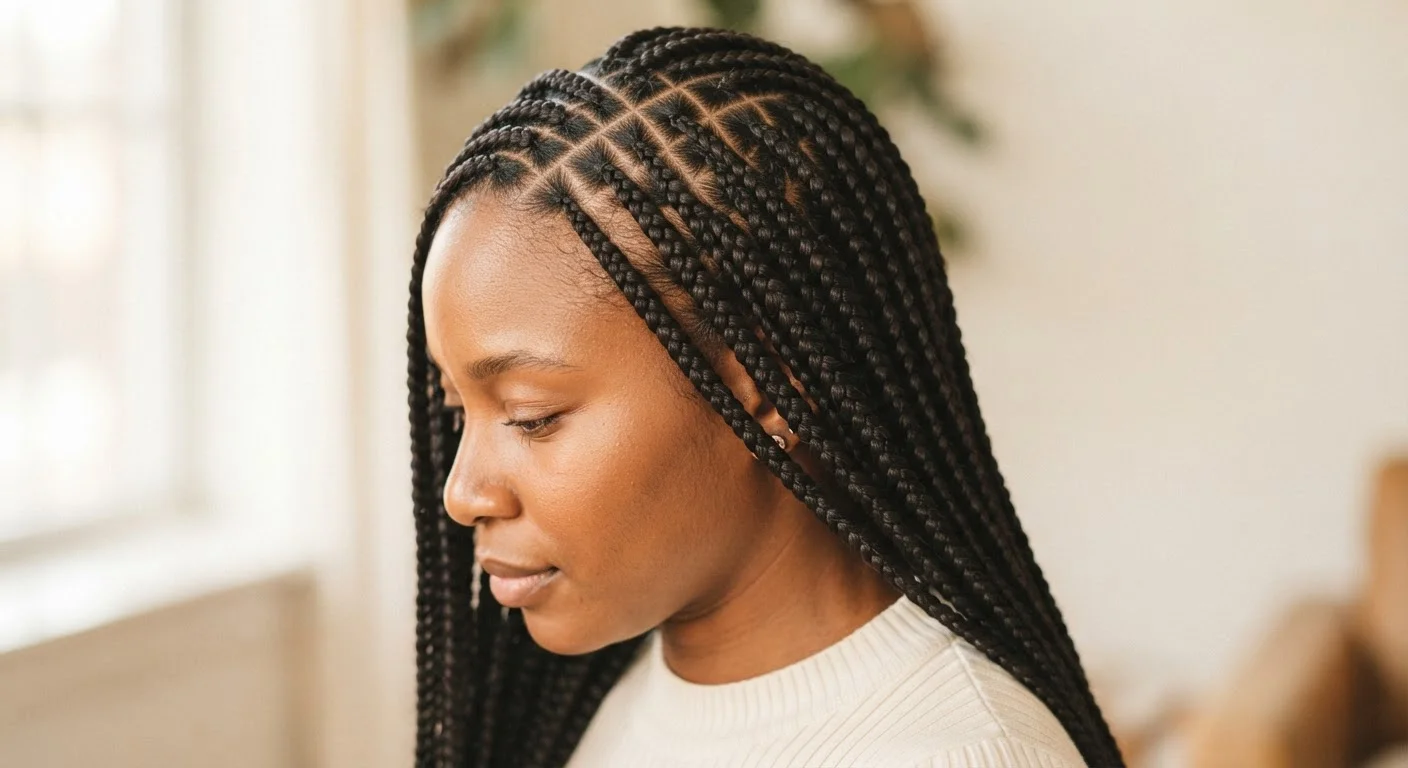
Photo: AskSpecialist.net editorial
Key Takeaways
- Protective styles reduce daily manipulation, which can help minimize mechanical breakage over time.
- Incorrect installation tension is a leading cause of traction alopecia, a form of hair loss.
- Scalp care doesn't stop when your hair is in a protective style - it becomes more important.
- Leaving a protective style in too long can cause matting, dryness, and significant breakage on removal.
- Healthy hair going into a style is more likely to emerge healthy - protective styles don't repair damage.
Reduces daily mechanical manipulation and friction
Fewer combing and detangling sessions mean less physical stress on each strand. This is particularly significant for tightly coiled hair, which is more prone to tangling and dryness-related breakage.
Supports length retention over time
When breakage is reduced, hair that grows at a normal rate has a better chance of actually being retained. This is often the primary motivation for choosing protective styling.
Limits heat tool exposure
Once installed, most protective styles require little to no heat styling, reducing cumulative thermal stress that can weaken the hair's protein structure over time.
Simplifies daily styling routines
A well-maintained protective style can dramatically cut morning prep time and decision fatigue, making hair care more manageable during busy periods.
Tight installation can cause traction alopecia
Chronic tension at the follicle - especially along the hairline - can lead to a form of hair loss that may become permanent if not addressed early. Pain or scalp bumps after installation are warning signs.
Neglected styles lead to dryness and breakage
Hair under a protective style still needs moisture. Leaving a style in without any scalp or strand care causes the hair to become brittle, and removal becomes a high-breakage event.
Overstaying a style increases damage risk
Leaving braids or twists beyond their recommended timeframe allows new growth to create tension differences at the root, increases matting, and can result in significant breakage during takedown.
Does not repair pre-existing hair damage
A protective style preserves the hair it holds but cannot reverse breakage, dryness, or chemical damage already present. Installing on compromised hair can worsen existing fragility.
Risk of scalp buildup and irritation
Oils, products, and dead skin cells can accumulate on the scalp when hair is in a protective style for weeks, potentially causing flaking, itching, or follicle congestion if the scalp isn't cared for.
What Protective Styling Actually Means
A protective style is any hairstyle that tucks the ends of the hair away and significantly reduces how often those strands are handled. Common examples include braids, twists, cornrows, bantu knots, and up-dos. The core idea is simple: the less your hair is combed, stretched, and manipulated each day, the less mechanical stress it experiences - and less stress generally means less breakage.
It's worth being clear about what protective styling is not. It is not a repair treatment. Hair that is already fragile, over-processed, or severely dry will not be healed by being braided. If anything, installing a style on compromised hair can accelerate breakage at the points where the strand is already weakened. Think of protective styling as a preservation strategy rather than a correction. Separating expectation from reality around hair growth and retention is essential before starting any new routine.
The Real Benefits - and What Drives Them
Reduces daily mechanical manipulation and friction
Fewer combing and detangling sessions mean less physical stress on each strand. This is particularly significant for tightly coiled hair, which is more prone to tangling and dryness-related breakage.
Supports length retention over time
When breakage is reduced, hair that grows at a normal rate has a better chance of actually being retained. This is often the primary motivation for choosing protective styling.
Limits heat tool exposure
Once installed, most protective styles require little to no heat styling, reducing cumulative thermal stress that can weaken the hair's protein structure over time.
Simplifies daily styling routines
A well-maintained protective style can dramatically cut morning prep time and decision fatigue, making hair care more manageable during busy periods.
Length retention is the most commonly cited advantage, and it holds up logically. Hair grows roughly half an inch per month on average, but many people never seem to gain length because breakage keeps pace with growth. By limiting daily combing, detangling, and re-styling, protective styles reduce the friction that causes ends to split and snap. For tightly coiled hair types that are particularly vulnerable to dryness and tangling, this reduction in handling can make a meaningful difference over several weeks.
Reduced styling time is a secondary but practical benefit - especially relevant during seasons or life phases where simplicity matters. Once a style is installed, morning routines can be dramatically shortened. This also reduces exposure to heat tools, which cause cumulative structural changes to hair over repeated use. For a closer look at what heat does at a strand level, see what heat styling actually does to your strands.
The Risks You Need to Take Seriously
Tight installation can cause traction alopecia
Chronic tension at the follicle - especially along the hairline - can lead to a form of hair loss that may become permanent if not addressed early. Pain or scalp bumps after installation are warning signs.
Neglected styles lead to dryness and breakage
Hair under a protective style still needs moisture. Leaving a style in without any scalp or strand care causes the hair to become brittle, and removal becomes a high-breakage event.
Overstaying a style increases damage risk
Leaving braids or twists beyond their recommended timeframe allows new growth to create tension differences at the root, increases matting, and can result in significant breakage during takedown.
Does not repair pre-existing hair damage
A protective style preserves the hair it holds but cannot reverse breakage, dryness, or chemical damage already present. Installing on compromised hair can worsen existing fragility.
Risk of scalp buildup and irritation
Oils, products, and dead skin cells can accumulate on the scalp when hair is in a protective style for weeks, potentially causing flaking, itching, or follicle congestion if the scalp isn't cared for.
The most significant risk associated with protective styling is traction alopecia - hair loss caused by prolonged tension on the follicles. Styles installed too tightly, particularly along the hairline and temples, can damage follicles over time. Early signs include small bumps, tenderness, or fine baby hairs that seem to recede. This damage can become permanent if the behavior continues unchecked. A qualified trichologist or dermatologist should be consulted if you notice ongoing scalp tenderness or thinning near the hairline.
Neglect is the other major hazard. Many people assume a protective style means the hair can be ignored for weeks. In reality, the scalp continues to produce sebum and sheds dead skin cells, products build up, and hair that isn't moisturized under a style becomes brittle. When a neglected style is removed - particularly if it has been left in beyond its recommended timeframe - the resulting detangling session can cause substantial breakage.
This article provides general hair care education and is not a substitute for advice from a qualified dermatologist or trichologist. If you are experiencing scalp pain, hair loss, or persistent irritation, consult a healthcare professional.
How to Get the Most Out of a Protective Style
~0.5 in
Average monthly hair growth for most adults
The American Academy of Dermatology notes that scalp hair grows roughly half an inch per month on average, though this varies by individual and health factors.
4-8 weeks
Typical recommended wear time for braided styles
Most hair care professionals and trichologists suggest this range as a guideline, with actual limits depending on hair type, installation quality, and maintenance consistency.
Installation tension should always be comfortable. If your scalp aches or you see puckering at the roots immediately after a style is done, that is too tight - regardless of who installed it. Speaking up during installation, or choosing to re-do sections, is not an overreaction.
Scalp care during the style is non-negotiable. A lightweight oil or diluted leave-in conditioner applied directly to the scalp - not the style itself - helps maintain moisture without causing buildup. Deep conditioning before installation is one of the most effective things you can do to set your hair up for a successful style period.
Follow realistic wear timelines. Most braided and twisted styles are appropriate for four to eight weeks depending on your hair type, the style's complexity, and how well you maintain it. Beyond eight weeks, new growth creates a density difference at the root that significantly increases tension and the risk of matting. Plan a regular check-in on your scalp and hair health during the wear period rather than waiting until removal.
After removal, give your hair a genuine recovery window before reinstalling - ideally at least one to two weeks of a gentler routine that includes moisture restoration. A simplified, focused routine during this period is often more beneficial than layering multiple treatments at once.
Protective Styles and Scalp Conditions
The content on this site is provided for informational purposes only and should not be considered a substitute for professional advice. While we strive to provide accurate and up-to-date information, we make no guarantees regarding its completeness or accuracy. Always consult a qualified professional for advice specific to your circumstances before making any decisions.