
What Causes Hair Breakage - and How to Tell It Apart From Shedding

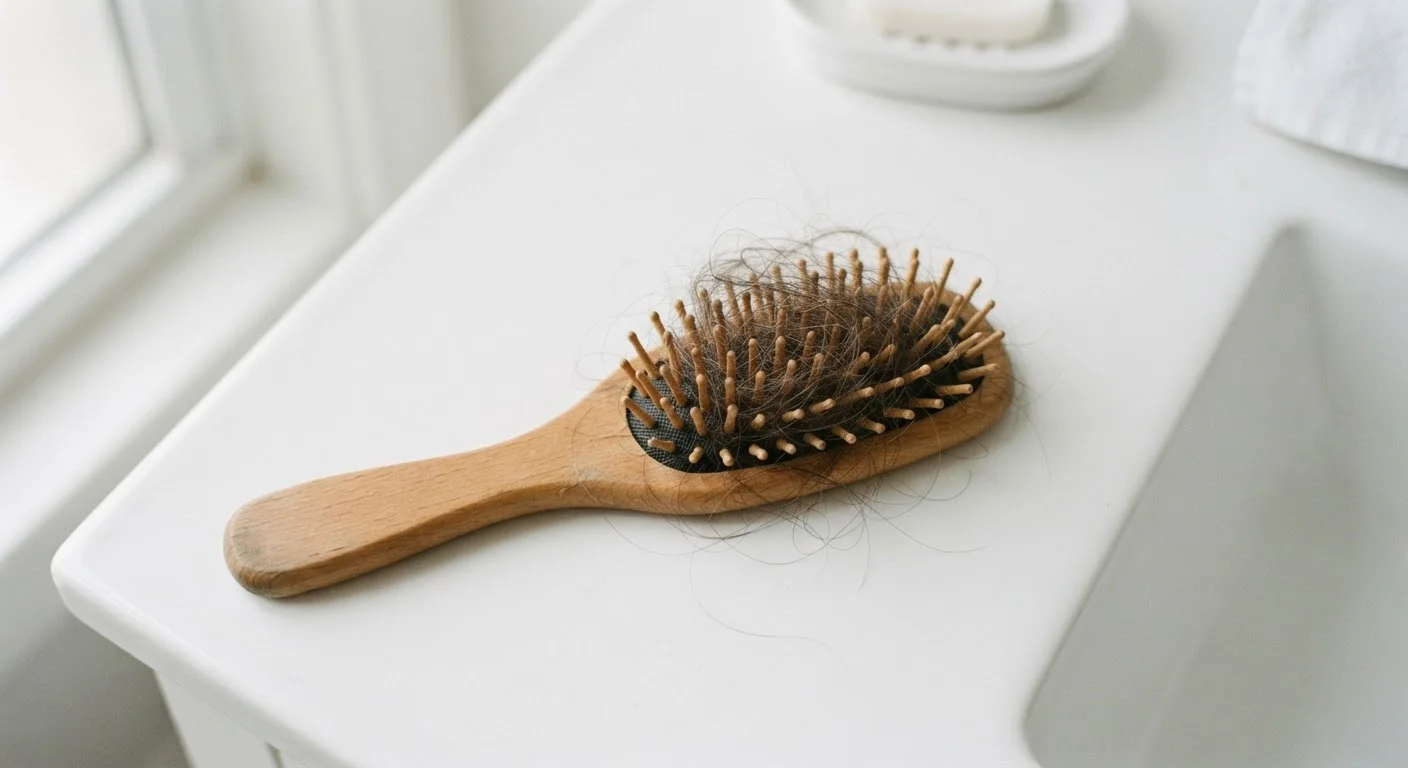
Photo: AskSpecialist.net editorial
Key Takeaways
- Shed hairs have a white bulb at the root; broken hairs are shorter fragments with no bulb.
- Losing 50-100 hairs per day through shedding is generally considered normal.
- Breakage is almost always caused by external stressors like heat, tension, or chemical processing.
- Shedding increases can reflect internal changes such as hormonal shifts, nutritional gaps, or stress.
- Adjusting your routine based on the correct diagnosis prevents unnecessary product use or worry.
- Persistent or sudden increases in either breakage or shedding warrant a conversation with a dermatologist or trichologist.
The Simple Test That Tells You Which One You're Dealing With
Before you overhaul your entire hair routine, take a closer look at the hairs you're finding in your brush or shower drain. Pick one up and examine it. If it runs close to your full hair length and has a tiny white or translucent bulb at one end, that's a shed hair - it completed its natural growth cycle and detached from the follicle cleanly. If the strand is short, varies in length from other loose hairs, and has no bulb at either end, it snapped. That's breakage.
This distinction isn't just semantic. The causes are different, the timelines are different, and the solutions are different. Treating breakage like shedding - or vice versa - wastes time and can make the problem worse.
The White Bulb Is Not a Root
What Causes Hair Breakage
Breakage is almost always mechanical or chemical in origin - meaning something external is stressing the strand past its structural limits. The most common culprits include:
- Heat styling: Repeated high-heat exposure from flat irons, curling wands, and blow dryers degrades the keratin proteins that give hair its tensile strength. Over time, strands become brittle and snap more easily.
- Chemical processing: Coloring, bleaching, relaxing, and perming all alter the hair's internal structure. Each process temporarily weakens the cortex, and overlapping treatments compounds the damage.
- Mechanical tension: Tight ponytails, braids worn for extended periods, rough towel-drying, and aggressive brushing - especially on wet hair - physically stress the shaft.
- Dryness and moisture imbalance: Hair that lacks adequate moisture becomes less flexible and more prone to snapping. This can be worsened by using the wrong cleansing method for your texture, which strips natural oils or fails to rinse away buildup effectively.
Breakage tends to show up as shorter pieces scattered throughout the hair and is often most visible at areas of repeated stress - along the hairline, at ponytail lines, or at the ends.
50-100
Hairs shed per day considered normal
Dermatologists broadly cite this range as typical for most adults, though individual variation exists based on hair density and cycle phase.
6-12 weeks
Delay between stressor and visible shedding
Telogen effluvium typically appears weeks after the triggering event because follicles need time to complete the cycle shift before hairs visibly shed.
~90%
Hair follicles in active growth phase at any given time
On a healthy scalp, the vast majority of follicles are in the anagen (growth) phase at once, which is why normal daily shedding doesn't result in visible thinning.
What Causes Increased Shedding
The hair growth cycle has four phases: growth (anagen), transition (catagen), rest (telogen), and shedding (exogen). Every follicle cycles independently, which is why we don't lose all our hair at once. Shedding becomes noticeable - or exceeds the typical daily range - when something pushes more follicles into the resting and shedding phases simultaneously.
Common triggers include:
- Physical or emotional stress: A condition called telogen effluvium describes diffuse shedding that occurs weeks to months after a significant stressor - illness, surgery, prolonged psychological stress, or rapid weight loss.
- Hormonal changes: Postpartum shedding is among the most widely recognized examples. Shifts related to thyroid function, menopause, or hormonal contraceptive changes can also affect the cycle.
- Nutritional deficiencies: Iron, zinc, protein, and biotin are particularly associated with hair cycle disruption when intake is inadequate.
- Seasonal variation: Research suggests some people experience slightly increased shedding in autumn. Seasonal shifts in hair behavior are real and worth accounting for when tracking changes.
Unlike breakage, shedding-related loss originates at the follicle level, so no change to your styling routine will resolve it on its own.
How to Respond to Each - and When to Seek Help
If breakage is your primary issue, start by auditing the physical and chemical stressors in your routine. Reduce heat frequency, lower temperature settings, and use a heat protectant consistently. Detangle gently starting from the ends, and avoid brushing hair when soaking wet. Protein treatments can help reinforce weakened strands, though overuse can cause stiffness - balance them with moisture-focused conditioning. You can use a weekly hair care audit to track whether your changes are making a measurable difference.
If you're experiencing increased shedding, the focus shifts inward. Evaluate whether a stressor, dietary gap, or health change preceded the increase - shedding often appears 6-12 weeks after the triggering event. Eating a varied, nutrient-adequate diet supports follicle function, but no supplement should be started or stopped without guidance from a healthcare provider.
Track Changes Over Time, Not Just Day to Day
When shedding is sudden, patchy, accompanied by scalp changes, or simply not improving, a board-certified dermatologist or trichologist is the right next step. They can assess whether an underlying condition is involved and recommend appropriate testing. This article is general educational information - it is not a substitute for professional medical evaluation. Also worth reviewing: common hair care myths that may be influencing how you interpret what you're seeing.
This article is for informational purposes only and does not constitute medical advice. If you have concerns about hair loss or scalp health, consult a qualified healthcare professional.
Frequently Asked Questions
The content on this site is provided for informational purposes only and should not be considered a substitute for professional advice. While we strive to provide accurate and up-to-date information, we make no guarantees regarding its completeness or accuracy. Always consult a qualified professional for advice specific to your circumstances before making any decisions.