
Why Your Hair Feels Dry an Hour After You Moisturize It

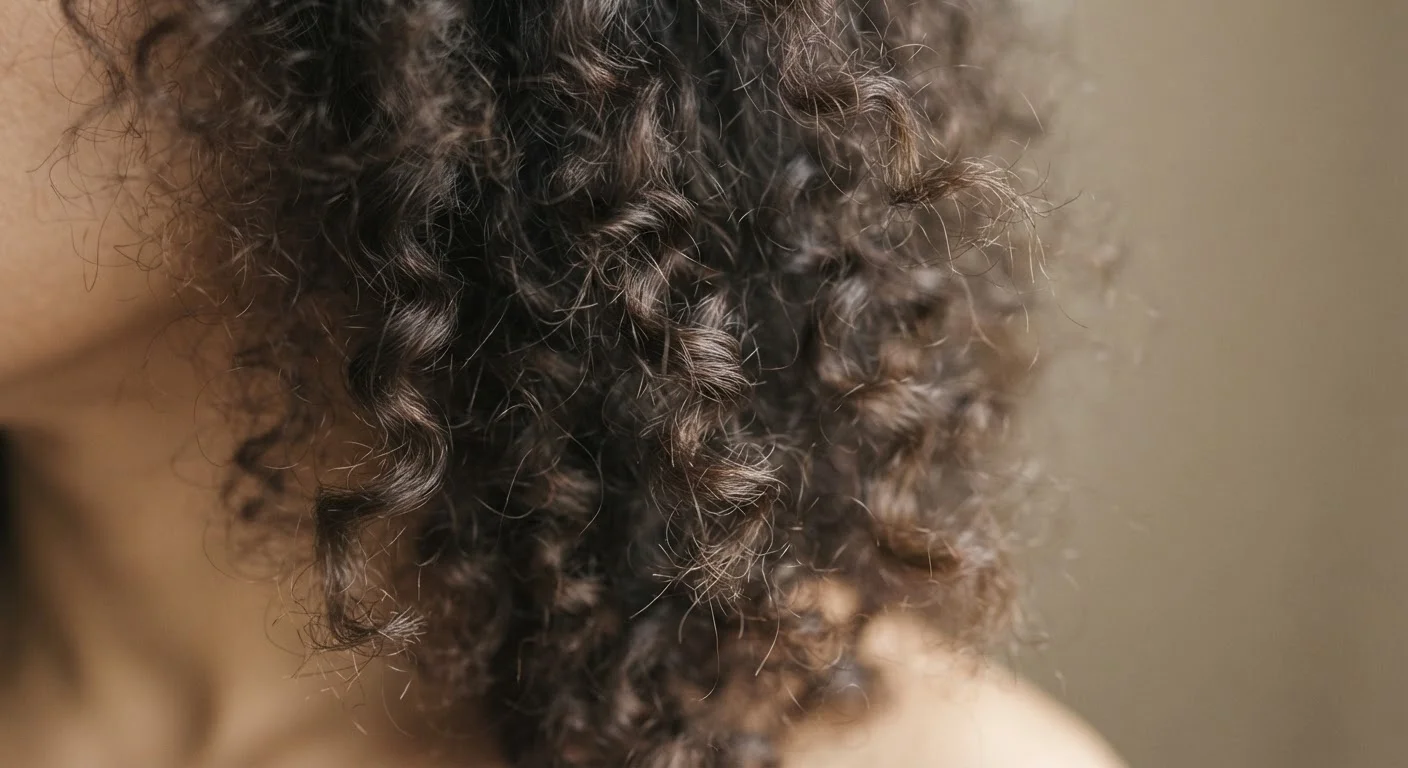
Photo: AskSpecialist.net editorial
Key Takeaways
- Hair that dries out quickly is usually a porosity issue, not a product quality issue.
- High-porosity hair absorbs moisture fast but loses it just as quickly without a sealant.
- Layering products in the correct order - liquid, cream, oil - makes a measurable difference in retention.
- Protein-moisture balance matters: too much of either disrupts the hair's ability to hold hydration.
- Understanding your hair's porosity level is the first step to building a routine that actually works.
The Real Reason Moisture Disappears
You applied a leave-in conditioner, maybe a cream on top of that, and within an hour your hair felt just as parched as before. It's a frustrating cycle - and the cause is almost never the product itself. The real explanation lives in your hair's structure, specifically in a property called porosity.
Porosity describes how easily your hair's outer layer - the cuticle - allows moisture in and out. Low-porosity hair has tightly closed cuticles that resist absorption. High-porosity hair, on the other hand, has gaps or lifted cuticles that absorb moisture quickly but can't hold onto it. If your moisture vanishes in under an hour, you're almost certainly dealing with high porosity. To understand why porosity matters so deeply, see our full breakdown in Porosity, Elasticity, and Density: The Three Numbers That Define Your Hair.
High porosity can be genetic, but it's frequently caused or worsened by chemical processing, heat styling, and physical damage. Heat styling changes your hair at a structural level, lifting and eroding cuticle edges over time - which directly undermines moisture retention.
Common Mistakes That Make the Problem Worse
Even when readers correctly identify that their hair is high porosity, certain habits continue to sabotage retention. The mistakes below are the most frequent culprits.
Applying moisturizer to dry hair instead of damp hair.
Skipping a sealant and relying on cream alone to hold moisture.
Using too much protein too frequently, creating a barrier that actually repels moisture.
Washing with water that is too hot, which forces cuticles further open.
Applying products in the wrong order so sealants go on before hydrators.
Don't Confuse Product Buildup With Dryness
Building a Routine That Actually Holds Moisture
Fixing rapid moisture loss isn't about buying a more expensive product - it's about changing your approach. The cornerstone strategy for high-porosity hair is the LOC or LCO method (Liquid, Oil, Cream - or Liquid, Cream, Oil), which layers products in an order designed to push moisture in and then seal it there.
Start with a water-based product or plain water to introduce actual hydration. Follow with a cream-based conditioner or leave-in to provide slip and lightweight coating. Then finish with an oil or butter to form a barrier that slows evaporation. The balance between protein and moisture also plays a critical role here: protein treatments can temporarily patch damaged cuticles and improve retention, but overuse leads to brittleness. Read your hair's signals - if it feels stiff and snaps easily, you likely need more moisture; if it stretches without springing back, a protein treatment may help.
Consistency matters more than any single product. A simple routine applied correctly and regularly will outperform an elaborate one used incorrectly.
This article is for general informational purposes only. Results vary based on individual hair type, condition, and care history. Consult a licensed cosmetologist or trichologist for personalized guidance.
The content on this site is provided for informational purposes only and should not be considered a substitute for professional advice. While we strive to provide accurate and up-to-date information, we make no guarantees regarding its completeness or accuracy. Always consult a qualified professional for advice specific to your circumstances before making any decisions.