
What 'SPF in Moisturizer' Actually Means for Daily Sun Protection

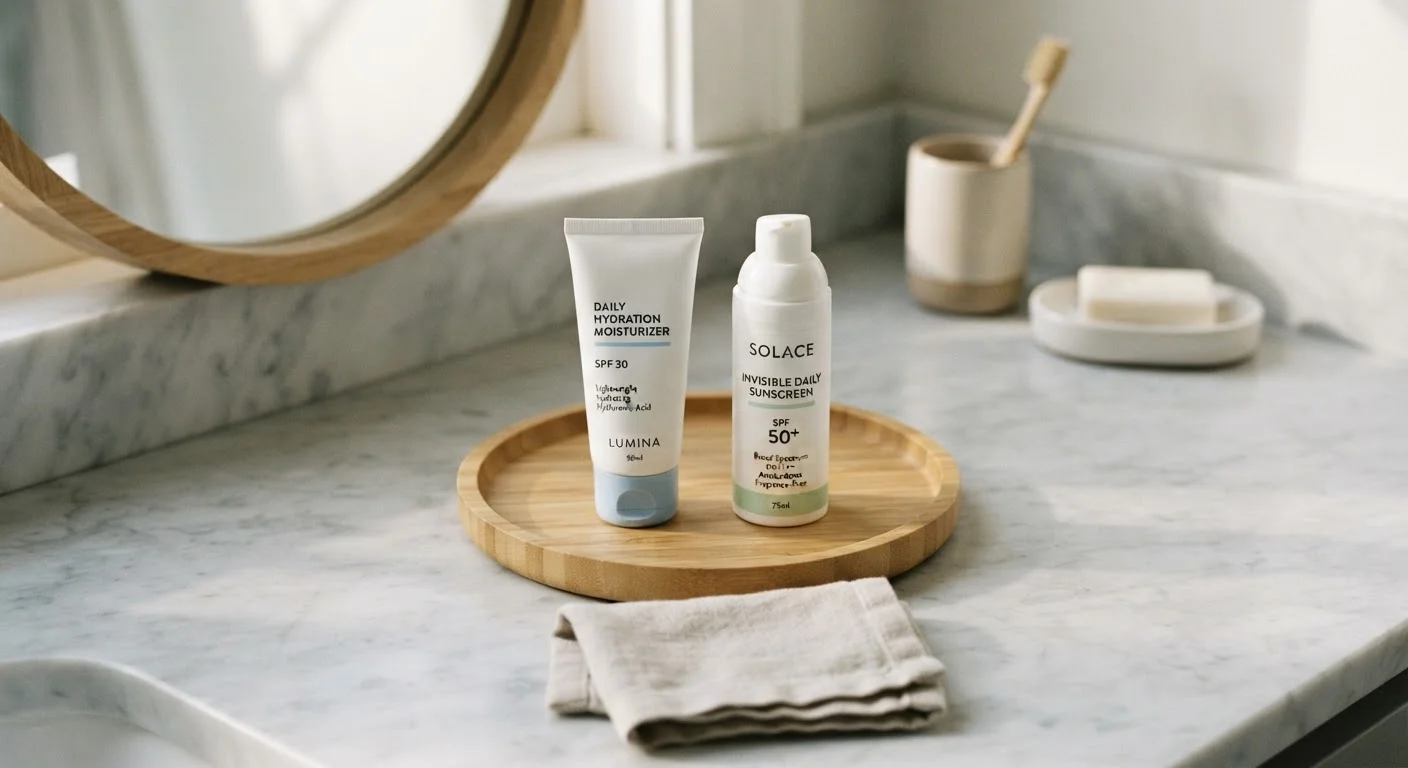
Photo: AskSpecialist.net editorial
Key Takeaways
- SPF in moisturizer works the same way as standalone sunscreen - it contains actual sunscreen actives regulated by the FDA.
- Lab-tested SPF values assume a specific application amount most people never apply in practice.
- SPF only measures UVB protection; look for 'broad spectrum' on the label for UVA coverage too.
- SPF moisturizers are a practical daily habit but may not replace dedicated sunscreen for extended outdoor exposure.
- Reapplication is necessary for ongoing protection - most moisturizers are not designed for reapplication mid-day.
How SPF Actually Gets Into a Moisturizer
A moisturizer earns its SPF label the same way a dedicated sunscreen does: by incorporating FDA-regulated sunscreen active ingredients into its formula. These actives - which include compounds like avobenzone, homosalate, and zinc oxide - are what physically or chemically intercept UV radiation before it reaches the skin. The moisturizing base around them (humectants, emollients, occlusives) is separate from the sun-protection function entirely.
This matters because the SPF number on the bottle is a measure of the active ingredients' performance, not the overall quality of the moisturizer. A product can be an excellent hydrator and a mediocre sunscreen simultaneously, or vice versa. Understanding this separation helps you evaluate the product more honestly. For a broader breakdown of ingredient terminology, see our active ingredients glossary.
~25-50%
Typical sunscreen application vs. tested amount
Research on sunscreen use behavior suggests most people apply between one-quarter and one-half the amount used in SPF testing, significantly reducing real-world protection.
SPF 30
Minimum SPF for daily use recommended by dermatologists
The American Academy of Dermatology generally recommends a broad-spectrum SPF of at least 30 for everyday sun protection in typical conditions.
Every 2 hrs
Sunscreen reapplication interval for sustained protection
Sun protection guidelines recommend reapplying sunscreen every two hours during outdoor exposure, or immediately after swimming or heavy sweating.
The Gap Between Lab SPF and Real-World Protection
SPF ratings are established through standardized testing that applies 2 milligrams of product per square centimeter of skin - for the face, that translates to roughly a quarter teaspoon. Studies consistently show that most people apply between a quarter and a half of that amount in daily use. Because SPF protection does not scale linearly, using half the required amount does not give you half the SPF - it can drop the effective protection considerably more than that.
With a moisturizer, the underapplication problem is amplified. People typically use just enough to cover and blend smoothly, which is far less product than a sunscreen-specific application would require. This does not mean SPF moisturizers are useless - it means the real-world SPF you receive is meaningfully lower than the label value, and that context should shape how you use the product.
Apply SPF Moisturizer More Generously Than You Think
UVA vs. UVB: Why 'Broad Spectrum' Is the Label Worth Checking
SPF only measures protection against UVB rays - the wavelengths responsible for sunburn. UVA rays, which penetrate more deeply into the skin and are present year-round even on cloudy days, are not captured in the SPF number at all. A moisturizer with SPF 50 but no broad-spectrum designation may offer strong UVB protection while leaving UVA rays largely unaddressed.
The FDA requires that any product labeled 'broad spectrum' has passed a test demonstrating meaningful UVA coverage proportional to its UVB protection. So when choosing an SPF moisturizer for daily use, 'broad spectrum' is the more important qualifier - the specific SPF number matters less than whether both UV categories are covered. For a fuller picture of why consistent sun protection matters long-term, our article on daily sunscreen habits is a useful follow-read.
When SPF Moisturizer Is Enough - and When It Isn't
For everyday, low-exposure situations - an office commute, running errands, sitting near windows - a broad-spectrum SPF 30 moisturizer applied as part of a consistent morning routine provides a practical and meaningful layer of protection. Dermatologists generally consider SPF 30 broad spectrum adequate for incidental daily exposure, and the convenience of a combined product makes daily compliance more realistic for many people.
Where SPF moisturizers fall short is in situations requiring sustained outdoor coverage: a long walk, outdoor dining, a day at a park. In those cases, a dedicated sunscreen applied at the correct amount - and reapplied every two hours or after sweating - is the more reliable tool. SPF moisturizer can still serve as a base layer, but it should not be treated as the sole protection for extended UV exposure.
It's also worth noting that reapplication, which is essential for ongoing protection, is rarely practical with a moisturizer. Dedicated sunscreen sprays or powder formulations tend to be more realistic for mid-day touch-ups over makeup. If you're noticing other signs that your current routine may not be serving your skin well, this overview of routine warning signs can help you recalibrate.
This article is for general informational and educational purposes only. It is not a substitute for professional dermatological or medical advice. Consult a qualified healthcare professional with any questions about your skin health or sun protection needs.
Frequently Asked Questions
The content on this site is provided for informational purposes only and should not be considered a substitute for professional advice. While we strive to provide accurate and up-to-date information, we make no guarantees regarding its completeness or accuracy. Always consult a qualified professional for advice specific to your circumstances before making any decisions.