
Sunscreen Every Day: The Non-Negotiable Skincare Step Most People Skip

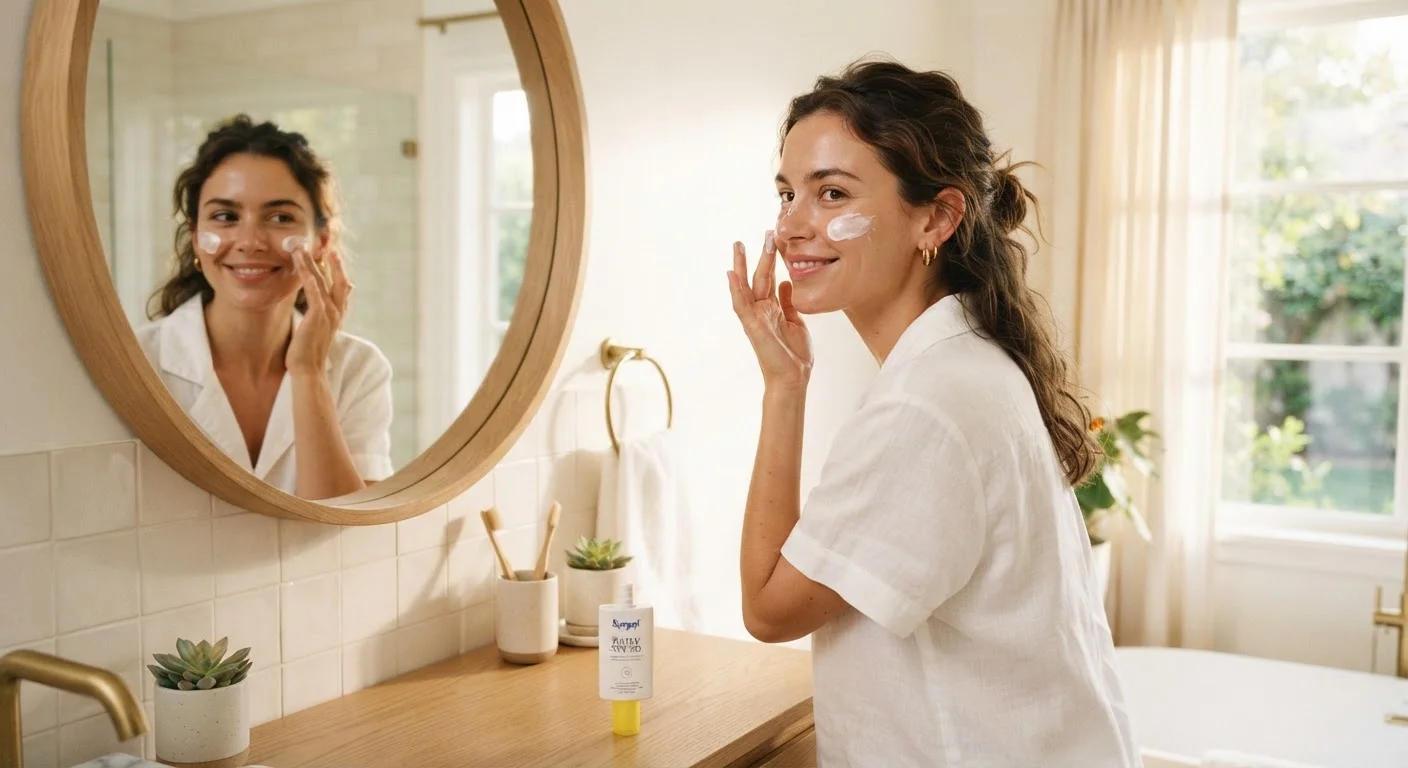
Photo: AskSpecialist.net editorial
Key Takeaways
- UV exposure happens year-round, not just on sunny or hot days.
- UVA rays penetrate windows and contribute to photoaging even indoors.
- Cumulative UV damage is a leading driver of premature wrinkles, dark spots, and skin cancer risk.
- SPF 30 broad-spectrum sunscreen is the widely recommended daily minimum by dermatology organizations.
- Reapplication every two hours during outdoor activity is as important as the initial application.
- Sunscreen works best as part of a consistent routine, not as an occasional precaution.
Why UV Damage Accumulates Silently
Most people associate sunscreen with vacations, pool days, or outdoor events. The reality is that the majority of lifetime UV exposure comes from everyday, unremarkable moments - a commute, a lunchtime walk, sitting beside a window. None of these feel like sun exposure in the traditional sense, but they add up over decades in ways that eventually show on the skin.
UV radiation arrives in two biologically relevant forms. UVB rays are the ones responsible for sunburn - they're most intense at midday and during summer months. UVA rays are more insidious: they penetrate deeper into the skin, remain relatively constant throughout the year, and pass through glass. While UVB causes the visible, immediate signal of overexposure, UVA does slower, structural damage - breaking down collagen, altering pigmentation, and contributing to the cumulative cellular changes associated with premature aging and skin cancer risk.
This distinction matters because it explains why sun protection isn't a seasonal concern. Even on a grey November afternoon, meaningful UVA exposure can occur during a 20-minute drive. Skipping SPF on days that don't feel sunny is one of the most common and consequential skincare errors. You can learn more about why these omissions matter in our piece on the overlooked steps in a proper skincare routine.
Reading SPF Labels Accurately
The number on a sunscreen bottle refers specifically to protection against UVB radiation. SPF 30 filters approximately 97% of UVB rays; SPF 50 filters around 98%. The incremental difference between high SPF values is real but modest - the meaningful threshold is whether the product is labeled broad-spectrum, which indicates it also addresses UVA.
Sunscreens fall into two main categories based on their active ingredients. Chemical (organic) filters - such as avobenzone or octinoxate - absorb UV energy and convert it to heat. Mineral (physical) filters - zinc oxide and titanium dioxide - sit on the skin's surface and reflect or scatter UV light. Both are effective when formulated and applied correctly. Mineral filters are often better tolerated by sensitive skin, while chemical filters tend to blend more invisibly into the skin, which some people prefer aesthetically.
For everyday use, a broad-spectrum SPF 30 applied to all exposed skin is the general guidance from established dermatology organizations. How much matters as much as what: most adults use far less product than needed, which substantially reduces effective protection. For a deeper look at how SPF claims work in everyday products, see what SPF in moisturizer actually means for daily sun protection.
Building the Habit Into Your Routine
The evidence for daily SPF is robust and consistent, yet adherence remains low. The main barriers tend to be tactile - greasy finish, white cast, or the feeling that it disrupts makeup - and habitual - sunscreen just wasn't part of how most Americans grew up thinking about skincare unless they were headed to the beach.
Treating SPF as the final step of a morning routine, applied after moisturizer and before makeup, is the most practical approach. Reapplication is equally important during prolonged outdoor exposure - dermatology guidelines generally cite every two hours as the standard interval, or after swimming or sweating heavily.
If you're concerned about skin sensitivity or reactions, building a routine around sensitive skin covers how to layer products in a way that minimizes irritation. And if you've ever wondered whether skipping SPF is among the more harmful routine choices, the answer is consistently yes - more on that in our look at signs your skincare routine is doing more harm than good.
There are also persistent myths that complicate the conversation - that darker skin tones don't need sunscreen, that SPF in makeup is sufficient, or that base tans offer meaningful protection. None of these hold up to scrutiny. For a broader look at evidence-versus-belief in skincare, see skincare myths that dermatologists frequently correct.
This article is for general informational purposes only and is not a substitute for professional medical or dermatological advice. Consult a qualified healthcare provider for concerns about your skin health.
Frequently Asked Questions
The content on this site is provided for informational purposes only and should not be considered a substitute for professional advice. While we strive to provide accurate and up-to-date information, we make no guarantees regarding its completeness or accuracy. Always consult a qualified professional for advice specific to your circumstances before making any decisions.