
Active Ingredients Glossary: What Every Label Term Actually Means

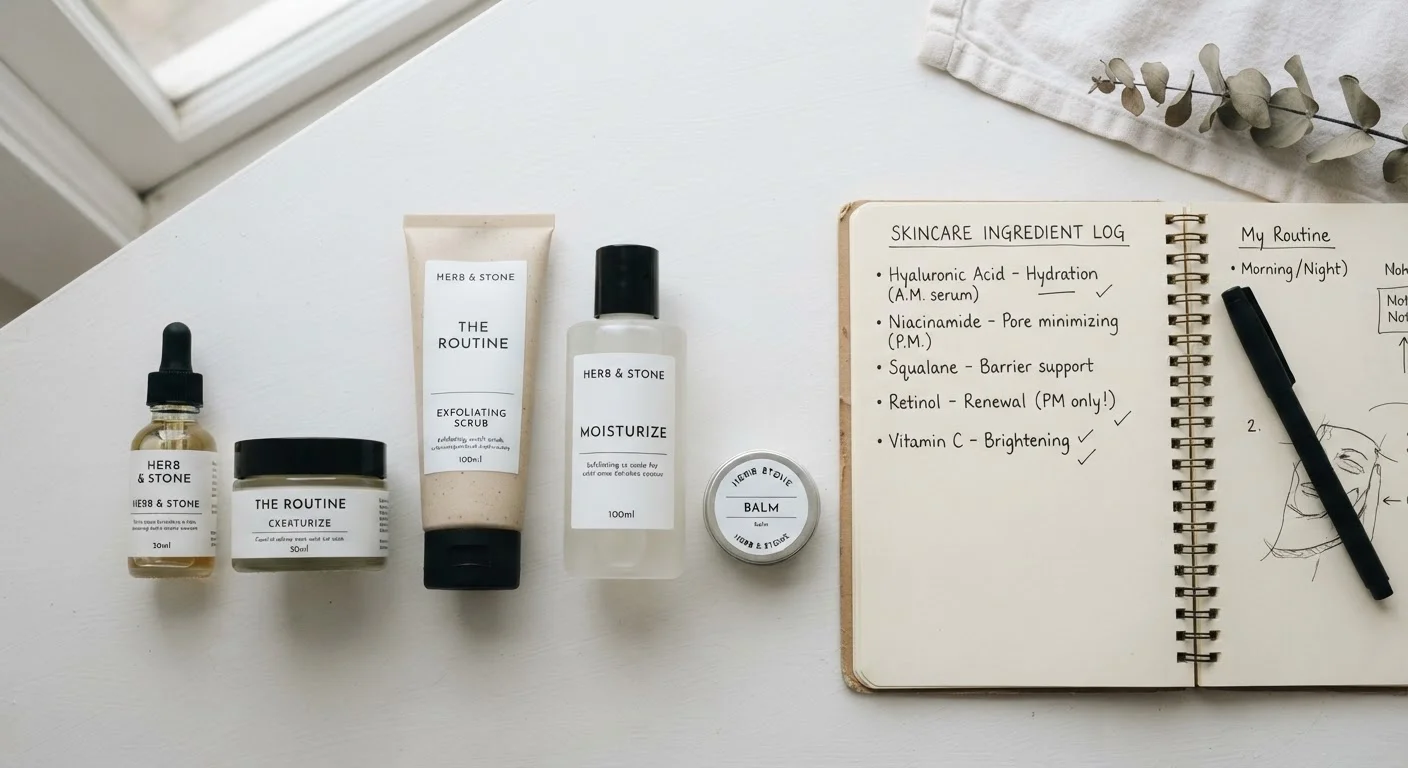
Photo: AskSpecialist.net editorial
Why Ingredient Terminology Matters
Skincare labels can feel like a chemistry exam - long INCI names, overlapping categories, and marketing language layered on top of functional science. The result is that many people either ignore ingredient lists entirely or place too much weight on trendy terms that don't tell the whole story.
This reference is designed to close that gap. Understanding what broad ingredient categories actually do - not just what they're called - lets you evaluate any product more objectively, spot redundancies in your routine, and avoid layering ingredients that may conflict. It's the same kind of close-reading skill that pays off whether you're looking at a nutrition label or a skincare bottle.
Ingredient Labels Follow a Standardized Order
This article is for general educational purposes only and is not medical or dermatological advice. If you have a skin condition, sensitivity, or underlying health concern, consult a qualified dermatologist before changing your skincare routine.
The Core Glossary: Terms You'll Encounter Most
The definitions below cover the ingredient classes that appear most frequently on U.S. skincare labels, organized by function. Each entry explains what the ingredient type does mechanically - not just what marketing copy claims it does.
AHA (Alpha Hydroxy Acid)
A class of water-soluble exfoliating acids derived from natural sources such as fruit, milk, or sugar cane. AHAs loosen the bonds between dead surface skin cells, encouraging them to shed and revealing smoother skin underneath. Glycolic acid and lactic acid are the most widely studied examples.
BHA (Beta Hydroxy Acid)
A class of oil-soluble exfoliating acids - salicylic acid being the primary example - that can penetrate the pore lining and dissolve the sebum and debris that contribute to breakouts. BHAs are particularly relevant for oily or acne-prone skin types.
Humectant
An ingredient that draws moisture from the environment or from deeper skin layers toward the surface. Hyaluronic acid, glycerin, and urea are common humectants. They increase surface hydration but do not seal that moisture in on their own.
Emollient
An ingredient that smooths and softens skin by filling gaps between skin cells, improving texture and flexibility. Plant oils, fatty acids, and squalane are common emollients. They work within or just on the skin surface rather than forming a physical barrier.
Occlusive
An ingredient that forms a physical film on the skin surface to slow water evaporation - a process called transepidermal water loss (TEWL). Petrolatum, lanolin, beeswax, and dimethicone are classic occlusives, often used as the final step in a routine.
Retinoid
A family of vitamin A derivatives that regulate how skin cells behave and turn over. The category spans over-the-counter retinol to prescription-strength tretinoin. Retinoids have a strong evidence base for supporting collagen production and managing acne, but require gradual introduction and consistent sunscreen use.
Peptide
Short chains of amino acids - the building blocks of proteins like collagen and elastin - applied topically to signal skin to produce more structural proteins. Research on peptides is ongoing; results tend to be gradual and more modest than those seen with retinoids.
Broad-Spectrum SPF
A sunscreen designation indicating protection against both UVB rays (which cause sunburn) and UVA rays (associated with skin aging and deeper DNA damage). In the U.S., 'broad-spectrum' is an FDA-regulated term that requires passing a defined testing standard.
Niacinamide
A form of vitamin B3 that is well-tolerated across most skin types. Research supports its use for reducing the appearance of enlarged pores, uneven tone, and redness. It also helps the skin barrier produce ceramides, reinforcing overall skin health.
Ceramide
Lipid molecules naturally present in the skin barrier that act like mortar between skin cells, keeping irritants out and moisture in. Ceramide levels can decline with age and over-cleansing; topical ceramides help replenish and reinforce barrier function.
Antioxidant
A compound that neutralizes free radicals generated by UV exposure, pollution, and other environmental stressors. Vitamins C and E and niacinamide are common skincare antioxidants. They support the skin's defenses but do not replace sunscreen protection.
Zinc Oxide
A mineral UV filter that scatters and reflects UVA and UVB radiation. It is classified as a physical (mineral) sunscreen active and is generally considered well-tolerated, including for sensitive skin. Zinc oxide appears on U.S. labels as an FDA-recognized active ingredient.
One distinction worth knowing: in U.S. cosmetics regulation, the phrase "active ingredient" carries a specific meaning. It refers only to ingredients - like sunscreen UV filters - that the FDA evaluates and approves for a drug-level function. Most functional skincare ingredients (retinol, niacinamide, peptides) are technically cosmetic ingredients, not drug actives. The practical difference is that drug actives like zinc oxide are held to a separate, stricter testing standard and must be listed separately on the label.
For a parallel look at how labeling conventions work in hair care - where terms like sulfates, silicones, and humectants appear constantly - see Reading a Hair Care Label Without a Chemistry Degree.
| AHA Exfoliation Type | Water-soluble; works on skin surface |
| BHA Exfoliation Type | Oil-soluble; penetrates inside pores |
| Retinol vs. Tretinoin | Retinol is OTC; tretinoin is prescription-strength |
| Broad-Spectrum Regulation | FDA-defined testing standard required on U.S. labels (U.S. Food & Drug Administration) |
| Ceramide Share of Skin Barrier Lipids | Approximately 50% of stratum corneum lipids (Dermatological research consensus) |
| Minimum Recommended Daily SPF | SPF 30 or higher (American Academy of Dermatology guidance) |
The content on this site is provided for informational purposes only and should not be considered a substitute for professional advice. While we strive to provide accurate and up-to-date information, we make no guarantees regarding its completeness or accuracy. Always consult a qualified professional for advice specific to your circumstances before making any decisions.