
Why Exfoliating Too Often Makes Your Skin Worse

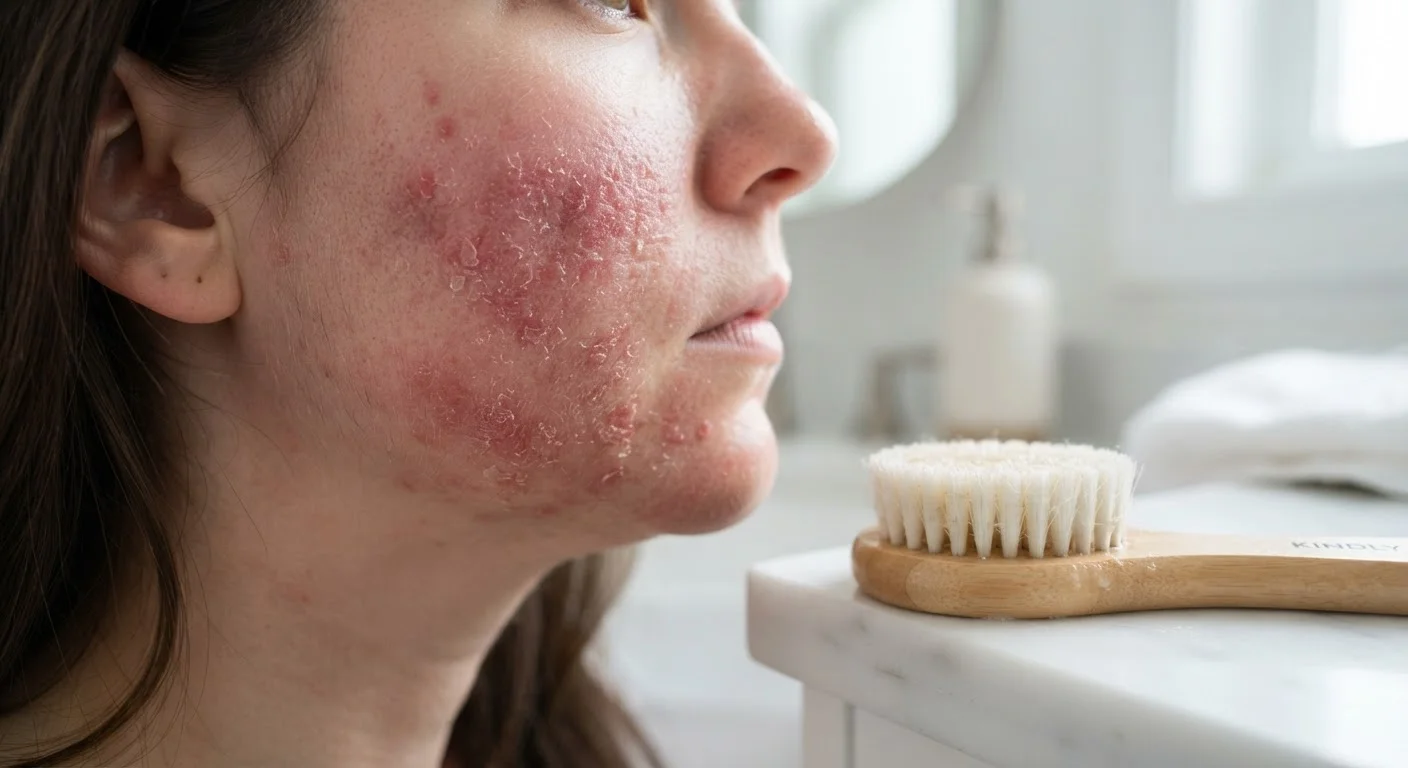
Photo: AskSpecialist.net editorial
Key Takeaways
- Over-exfoliating strips the skin barrier, triggering redness, dryness, and breakouts.
- Most skin types benefit from exfoliating just one to three times per week.
- Signs of over-exfoliation - tightness, shininess, and sensitivity - are often mistaken for other conditions.
- Chemical and physical exfoliants both cause damage when used too aggressively or too frequently.
- Recovery from over-exfoliation requires simplifying your routine and prioritizing barrier repair.
What Over-Exfoliation Actually Does to Your Skin
Exfoliation removes dead skin cells from the surface, and done at the right frequency, it can improve texture, tone, and product absorption. The problem starts when people treat it as a daily necessity. Your skin has a natural renewal cycle - roughly 28 days in younger adults, slowing with age - and exfoliating too frequently disrupts that process before it's complete.
When you over-exfoliate, you don't just remove dead cells; you begin stripping away the outermost layers of living skin and the lipids that hold them together. The result is a compromised skin barrier - the thin, protective layer that keeps moisture in and irritants out. To understand why this matters so deeply, see our guide to how the skin barrier works.
A damaged barrier responds predictably: increased water loss leads to dryness and flaking, while open pathways invite bacteria and environmental irritants, causing redness and breakouts. Paradoxically, your skin may also produce excess oil as a compensatory response - making oily-skin types feel like they need to scrub more, when in fact they need to scrub less.
28 days
Skin's natural cell turnover cycle
Dermatologists commonly cite a roughly 28-day cell renewal cycle in younger adults, which slows progressively with age - a timeline that daily exfoliation directly disrupts.
1-3×
Recommended weekly exfoliation frequency
Most dermatological guidelines suggest most skin types exfoliate no more than one to three times per week, with sensitive skin staying at the lower end of that range.
Common Mistakes That Lead to Barrier Damage
Most over-exfoliation doesn't happen because someone ignored the instructions - it happens because of compounding habits that each seem reasonable on their own. Understanding these specific errors is the first step toward fixing them.
Using a physical scrub and a chemical exfoliant on the same day.
Exfoliating every day because skin feels rough or congested.
Applying multiple active ingredients - such as retinol, vitamin C, and AHAs - on top of freshly exfoliated skin.
Scrubbing with too much pressure or using overly abrasive tools.
Not adjusting exfoliation frequency when starting a new active ingredient like retinol.
If your skin is reacting badly but you're not sure why, it's worth reviewing the broader patterns in your routine. Our article on signs your skincare routine is doing more harm than good covers the warning signals to watch for.
How to Recover and Rebuild Your Routine
If your skin is already showing signs of over-exfoliation - persistent tightness, a shiny or "raw" appearance, stinging when you apply moisturizer, or unusual breakouts - the priority is to stop exfoliating entirely for at least one to two weeks. Let your barrier rebuild before reintroducing any active ingredients.
Stop All Exfoliation During Recovery
During recovery, simplify your routine to a gentle, fragrance-free cleanser, a barrier-supporting moisturizer containing ingredients like ceramides, glycerin, or niacinamide, and a broad-spectrum SPF during the day. Avoid retinoids, vitamin C, AHAs, BHAs, and physical scrubs until sensitivity resolves.
When you do reintroduce exfoliation, start with the lowest effective frequency - once per week - and use only one exfoliant at a time. Many of the beliefs driving over-exfoliation are rooted in skincare myths worth questioning. Our piece on skincare myths dermatologists frequently correct addresses several directly relevant to exfoliation habits.
This article is for general informational and educational purposes only and is not a substitute for professional medical or dermatological advice. If you are experiencing persistent skin concerns, consult a qualified dermatologist.
The content on this site is provided for informational purposes only and should not be considered a substitute for professional advice. While we strive to provide accurate and up-to-date information, we make no guarantees regarding its completeness or accuracy. Always consult a qualified professional for advice specific to your circumstances before making any decisions.