
Chemical Exfoliants vs. Physical Scrubs: Choosing the Right Approach for Your Skin

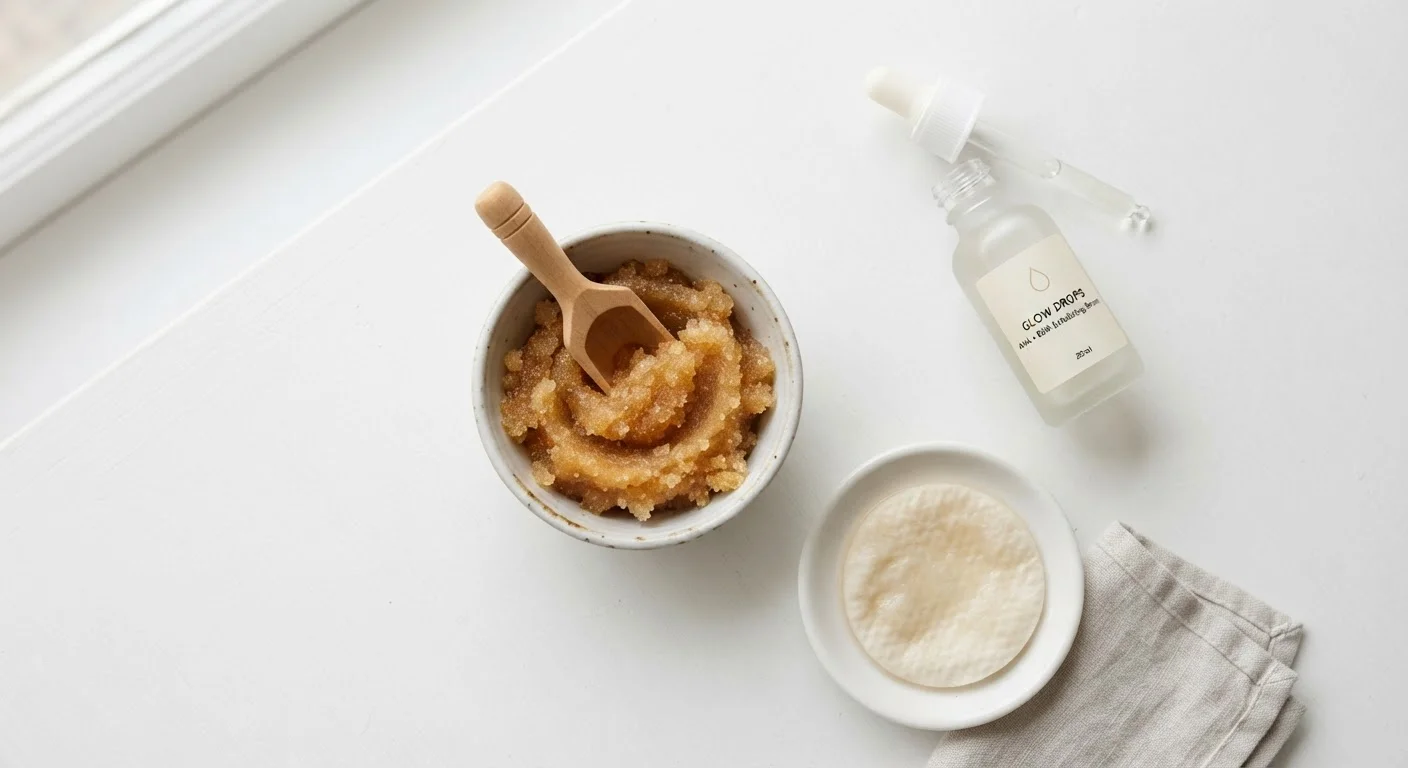
Photo: AskSpecialist.net editorial
Key Takeaways
- Chemical exfoliants (AHAs and BHAs) dissolve the bonds between dead skin cells without manual friction.
- Physical scrubs remove dead skin through abrasion and can cause micro-tears if used aggressively.
- Skin type is the most reliable guide: oily and acne-prone skin often responds well to BHAs, while dry or sensitive skin may favor gentle AHAs or no physical scrubs at all.
- Over-exfoliating - with either method - is one of the most common causes of barrier damage and irritation.
- Most dermatologists recommend exfoliating no more than two to three times per week for the average skin type.
What Exfoliation Actually Does
Your skin naturally sheds dead cells from its outermost layer roughly every 28 to 40 days - a process that slows with age. When that turnover lags, dead cells accumulate, leading to dullness, clogged pores, rough texture, and uneven tone. Exfoliation speeds that clearing process, but the way it does so varies significantly between chemical and physical approaches.
If you're building a routine from the ground up, our first-timer's skincare roadmap covers where exfoliation fits within a complete regimen. For now, understanding the mechanics of each method is what lets you choose purposefully rather than by trial and error.
How Chemical Exfoliants Work
Chemical exfoliants are acids or enzymes that loosen the bonds holding dead skin cells together, allowing them to shed without any physical rubbing. The two main categories are:
- AHAs (alpha-hydroxy acids) - including glycolic acid (derived from sugar cane) and lactic acid (derived from milk). These are water-soluble and work primarily on the skin's surface. They're well-suited for addressing dryness, fine lines, and uneven pigmentation.
- BHAs (beta-hydroxy acids) - primarily salicylic acid. Oil-soluble, BHAs penetrate into pores and are particularly effective for oily, acne-prone skin. They have mild anti-inflammatory properties as well.
Enzyme exfoliants, often derived from papaya or pineapple, offer a gentler alternative that works similarly to AHAs and is sometimes better tolerated by very sensitive skin.
Start Low, Go Slow With Acids
The concentration of an acid matters as much as the type. Over-the-counter AHA products typically range from 5% to 10%; higher concentrations found in professional peels require controlled settings. Starting with a lower percentage and working up is a sound approach for most people.
How Physical Scrubs Work
Physical scrubs - also called mechanical exfoliants - use friction from abrasive particles to manually dislodge dead skin cells. Common particles include sugar, salt, ground rice, jojoba beads, and finely milled oats. The results are immediate: skin feels smoother right after use.
The drawback is in the execution. Irregular or jagged particles (walnut shell powder is frequently cited by dermatologists as a concern) can create micro-tears in the skin, particularly when applied with too much pressure. Even smooth-particle scrubs can damage a compromised skin barrier if used too frequently or too vigorously.
For those with sensitive or reactive skin, it's worth reading our guide to grooming for sensitive skin before incorporating any physical exfoliant into your routine.
| Chemical Exfoliants (AHA/BHA) | Physical Scrubs | |
|---|---|---|
| How it works | Dissolves cell bonds with acid or enzymes | Removes cells through manual friction |
| Best for | Most skin types, especially sensitive or acne-prone | Normal skin with no active inflammation |
| Risk of irritation | Low to moderate if concentration is appropriate | Moderate to high if particles are coarse or pressure is heavy |
| Penetration depth | Surface to pore-level (BHAs go deeper) | Surface only |
| Learning curve | Requires understanding of acid types and percentages | Straightforward to use but easy to overdo |
| Visible results timeline | Gradual improvement over days to weeks | Immediate smoothness after use |
Frequency, Tolerance, and Common Mistakes
One of the most consistent skincare mistakes is exfoliating too often. Whether the method is chemical or physical, overdoing it strips the skin barrier - the protective outer layer that keeps moisture in and irritants out. Signs of over-exfoliation include persistent redness, stinging, tight or shiny skin, and increased breakouts. Learn exactly what happens to your barrier when exfoliation becomes excessive.
Don't Mix Exfoliation Methods in One Session
As a general starting point:
- Normal skin: two to three times per week with either method
- Oily skin: up to three times per week with a BHA
- Dry or sensitive skin: once per week, preferably with a low-concentration AHA or enzyme exfoliant
- Compromised or inflamed skin: pause exfoliation entirely and consult a dermatologist
If you're unsure whether your current routine is working for or against you, these warning signs can help you identify the problem.
This article is for general informational purposes only and is not a substitute for professional dermatological advice. If you have a skin condition, persistent irritation, or are pregnant or nursing, consult a qualified healthcare provider before introducing exfoliating acids into your routine.
The content on this site is provided for informational purposes only and should not be considered a substitute for professional advice. While we strive to provide accurate and up-to-date information, we make no guarantees regarding its completeness or accuracy. Always consult a qualified professional for advice specific to your circumstances before making any decisions.