
Why Home Prices Don't Move in Lockstep with Mortgage Rates

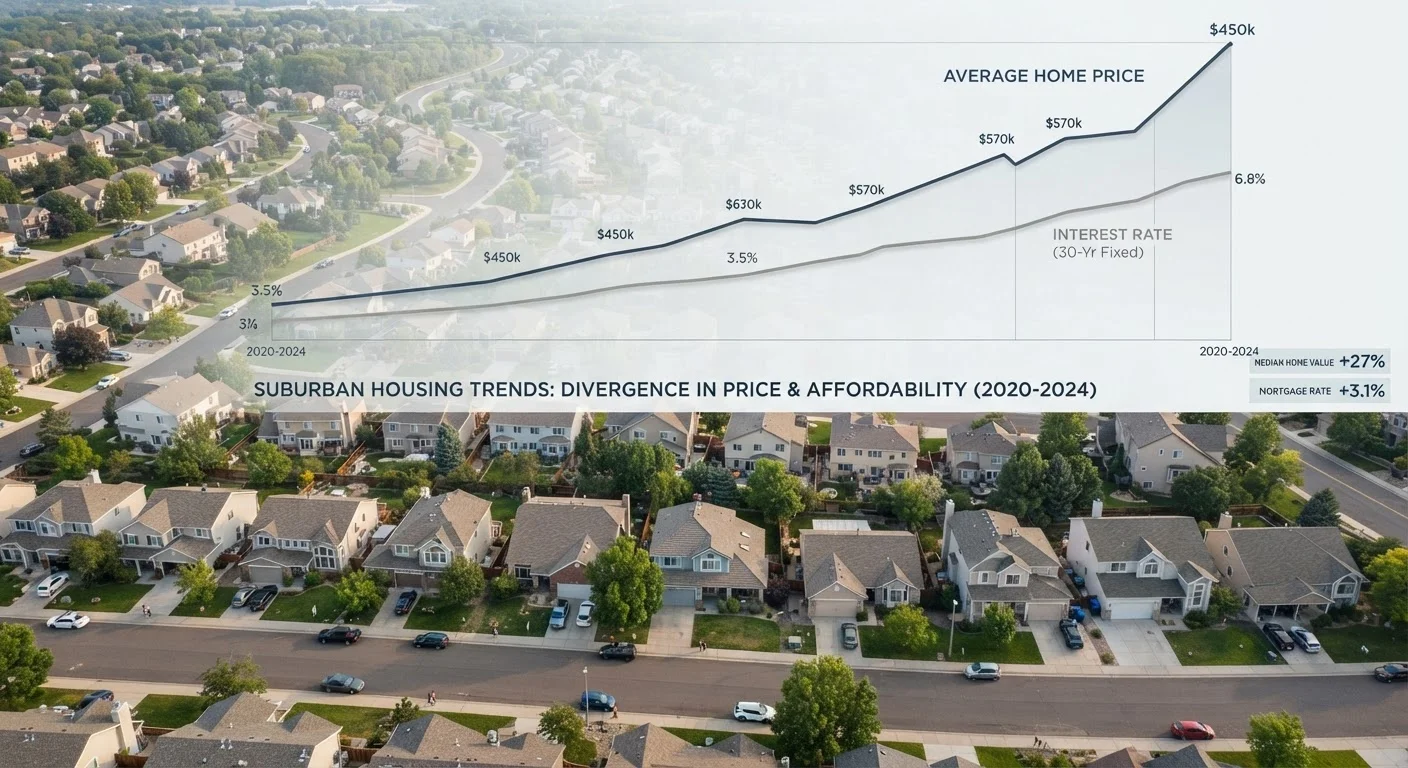
Photo: AskSpecialist.net editorial
Key Takeaways
- Mortgage rates influence what buyers can afford monthly, not necessarily what sellers ask for their homes.
- Housing supply - or the lack of it - is often a more powerful price driver than interest rate changes.
- Local economic conditions like employment and population growth frequently override national rate trends.
- Sellers resist cutting prices even when rates rise, a phenomenon economists call nominal price stickiness.
- Falling rates don't guarantee lower prices; they can fuel competition that pushes prices higher.
The Intuitive but Incomplete Story
The conventional logic goes something like this: when mortgage rates climb, borrowing becomes more expensive, buyers pull back, demand softens, and home prices decline. When rates fall, the reverse happens. It's tidy, intuitive - and only partially true.
The relationship between rates and prices is real but conditional. It plays out differently depending on how much housing is available, how strong local employment is, and how willing sellers are to adjust their expectations. Understanding why the connection isn't automatic helps buyers and sellers interpret market headlines with far more accuracy.
For a broader look at how housing data can mislead, see our guide on real estate market myths that confuse homebuyers.
Supply Constraints Often Trump Rate Movements
The most important thing to understand about home prices is that they respond to local supply and demand - and in many U.S. markets, supply has been severely limited for years. Decades of under-building, restrictive zoning laws, and rising construction costs have left many metros with far fewer homes than households that want them.
When inventory is this tight, even a meaningful increase in mortgage rates doesn't produce enough seller motivation to bring prices down. Sellers who don't need to move simply wait. Buyers who remain active - whether due to relocation, family changes, or strong local job markets - compete for whatever is available and sustain prices.
~4 months
Supply considered a balanced U.S. housing market
The National Association of Realtors generally defines a balanced market as roughly 5-6 months of supply; many metros have traded well below that level in recent years.
Millions
U.S. homes estimated underbuilt since 2008
Multiple housing economists and research groups have estimated a structural shortfall of several million units built relative to household formation since the last housing crisis.
~60%+
Share of mortgaged homeowners with sub-4% rates at recent peaks
Federal Housing Finance Agency data has shown a large proportion of outstanding mortgages locked in at rates well below subsequent market levels, reinforcing the lock-in effect.
This dynamic helps explain why price declines, when they do occur, tend to be modest and uneven. Markets with more builder activity or rising vacancy rates are more sensitive to rate increases than supply-constrained cities where new construction is limited.
The Lock-In Effect: Why Sellers Stay Put
One of the more underappreciated forces shaping recent housing markets is what researchers call the lock-in effect. Many existing homeowners secured mortgages at historically low rates. Selling would mean giving up that rate and taking on a new, higher-rate loan for their next purchase - a financially painful trade even if their home's value has appreciated.
The practical result: fewer homes listed for sale. When supply stays low because sellers are reluctant to move, prices don't fall the way simple rate-price logic would predict. This is a supply story with interest rates as the trigger, not a direct rate-to-price link.
How to Read Rate News Without Overreacting
To understand how mortgage structures affect these decisions, see our explainer on fixed-rate vs. adjustable-rate mortgages.
Local Markets Follow Their Own Rules
National mortgage rate headlines describe a single number, but home prices are always local. A market with strong job growth, net in-migration, and limited buildable land will behave very differently from a market with stagnant employment and abundant inventory - even when both face the same rate environment.
Cities experiencing rapid population growth from tech or healthcare sectors, for example, can sustain price levels that look irrational from a purely rate-based perspective. Conversely, markets with economic headwinds may see prices soften even during periods of falling rates, simply because buyer confidence or purchasing power is weak.
National reports on median and average home prices can also obscure these local realities. For guidance on reading price data correctly, see median vs. average home price and why the gap matters. And for practical guidance on weighing national headlines against your neighborhood's conditions, our article on national housing trends vs. local market conditions is a useful starting point.
What Falling Rates Actually Do to Prices
If rising rates don't reliably lower prices, the opposite is equally worth examining. When rates decline, monthly payments drop for a given loan amount - which immediately expands the pool of qualified buyers. More buyers entering the market simultaneously creates competition, and in supply-constrained environments, that competition pushes prices upward.
The net affordability gain from a rate cut can therefore be partially or fully erased by higher purchase prices. This is not a guaranteed outcome, but it is a well-documented pattern in markets where inventory fails to keep pace with demand.
Housing's role as both a consumer market and an economic signal is explored in depth in our piece on understanding real estate as an economic indicator.
For buyers, the practical takeaway is that waiting for rate cuts as a strategy to improve affordability carries real uncertainty. The right decision depends on local inventory, your financial readiness, and how long you plan to stay - not on rate movements alone.
Frequently Asked Questions
The content on this site is provided for informational purposes only and should not be considered a substitute for professional advice. While we strive to provide accurate and up-to-date information, we make no guarantees regarding its completeness or accuracy. Always consult a qualified professional for advice specific to your circumstances before making any decisions.