
Certifications, Standards, and Safety Marks: A Consumer's Quick Reference

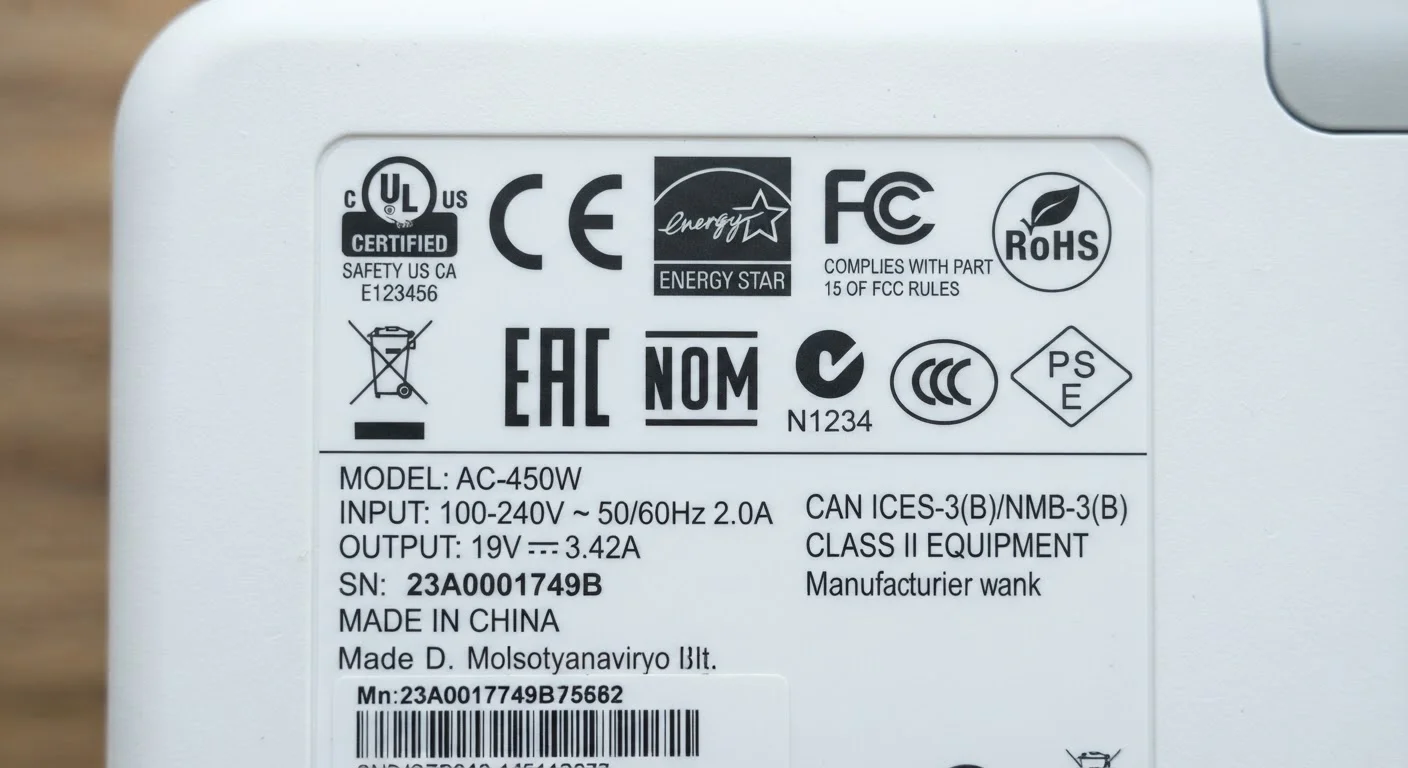
Photo: AskSpecialist.net editorial
Why Certification Marks Matter
Walk through any store and you'll find product packaging covered in logos, seals, and acronyms. Some of these marks represent rigorous independent testing. Others are little more than self-declared marketing badges. Knowing the difference is a practical skill that can protect your safety, your wallet, and your expectations.
Certification marks generally fall into three categories: safety certifications (verifying a product won't harm you under normal use), performance or efficiency standards (confirming measurable product characteristics), and voluntary marketing claims (which may or may not be verified by anyone). The first two carry genuine accountability; the third requires more scrutiny from you.
This reference covers the marks U.S. consumers most commonly encounter. For a broader look at how to evaluate product quality before buying, see our guide to product quality red flags.
NRTL (Nationally Recognized Testing Laboratory)
A testing laboratory recognized by OSHA to evaluate products against established safety standards. UL, ETL (Intertek), and CSA Group are all NRTLs operating in the U.S. Their marks carry regulatory weight for electrical safety compliance.
Third-Party Certification
Verification of a product's characteristics by an independent organization - not the manufacturer. Third-party certification adds accountability because the testing entity has no financial stake in the outcome.
Self-Declaration / Self-Certification
A manufacturer's own claim that their product meets a standard, without independent verification. The CE mark on most product categories operates this way. Self-declarations are less reliable than third-party certifications.
CPSC Compliance
Adherence to safety standards and regulations enforced by the U.S. Consumer Product Safety Commission. CPSC oversees mandatory safety rules for a wide range of consumer products, including children's items, furniture, and household goods.
Performance Standard
A defined, measurable benchmark a product must meet in a specific area - such as energy use, water flow rate, or noise level. ENERGY STAR and WaterSense are examples of programs built around performance standards.
FCC ID
A unique identifier assigned by the Federal Communications Commission to electronic devices that emit radio frequency energy. It confirms the device was authorized for use in the U.S. and meets interference limits - not a quality or safety endorsement.
Common Marks Decoded
The following marks appear frequently on consumer products sold in the U.S. Understanding what each one actually guarantees - and what it doesn't - helps you shop with clearer eyes.
| UL Founded | 1894 (Underwriters Laboratories corporate history) |
| ENERGY STAR Administered By | U.S. Environmental Protection Agency (EPA) (EPA ENERGY STAR program) |
| CE Mark Origin | European Economic Area - not a U.S. safety standard (European Commission regulatory framework) |
| WaterSense Efficiency Threshold | At least 20% more efficient than standard models (EPA WaterSense program criteria) |
| NRTL Program Overseen By | Occupational Safety and Health Administration (OSHA) (OSHA NRTL Program) |
| CPSC Oversight Covers | More than 15,000 types of consumer products (U.S. Consumer Product Safety Commission) |
Safety and Electrical Standards
- UL Listed / UL Certified: Underwriters Laboratories (UL) is a U.S.-based, OSHA-recognized Nationally Recognized Testing Laboratory (NRTL). A UL mark means the product was tested against published safety standards for that product category. "UL Listed" applies to complete products; "UL Recognized" applies to components used inside other products.
- ETL Listed: Issued by Intertek, this mark carries the same regulatory standing as UL listing. Products bearing an ETL mark have been evaluated by another OSHA-recognized NRTL. Either mark meets the same minimum safety bar for U.S. electrical products.
- CSA Group: A Canadian NRTL also recognized in the U.S. Products with CSA marks have been tested to North American standards, and the mark is widely accepted by U.S. inspectors and code authorities.
Efficiency and Environmental Marks
- ENERGY STAR: A voluntary program administered by the U.S. Environmental Protection Agency. Products earning this designation meet EPA efficiency thresholds for their category. Qualification criteria vary significantly by product type, so checking the specific category requirements on the EPA's website gives a more complete picture.
- WaterSense: Also EPA-administered, this mark applies to plumbing fixtures and irrigation products that meet water-efficiency and performance criteria - typically at least 20% more efficient than standard models in that category.
International and Regulatory Marks
- CE Mark: A self-declaration mark required for many products sold in the European Economic Area. It signals the manufacturer claims compliance with applicable EU directives. Note: CE does not involve independent third-party testing in most cases, and it is not a safety certification in the same sense as UL or ETL. Seeing CE on a product sold in the U.S. tells you little about its safety for U.S. markets.
- FCC ID: Required by the Federal Communications Commission for electronic devices that emit radio frequency energy. This ensures the device won't interfere with other communications equipment. It is a regulatory requirement, not a quality endorsement.
Missing certifications are a genuine warning sign - especially for electrical products, children's items, and anything with health-adjacent claims. Pair this knowledge with a critical read of product specs, and cross-reference with common retail marketing language to separate verified claims from promotional noise.
Putting It Into Practice
When evaluating a product's certifications, a few habits improve your accuracy:
- Match the mark to the product type. A UL mark on a power strip is meaningful. The same logo appearing on a decorative item in a non-electrical context tells you much less.
- Verify through official databases. UL, ETL, and CSA each maintain searchable online databases of certified products. If a mark looks unfamiliar or the product seems mismatched, a quick lookup takes under a minute.
- Distinguish mandatory from voluntary. FCC ID and CPSC (Consumer Product Safety Commission) compliance requirements are legally mandated for applicable products. ENERGY STAR is voluntary. A missing voluntary mark isn't necessarily a red flag; a missing required mark is.
- Watch for look-alike marks. Some packaging features invented shields, stars, or seals with no external verification behind them. If you can't find the certifying organization or confirm the mark's authenticity through a public registry, treat it skeptically.
Certifications exist alongside - not instead of - warranty terms and consumer protection rights. For a clear-eyed view of what warranties actually cover, see what consumers commonly misunderstand about warranty coverage. And if you're weighing a refurbished or open-box option, understand what those condition labels actually mean before assuming certifications still apply in full.
The content on this site is provided for informational purposes only and should not be considered a substitute for professional advice. While we strive to provide accurate and up-to-date information, we make no guarantees regarding its completeness or accuracy. Always consult a qualified professional for advice specific to your circumstances before making any decisions.