
Open-Box, Refurbished, and Clearance: What Each Label Actually Means

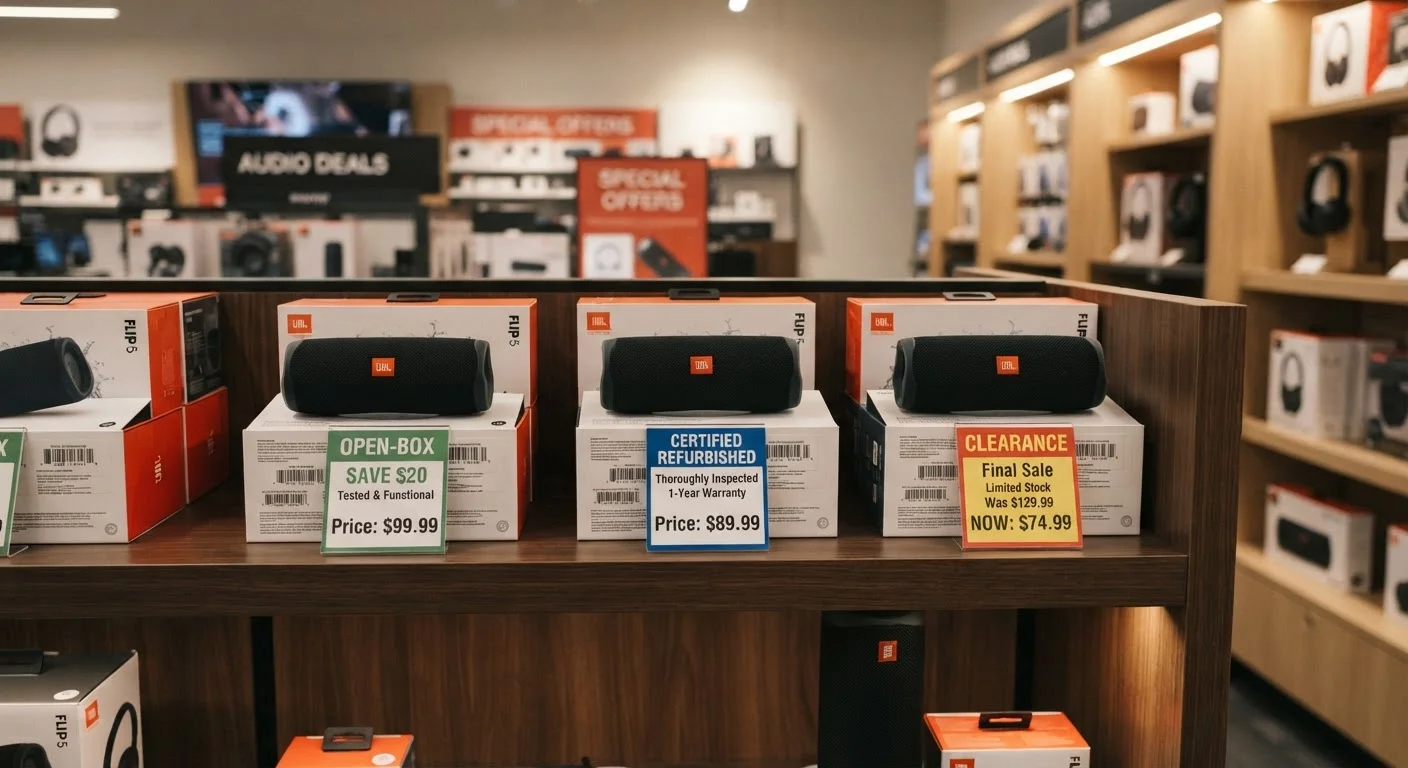
Photo: AskSpecialist.net editorial
Why These Labels Matter Before You Buy
Walk through any big-box electronics section or scroll a major retailer's website and you'll spot at least one of these three labels: open-box, refurbished, or clearance. Each signals a lower price - but the reasons for that discount, and what it means for the product you take home, are genuinely different. Confusing them can lead to surprises around condition, warranty, and return options.
This reference breaks each label down plainly so you know exactly what you're evaluating. For a broader look at how retailers frame pricing language, see our retail marketing language glossary.
| Open-Box Definition | Previously purchased or display item with opened packaging; condition varies |
| Refurbished Definition | Inspected, repaired to functional spec, and tested - may be manufacturer or third-party sourced |
| Clearance Definition | New, unsold inventory discounted to move excess stock; often discontinued models |
| Warranty Risk | Highest with open-box; depends on source for refurbished; usually intact for clearance |
| Condition Reliability | Most predictable with clearance (new); least consistent with open-box (no repair standard) |
| Return Policy Impact | All three may carry different return windows than standard new-product purchases |
Open-Box: Returned, Not Necessarily Used
Open-box items are products that a previous customer purchased and returned - or that were used as floor display models. The defining characteristic is that the original packaging has been opened. Beyond that, condition varies considerably.
A product might be open-box because someone changed their mind after one day of use, because a box was damaged in shipping, or because it was a display unit handled by dozens of shoppers. Most retailers grade open-box items (terms like "excellent," "satisfactory," or "like new" are common), but grading standards are set internally - they are not governed by a universal standard.
Key things to verify with open-box purchases:
- Whether all original accessories and documentation are included
- What warranty, if any, transfers with the item - manufacturer warranties may or may not honor open-box units depending on the brand's policy
- The retailer's return window for open-box goods, which is often shorter than for new products
Open-box can represent genuine value when the item is nearly unused and the retailer's grade is transparent. It carries more risk when grading language is vague. Before committing, understand the return policy that applies specifically to that open-box unit - it may differ from the store's standard policy.
Refurbished: Tested and Repaired to a Standard
Refurbished (sometimes called "reconditioned") means the product has been inspected, repaired as needed, and tested to confirm it meets functional specifications. This is meaningfully different from simply being returned. A refurbished item has gone through a deliberate process - the question is who performed that process.
Manufacturer-refurbished units are serviced by the original brand using genuine parts and their own quality standards. These typically carry a limited manufacturer warranty and are generally considered the most reliable refurbished tier. Third-party refurbished items are reconditioned by a separate company, whose standards and warranty terms vary widely.
The source matters more than the label. Always confirm:
- Whether refurbishment was done by the manufacturer or a third party
- What warranty is provided and what it actually covers - see what warranty coverage commonly excludes before assuming you're protected
- Whether replacement parts used were original or generic
Refurbished products can be a sound purchase, particularly for electronics and appliances, when the refurbisher is reputable and the warranty terms are clear in writing.
Open-Box
A product whose original packaging has been opened, typically because it was returned by a customer or used as a store display. Condition is not standardized and varies by retailer grading.
Manufacturer-Refurbished
A product serviced, tested, and certified by the original manufacturer. Generally considered the most reliable refurbished tier and often carries a limited manufacturer warranty.
Third-Party Refurbished
A product reconditioned by a company other than the original manufacturer. Quality standards and warranty terms vary significantly depending on the refurbisher.
Clearance
New, unsold merchandise discounted by a retailer to reduce inventory, often due to a model being discontinued or a season ending. Product is typically unused.
Limited Warranty
A warranty that covers defects or failures only under specific conditions and for a defined period. It does not cover all possible problems and may exclude damage from normal use.
Final Sale
A purchase condition under which the retailer will not accept returns or exchanges. Often applies to clearance and open-box items; always verify before buying.
Clearance: New Condition, Discontinued Inventory
Clearance items are typically new, never-used products that a retailer is discounting to move excess inventory - often because a newer model has arrived, a season has ended, or the item is being discontinued. Unlike open-box or refurbished, clearance products usually haven't been opened or repaired.
The trade-off with clearance isn't condition - it's often support longevity. A discontinued product may lose software support sooner, have accessories that become harder to source, or be ineligible for future trade-in programs. These considerations are especially relevant for electronics, appliances, and automotive accessories.
What to check on clearance items:
- Whether the full manufacturer warranty still applies (it generally does for new clearance goods, but confirm)
- Whether the model is truly discontinued or simply being rotated - some "clearance" designations are retailer-specific inventory moves, not manufacturer end-of-life announcements
- Return policy, which may be unchanged from new-product terms or may be final-sale - retailers sometimes bury final-sale conditions in the fine print
For clearance on high-consideration purchases like vehicles, the same evaluation discipline applies. The automotive buying process involves its own set of disclosures worth reviewing carefully regardless of how a vehicle is labeled.
Comparing the Three: A Practical Summary
The table below summarizes how these labels typically differ across four dimensions consumers care most about. Individual retailer practices vary, so treat this as a starting framework rather than a guarantee.
| Label | Typical Condition | Warranty Likelihood | Return Flexibility |
|---|---|---|---|
| Open-Box | Varies; may be unused or lightly used | Reduced or none from manufacturer | Often shorter window than new |
| Refurbished | Repaired and tested; not new | Usually limited; scope depends on source | Varies by seller |
| Clearance | New and unused in most cases | Full manufacturer warranty typically intact | May be final sale - verify first |
When any of these labels appears alongside complex warranty language, take the time to read the terms. Warranty language carries specific legal meaning that affects your actual protection, not just the marketing description on a price tag.
The content on this site is provided for informational purposes only and should not be considered a substitute for professional advice. While we strive to provide accurate and up-to-date information, we make no guarantees regarding its completeness or accuracy. Always consult a qualified professional for advice specific to your circumstances before making any decisions.