
Trusting the Price Tag: When a Higher Cost Signals Better Quality

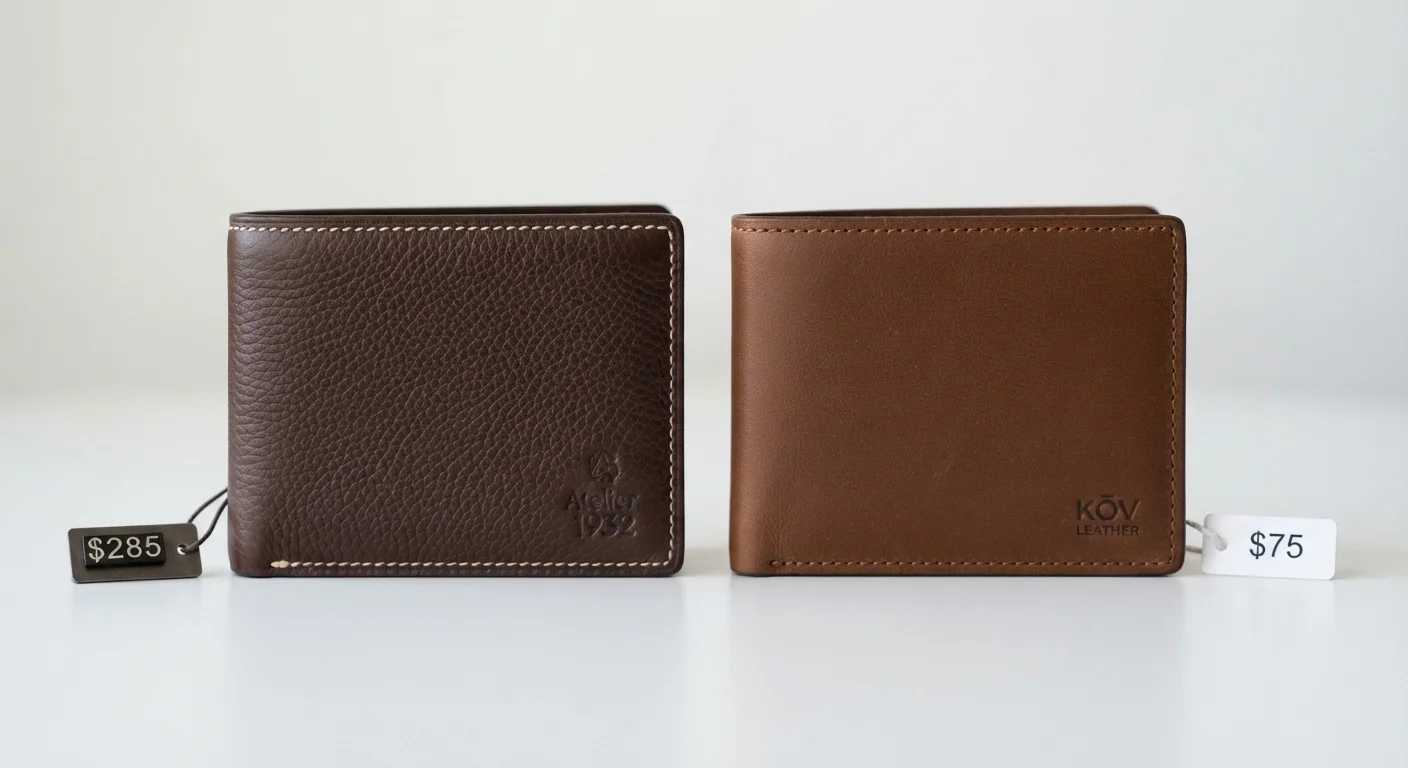
Photo: AskSpecialist.net editorial
Key Takeaways
- Higher price legitimately reflects better quality only when tied to verifiable materials, construction, or performance.
- Brand prestige and packaging often inflate cost without improving the underlying product.
- Comparing cost-per-use helps reveal which premium products actually deliver long-term value.
- Independent certifications and warranty terms are more reliable quality signals than price alone.
- Category matters: in some product types, price-quality correlation is stronger than in others.
Better raw materials with measurable performance differences
Higher-grade steel, full-grain leather, or medical-grade silicone cost more to source and process. That cost shows up in the price and in how the product holds up over time.
Tighter manufacturing tolerances and quality control
Premium-tier production typically involves stricter defect thresholds and more rigorous testing before a product ships, reducing failure rates and inconsistency.
Longer useful lifespan lowers cost-per-use
When a product lasts significantly longer than its cheaper counterpart, the higher upfront cost often averages out - or even comes out ahead over the ownership period.
More comprehensive warranty and after-sale support
Premium products more frequently come with multi-year warranties and accessible customer service, reducing the financial risk of a defect or failure.
Third-party safety and performance certifications
Certified products have been tested by an independent body against defined standards - a form of quality assurance that price alone cannot replicate.
Marketing spend disguised as product value
A large share of a premium product's price can reflect advertising costs, influencer partnerships, and brand-building - none of which improve what's in the box.
Prestige pricing with no functional benefit
In fashion, beauty, and lifestyle categories especially, consumers often pay for a name or aesthetic that signals status rather than any measurable performance advantage.
Packaging and unboxing experience inflating cost
Premium packaging is costly to produce and is frequently cited in premium-product marketing, but it has no bearing on how well the actual product functions or lasts.
Retail channel markups unrelated to quality
Products sold through high-end retailers carry channel costs - flagship stores, visual merchandising, sales staff - that consumers absorb without receiving a better product.
Category-blind premium assumptions lead to overspending
Applying a "pay more, get more" rule uniformly across all categories - including ones where quality tiers are essentially flat - reliably results in unnecessary spending.
The Price-Quality Relationship: Real, But Conditional
The assumption that a higher price means a better product is so widespread it has a name in behavioral economics: the price-quality heuristic. Research consistently shows that consumers associate cost with quality - and that assumption isn't always wrong. But it is frequently exploited.
The honest answer is that price and quality correlate meaningfully in some categories and barely at all in others. Understanding which situation you're in before you buy is where real shopping intelligence begins. As a starting point, ask yourself: what is the extra cost actually paying for? If you can answer that with specifics - thicker gauge steel, longer battery cycles, third-party safety certification - the premium may be legitimate. If your answer is "it's a well-known name" or "the packaging looks premium," that's a different story.
For a deeper look at how brand reputation can mislead, see our guide on build quality vs. brand reputation.
When Paying More Is Genuinely Justified
Certain product categories have measurable, objective quality tiers - and price tends to track with them reasonably well. Here are the conditions where spending more typically earns you something tangible:
Better raw materials with measurable performance differences
Higher-grade steel, full-grain leather, or medical-grade silicone cost more to source and process. That cost shows up in the price and in how the product holds up over time.
Tighter manufacturing tolerances and quality control
Premium-tier production typically involves stricter defect thresholds and more rigorous testing before a product ships, reducing failure rates and inconsistency.
Longer useful lifespan lowers cost-per-use
When a product lasts significantly longer than its cheaper counterpart, the higher upfront cost often averages out - or even comes out ahead over the ownership period.
More comprehensive warranty and after-sale support
Premium products more frequently come with multi-year warranties and accessible customer service, reducing the financial risk of a defect or failure.
Third-party safety and performance certifications
Certified products have been tested by an independent body against defined standards - a form of quality assurance that price alone cannot replicate.
In these cases, the premium reflects real inputs: raw material costs, engineering tolerances, or third-party testing that budget versions skip. Tools, cookware, mattresses, and safety equipment (car seats, helmets, smoke detectors) are categories where quality differences translate directly into performance or safety outcomes.
Cost-per-use math is useful here. A work boot that costs twice as much but lasts four times as long is a better value, not an indulgence. Our article on what value for money actually means breaks down this calculation in practical terms.
When the Premium Isn't Earning Its Keep
Not every price gap reflects a quality gap. In many categories, a significant portion of the cost premium covers marketing, retail placement, celebrity endorsements, or simply brand equity - none of which improves the product you take home.
Marketing spend disguised as product value
A large share of a premium product's price can reflect advertising costs, influencer partnerships, and brand-building - none of which improve what's in the box.
Prestige pricing with no functional benefit
In fashion, beauty, and lifestyle categories especially, consumers often pay for a name or aesthetic that signals status rather than any measurable performance advantage.
Packaging and unboxing experience inflating cost
Premium packaging is costly to produce and is frequently cited in premium-product marketing, but it has no bearing on how well the actual product functions or lasts.
Retail channel markups unrelated to quality
Products sold through high-end retailers carry channel costs - flagship stores, visual merchandising, sales staff - that consumers absorb without receiving a better product.
Category-blind premium assumptions lead to overspending
Applying a "pay more, get more" rule uniformly across all categories - including ones where quality tiers are essentially flat - reliably results in unnecessary spending.
Cosmetics, bottled water, fashion basics, and many supplements are categories where price frequently signals positioning rather than performance. In these spaces, you're often paying for the story told around the product, not the product itself.
It also helps to recognize when pricing is designed to manipulate rather than inform. Price anchoring tactics can make a moderately priced item feel like a bargain purely by comparison to an inflated reference price.
Practical Ways to Evaluate Before You Spend
Rather than using price as a quality shortcut, build a quick evaluation habit based on objective signals:
- Check for independent certifications. Organizations like NSF, UL, ASTM, or OEKO-TEX test products against defined standards. A certification logo is a more reliable quality marker than a price point.
- Read the warranty terms. A manufacturer willing to back a product for five or ten years is signaling confidence in its durability. Budget items often come with 30- or 90-day coverage, if any.
- Look at the specs, not just the marketing copy. Thread count, gauge thickness, processor specs, and battery capacity are measurable. Vague descriptors like "premium feel" or "artisan-crafted" are not.
- Compare verified user reviews across purchase channels. Long-term reviews - those written six to twelve months after purchase - surface durability patterns that initial reviews miss.
When Bundles Complicate the Price Signal
For a full list of observable signals, see quality signals that don't require expert knowledge and red flags that often get missed before purchase.
The content on this site is provided for informational purposes only and should not be considered a substitute for professional advice. While we strive to provide accurate and up-to-date information, we make no guarantees regarding its completeness or accuracy. Always consult a qualified professional for advice specific to your circumstances before making any decisions.