
Price Tracking Tools and What They Actually Tell You

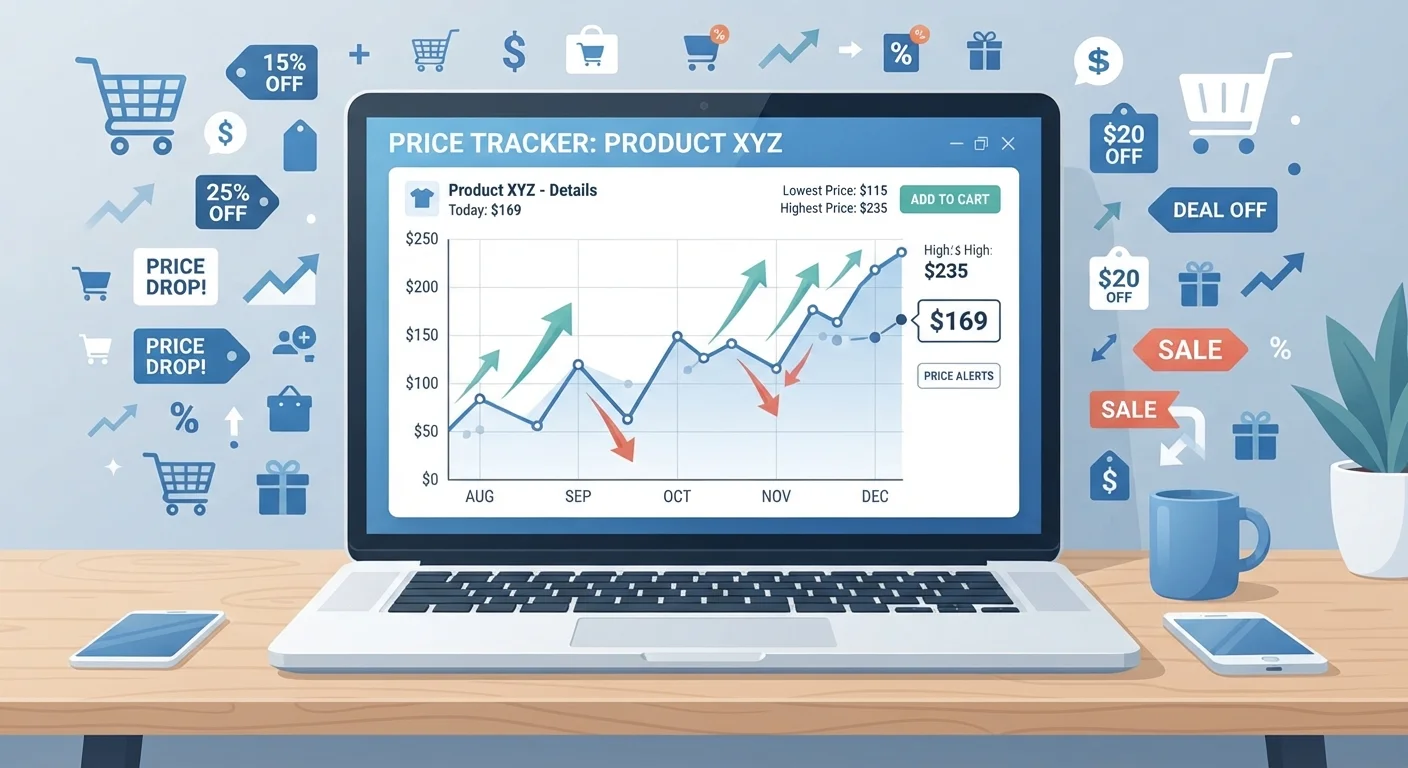
Photo: AskSpecialist.net editorial
Key Takeaways
- Price tracking tools show historical price data, not whether a product is worth buying at any price.
- A discount is only meaningful when compared to the product's consistent baseline price, not its highest-ever spike.
- Many headline 'sale' prices are set against inflated reference prices - history data exposes this pattern.
- Tracking tools have real gaps: they may miss bundle deals, coupon stacks, or seller-specific pricing.
- Use price history alongside seasonality knowledge for the most reliable timing decisions.
What the Price Chart Is Actually Showing You
When you pull up a price history chart, you're looking at a timestamped log of the prices a retailer has listed for a specific product page. That sounds straightforward, but several details shape what the data actually means.
First, the chart reflects listed price, not necessarily the price you'd pay after coupons, loyalty points, or bundled offers. Second, it only captures data from the moments the tool checked - if a flash sale ran for six hours at 3 a.m., it may not appear at all. Third, if a product switches sellers on a marketplace, the history may reset or blend prices from multiple sources without clear labeling.
What the chart does reliably reveal is price volatility: how often the price changes, by how much, and whether the current price sits near the high or low end of its range. That's genuinely useful information - particularly for spotting the pattern described in our companion piece on sale price versus real price, where reference prices are inflated to make discounts appear larger than they are.
Marketplace vs. Direct Retailer Tracking
Reading the Data Without Being Misled
The most common misreading of price history is anchoring to the highest price in the chart rather than the typical price. If a product spent 10 months at $45 and two weeks at $70 before dropping to a 'sale' price of $50, the sale price is above normal - not below it. The chart will show this if you look at the full timeline.
Practical habits that make the data more useful:
- Expand the time window. Looking at 90 days of data is better than 30; 12 months is better still. Seasonal patterns become visible at longer horizons.
- Identify the modal price - the price the product sits at most of the time. That's your real baseline, not the listed 'original' price.
- Check for pre-event spikes. A sharp price increase immediately before a major sale event is a red flag. Reputable history charts will show this as a visible jump in the days or weeks prior.
~22%
Products with inflated pre-sale reference prices
Research by consumer advocacy organizations has found that a substantial share of 'sale' items on major retail platforms carry reference prices that were never the consistent market price.
90+ days
Recommended price history window
Consumer shopping researchers generally recommend viewing at least three months of price history to identify a reliable baseline rather than reacting to short-term fluctuations.
Up to 52x
Annual price changes on high-demand products
Studies of dynamic pricing on large online marketplaces have documented some products changing price more than once per week throughout the year, making real-time tracking more valuable than periodic manual checks.
Pairing this analysis with knowledge of seasonal pricing cycles gives you a fuller picture: you'll know both what the historical baseline is and when the category typically sees genuine markdowns.
The Real Limits of These Tools
Price tracking tools are genuinely useful, but treating them as the final word on a deal is a mistake. Their structural limitations matter:
- Retailer coverage gaps. Tools built around one major marketplace may have no data on regional chains, warehouse clubs, or direct-to-consumer brands. A lower price may exist somewhere not tracked.
- Product variation blind spots. Price history is tied to a specific product listing URL. A slightly different color, bundle, or size will have its own - or no - history. Refurbished and open-box listings are almost never tracked.
- Data freshness. Some tools update daily; others less often. A fast-moving price may be stale by hours when you check it.
- No quality signal. A historically low price on a product that received consistently poor reviews after its launch isn't a good deal - the tool has no way to surface that context.
Think of price history the way you'd think of any single data source: useful as one input in a decision, not a substitute for the full picture. The same principle applies when consumers review vehicle history reports - as our automotive counterpart on what a vehicle history report actually tells you makes clear, data tools have consistent blind spots that require verification from other sources.
Set Alerts Instead of Checking Manually
Putting It Into a Practical Workflow
Price tracking works best when it's one step in a short research sequence rather than the entire process. A workable order:
- Confirm the product meets your actual needs before checking price at all.
- Pull the 12-month price history and identify the modal (most common) price.
- Note whether the current price is at, above, or below that baseline.
- Check whether the category has a predictable markdown season coming up.
- Set a price alert if you're not in a rush - let the tool do the monitoring so you don't have to check manually.
This sequence keeps the tool in its proper role: a filter that removes marketing noise, not a system that makes the purchase decision for you. For a broader framework that integrates these habits with behavioral and policy considerations, see finding value without falling for hype.
Frequently Asked Questions
The content on this site is provided for informational purposes only and should not be considered a substitute for professional advice. While we strive to provide accurate and up-to-date information, we make no guarantees regarding its completeness or accuracy. Always consult a qualified professional for advice specific to your circumstances before making any decisions.