
Sale Price vs. Real Price: Understanding the Difference

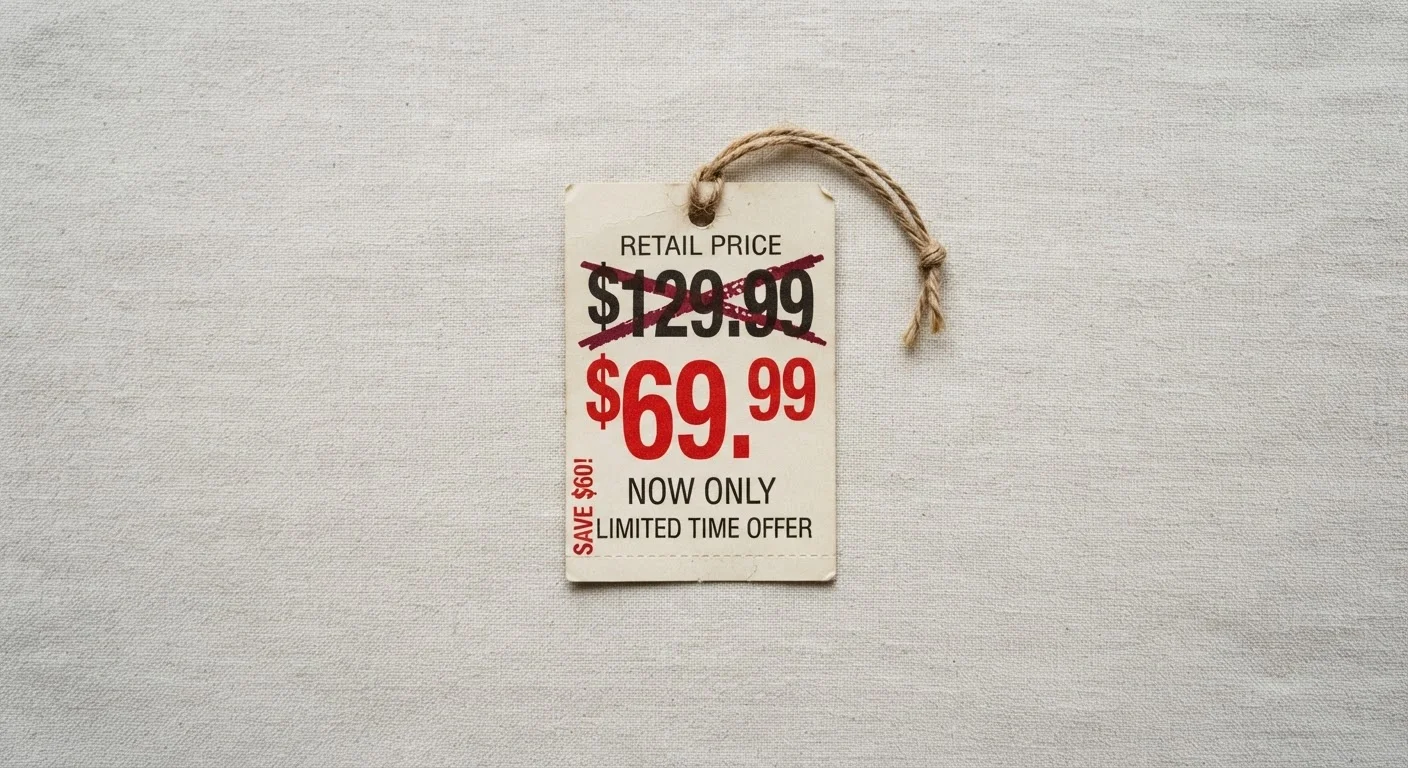
Photo: AskSpecialist.net editorial
Key Takeaways
- A sale price is only a real deal if the reference price reflects what the item genuinely sold for.
- Retailers can legally inflate reference prices in many states, making discounts appear larger than they are.
- Price history tools let you check what an item actually sold for over time before a sale.
- The "compare at" label often means a manufacturer's suggested price, not a price the retailer ever charged.
- Urgency tactics like countdown timers are designed to prevent you from doing the price research that matters.
Why the Reference Price Is the Real Variable
When you see a price tag showing $89.99 crossed out above a sale price of $44.99, your brain does a fast calculation: 50% off, that's a great deal. But that math only holds if $89.99 was a real price - one the item actually sold at, for a meaningful period of time, at that retailer.
In practice, reference prices - the crossed-out figures retailers use to frame discounts - are set by the store, not by any neutral authority. A retailer can, in many cases, set an inflated reference price, offer the item at a lower price from day one, and still call it a sale. The savings are real only relative to a number the store itself invented.
This is what separates a sale price from a real price. The sale price is what you pay at checkout. The real price is what the item is genuinely worth based on its consistent market value - what it has actually sold for across retailers and over time. These two figures can be identical, or they can be miles apart.
Reference Pricing Regulation Varies by State
For a deeper look at how retailers set the baselines for percentage-off claims, see our article on how retail markdowns are calculated.
The Tactics That Make Inflated Discounts Work
Retailers rely on a few well-documented cognitive shortcuts to make reference pricing effective.
- Anchoring: The first price you see becomes the frame for all subsequent prices. A $200 anchor makes $120 feel cheap, even if the item never sold for $200 in practice. Our article on price anchoring covers the psychology in detail.
- Urgency framing: Countdown timers, "only 3 left" notices, and "today only" labels are designed to compress decision-making time. Less time to research means less time to verify whether the reference price is legitimate.
- "Compare at" language: Labels like "compare at," "valued at," or "MSRP" refer to a manufacturer's suggested retail price or a competitor's price - not necessarily what the item ever sold for at that specific store. It's a benchmark the retailer chooses, not an independent standard.
~87%
Black Friday items available cheaper at other times
Research by consumer advocates and price-tracking services has found that a large majority of items promoted during major retail events were available at the same or lower prices at other points during the year.
7-14 days
Minimum 'former price' period in many state laws
Several U.S. states set a minimum duration for which a reference price must have been offered before a retailer can advertise a markdown from it - but requirements vary significantly by state.
The practical defense against all three tactics is the same: slow down and check the price history before buying. If an item's "sale" price has been its consistent price for months, the discount is nominal.
How to Find the Real Price Before You Buy
Price history tools track what an item has actually sold for over time across retailers. They expose the most common form of reference price inflation: an item marked up briefly before a sale event, then "discounted" back to its normal selling price.
When reading price history data, focus on a few things:
- What is the item's floor price? The lowest consistent price it has held - not a one-day flash price - is the closest thing to its real market value.
- Was there a price spike before the sale? A sudden increase in the reference price immediately before a promotional period is a strong indicator of manufactured savings.
- How does it compare across retailers? If the "sale" price at one store matches the everyday price at three others, the discount is illusory.
Our guide on price tracking tools and what they actually tell you explains how to read this data and what its limitations are.
For items where price history isn't available - new releases, exclusive bundles, services - the best proxy is comparing the asking price against similar items from multiple independent sources. If the deal looks extraordinary, that warrants extra scrutiny. See why deals that look too good usually are for the warning signs.
Frequently Asked Questions
The content on this site is provided for informational purposes only and should not be considered a substitute for professional advice. While we strive to provide accurate and up-to-date information, we make no guarantees regarding its completeness or accuracy. Always consult a qualified professional for advice specific to your circumstances before making any decisions.