
Urban Destinations vs. Rural Retreats: Matching Travel Style to the Right Setting

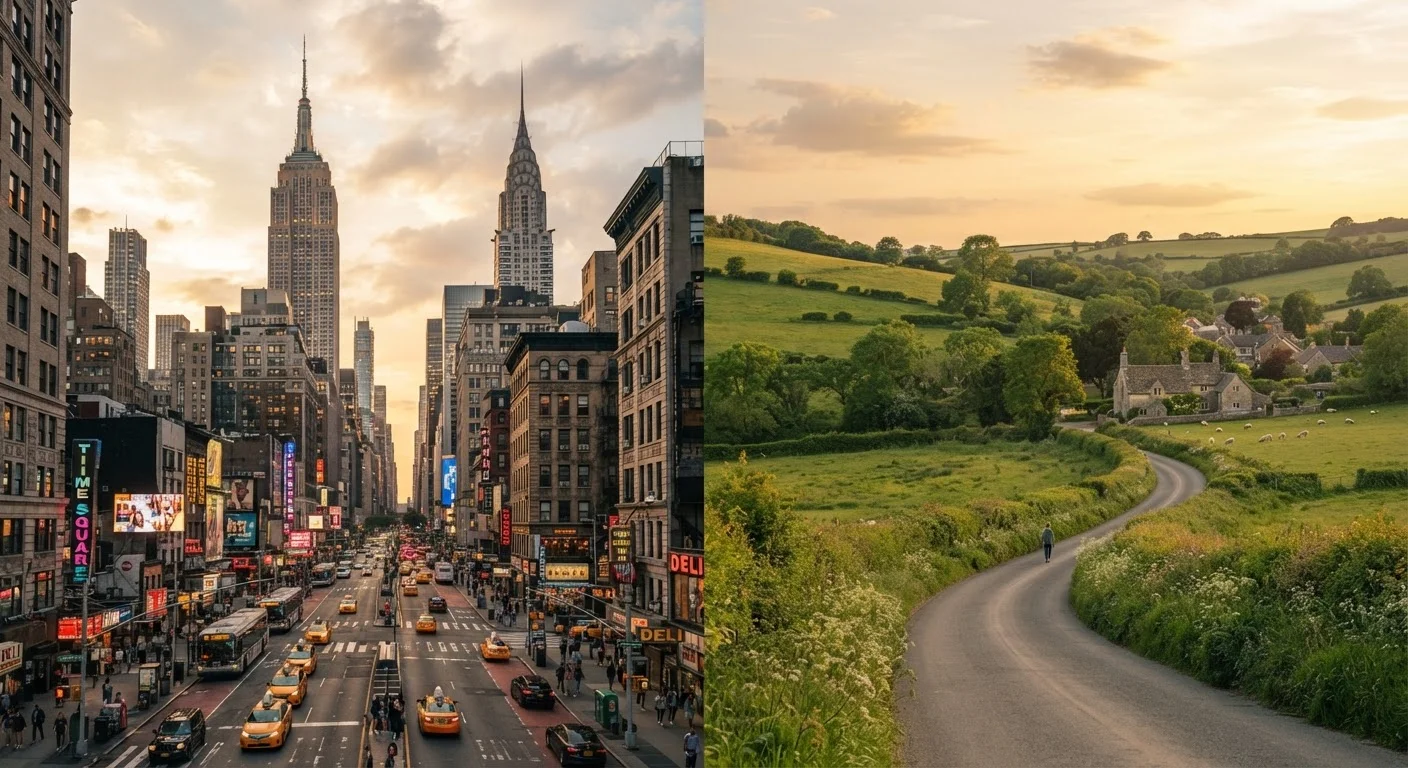
Photo: AskSpecialist.net editorial
Key Takeaways
- Urban and rural travel offer fundamentally different paces, costs, and logistics - not just scenery.
- Your ideal setting depends on how you actually recharge, not how you imagine you will.
- Rural destinations often require more upfront planning despite appearing simpler.
- Cities tend to offer more flexibility but can cost significantly more per day.
- Mixing both types in a single trip is a practical middle-ground many travelers overlook.
The Core Difference Isn't Just Scenery
Most travelers frame the urban-versus-rural question as an aesthetic choice - do you want buildings or trees? But the real distinction runs deeper: it's about daily structure, pace, and the kind of energy a destination demands from you.
In a city, your schedule is largely shaped by options. Museums open at 10, restaurants fill up by 7, transit runs on a fixed timetable. In a rural setting, structure dissolves. Meals may require driving 20 minutes. There's no Uber. That openness can feel restorative or deeply uncomfortable depending on the traveler.
Before choosing a destination type, it helps to reflect honestly on how you spend a typical weekend at home. If your rest looks like wandering a neighborhood, trying new coffee shops, and catching a show, urban travel is probably aligned with your natural rhythm. If rest means sitting on a porch, hiking, or genuinely doing less - a rural retreat may serve you better. As the factors that shape whether a trip actually feels good often come down to pace and expectations, not the destination name itself.
How Costs Actually Break Down
Urban and rural travel have very different cost structures, and the gaps can surprise travelers who haven't mapped them out in advance.
| Urban Destinations | Rural Retreats | |
|---|---|---|
| Daily cost range | Higher baseline, more control levers | Lower nightly rate, hidden transport costs |
| Transportation | Public transit widely available | Car rental typically required |
| Advance planning needed | Moderate - flexible booking possible | High - limited availability and services |
| Pace | Activity-dense, schedule-driven | Open-ended, slower |
| Best for solo travelers | Strong infrastructure and visibility | Requires more self-sufficiency |
| Crowd levels | Can be significant at peak times | Generally lower, seasonal variation |
Cities tend to carry higher baseline daily costs - accommodation, meals, and entry fees add up quickly in dense tourist zones. However, cities also offer more budget-control levers: free museums, public transit, and street food can keep costs manageable if you plan deliberately.
Rural destinations often have lower accommodation rates, but hidden costs emerge. Car rental is typically non-negotiable, gas adds up over distance, and dining options may be limited to a handful of spots at fixed price points. Grocery runs for self-catering require planning ahead. These costs are real, even if the headline nightly rate looks modest.
The Trip Planning hub covers budgeting strategies that apply to both settings - including how to avoid the most common cost miscalculations travelers make.
Logistics: What Each Setting Actually Requires
Rural travel is frequently perceived as simpler, but it often demands more advance preparation than a city trip. Cell service can be unreliable, grocery stores may close early, and accommodation choices are genuinely limited - especially in peak seasons when properties book months out.
Book Rural Accommodation Early
Urban trips benefit from infrastructure that reduces friction: public transit maps, hotel concierges, and the density of options that means a backup plan is usually a block away. That said, cities introduce their own logistical challenges. Crowds at popular attractions are real - the impact of overtourism on your trip experience can turn a dream destination into an exhausting one if you haven't planned around it.
For solo travelers in particular, cities offer a safety net of visibility and accessibility that rural areas simply don't. Our guidance on staying oriented and aware in unfamiliar cities is worth reviewing before any solo urban trip.
When to Consider Combining Both
A common and underused approach is the hybrid itinerary: anchor a trip in a mid-size city with good transit access, then take day trips or overnight excursions into surrounding countryside. This structure gives you the logistical support of a city base while still accessing natural or rural environments without the commitment of full rural lodging.
This approach works especially well along the U.S. Eastern Seaboard, in the Pacific Northwest, and in parts of the Mountain West where cities sit within reasonable driving distance of genuinely rural terrain. The qualities that make a city worth a long road trip often include exactly this kind of regional accessibility.
Be cautious about over-scheduling a hybrid trip. Frequent transitions between settings consume more time and energy than most travelers budget for. The common trip planning myths include the belief that more variety automatically means a better trip - it often means a more exhausting one instead.
The content on this site is provided for informational purposes only and should not be considered a substitute for professional advice. While we strive to provide accurate and up-to-date information, we make no guarantees regarding its completeness or accuracy. Always consult a qualified professional for advice specific to your circumstances before making any decisions.