
Collision vs. Comprehensive Coverage: Knowing Which Applies After an Incident

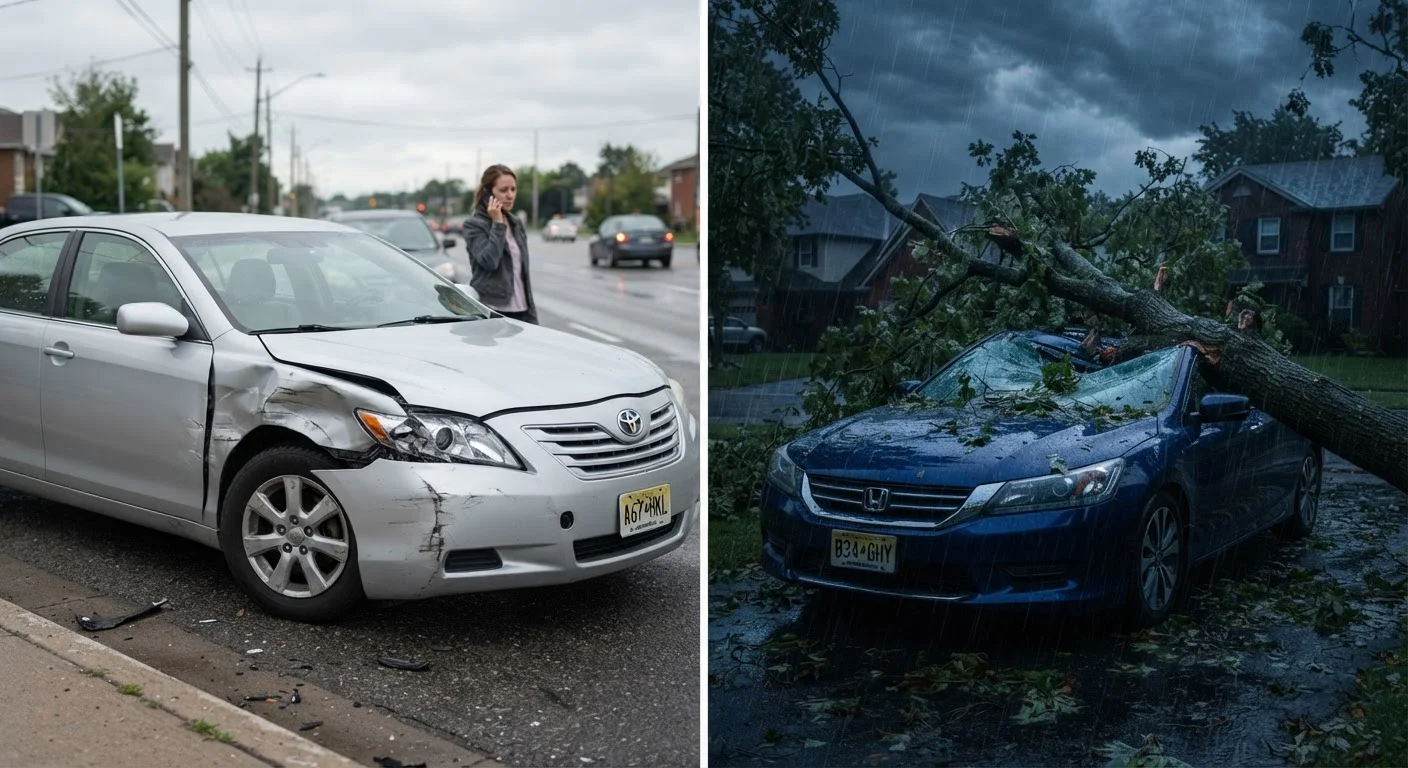
Photo: AskSpecialist.net editorial
Key Takeaways
- Collision covers damage from crashes with other vehicles or stationary objects like guardrails.
- Comprehensive covers damage from events outside your control - storms, theft, fire, or animals.
- Both coverages are optional unless your lender or lease requires them.
- Each has its own deductible, meaning you pay that amount out of pocket before insurance contributes.
- Neither coverage pays for injuries - that's handled by separate parts of your policy.
- Your car's value, your deductible choice, and your financial situation all factor into whether carrying both makes sense.
What Each Coverage Actually Does
Both collision and comprehensive protect your own vehicle from physical damage - but they respond to completely different types of incidents. That distinction matters the moment you need to file a claim.
Collision coverage applies when your car makes physical contact with another vehicle or a stationary object. That includes rear-ending another car, sideswiping a concrete barrier, or rolling into a fence in your own driveway. If your vehicle is moving and hits something, collision is typically the relevant coverage.
Comprehensive coverage - sometimes called "other than collision" - covers damage that isn't the result of a crash. Think hailstorms denting your hood, a tree limb cracking your windshield, a flood damaging your interior, a fire, or a stolen vehicle. Animal strikes (like hitting a deer) also fall under comprehensive, not collision, even though your car is moving at the time.
For a broader breakdown of how these fit into your overall policy, see what each coverage type pays for.
| Criterion | Collision Coverage | Comprehensive Coverage |
|---|---|---|
| What triggers it | Crashing into a vehicle or object | Non-crash damage or loss |
| Common examples | Rear-end collision, hitting a guardrail | Hail, theft, flood, deer strike, fire |
| Required by law | No | No |
| Required by lenders | Usually yes | Usually yes |
| Has a deductible | Yes | Yes (often lower) |
| Pays for injuries | No | No |
| Pays for others' vehicle damage | No | No |
| Max payout | Actual cash value of your car | Actual cash value of your car |
Deductibles, Limits, and What You'll Actually Pay
Each coverage carries its own deductible - the amount you pay out of pocket before your insurer covers the rest. Common deductible amounts range from $250 to $1,500. Choosing a higher deductible typically lowers your premium, but it also means more exposure if you file a claim.
One important limit to understand: insurers won't pay more than your car's actual cash value (ACV) - what the vehicle is worth in the current market, accounting for depreciation. If repairs cost more than the ACV, the insurer will typically declare the car a total loss and pay you the ACV instead.
~$522
Average annual collision premium (U.S.)
According to the National Association of Insurance Commissioners (NAIC), the average annual expenditure for collision coverage was approximately $522 in a recent policy year.
~$172
Average annual comprehensive premium (U.S.)
NAIC data indicates comprehensive coverage costs significantly less per year than collision on average, reflecting the lower frequency of covered events.
1 in 8
Drivers estimated to be uninsured
The Insurance Research Council has estimated roughly one in eight drivers on U.S. roads carries no liability coverage at all - underscoring why understanding your own policy matters.
Neither collision nor comprehensive covers injuries to you or your passengers - that falls under medical payments coverage or personal injury protection (PIP), which are separate. They also don't cover damage to another person's vehicle; that's what liability coverage handles. For a fuller picture of where standard policies leave gaps, see overlooked coverage areas drivers discover too late.
When You're Required to Carry Both
Collision and comprehensive are both optional under state law - no state requires you to carry either. However, if you're financing or leasing your vehicle, your lender or leasing company almost certainly does require both. They have a financial interest in the car, and these coverages protect that investment.
Once your loan is paid off or your lease ends, the requirement goes away - but that doesn't mean dropping coverage is automatically the right call. Understanding what you give up by scaling back can help you decide what actually makes sense for your situation.
If you're weighing whether to drop one or both coverages on an older vehicle, a rough rule of thumb used by many financial planners is to compare your annual premium cost plus your deductible against your car's market value. If the numbers are close, the math may not favor carrying the coverage - though your personal risk tolerance and savings cushion matter just as much as the numbers.
Life events can shift the calculation, too. Major milestones are worth reviewing your coverage to make sure what you're carrying still fits your circumstances.
Gap Insurance Fills a Separate Hole
Sorting Out Which Coverage Applies After an Incident
When something happens to your car, the first question to ask is: Was my vehicle involved in a crash or physical impact? If yes, collision likely applies. If the damage came from an external event - weather, theft, an animal - comprehensive is typically the right coverage.
Some scenarios can feel ambiguous. A pothole, for example, is generally treated as a collision claim since it involves your car striking a road surface. Vandalism falls under comprehensive. A hit-and-run where the other driver can't be identified is a collision claim in most cases.
Once you've identified the right coverage, the claims process matters. Knowing what to document and who to contact can make a real difference in how smoothly things go. Keep in mind that filing a claim - regardless of fault - can affect your premium at renewal, so it's worth thinking through whether smaller repairs are worth claiming at all.
This article is for general informational purposes only and does not constitute insurance, legal, or financial advice. Coverage terms, exclusions, and requirements vary by insurer and state. Always read your policy documents carefully and consult a licensed insurance professional for guidance specific to your situation.
The content on this site is provided for informational purposes only and should not be considered a substitute for professional advice. While we strive to provide accurate and up-to-date information, we make no guarantees regarding its completeness or accuracy. Always consult a qualified professional for advice specific to your circumstances before making any decisions.