
Minimum State Coverage vs. Full Coverage: Understanding the Real Difference

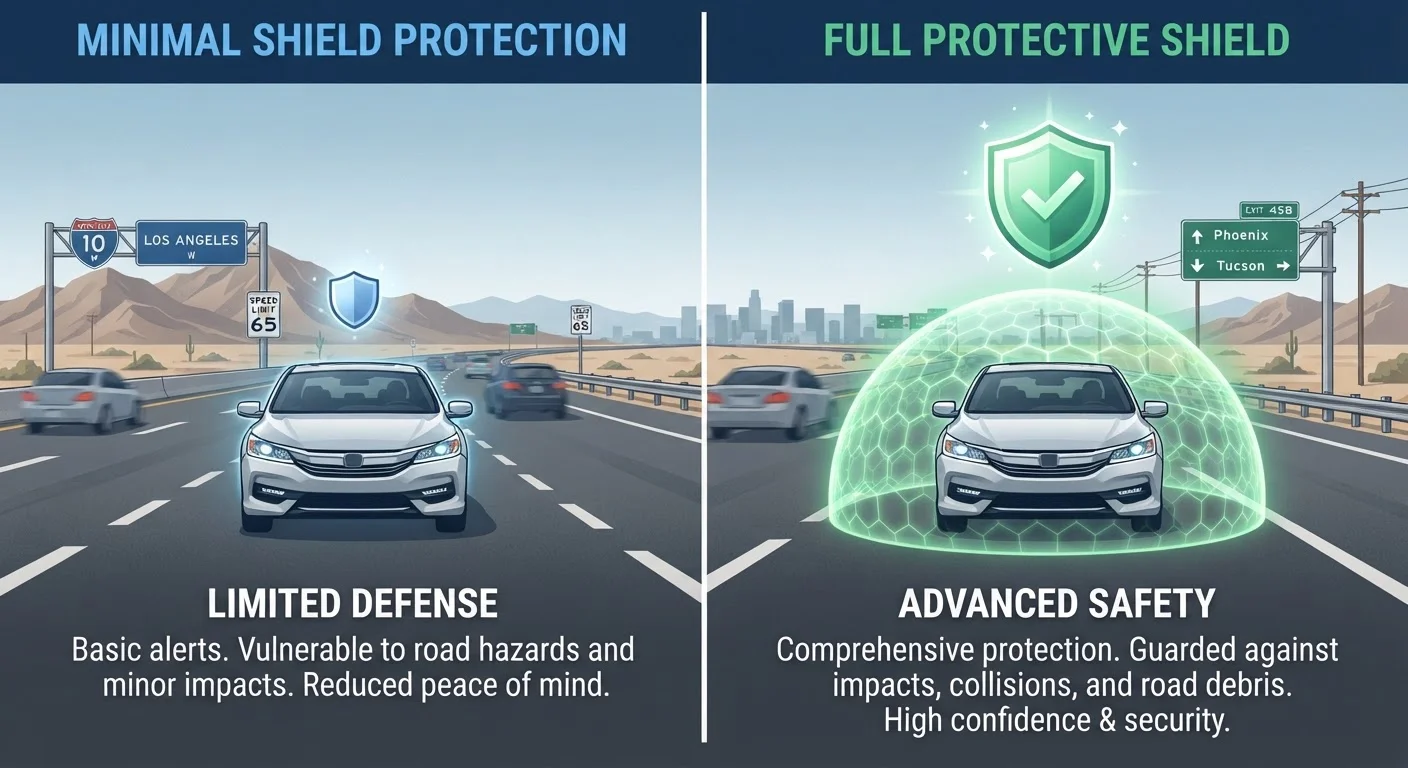
Photo: AskSpecialist.net editorial
Key Takeaways
- State minimums only cover damage and injuries you cause to others - your own car is not protected.
- Full coverage typically adds collision and comprehensive, protecting your vehicle from accidents, theft, and weather.
- Lenders almost always require full coverage on financed or leased vehicles.
- Minimum coverage limits vary by state and may be far lower than the real cost of a serious accident.
- Choosing between the two comes down to your vehicle's value, your financial situation, and your risk tolerance.
What Minimum State Coverage Actually Means
Every state requires drivers to carry at least some auto insurance - but those minimums are narrower than most people assume. State-required coverage is almost always liability-only, which means it pays for injuries and property damage you cause to other people. It does not pay to repair or replace your own vehicle.
Liability limits are expressed as three numbers, such as 25/50/25. These represent the maximum your insurer will pay per injured person, per accident, and for property damage (in thousands of dollars). A state minimum of 25/50/25 sounds like meaningful protection - until you consider that a single serious accident can easily exceed those limits. If damages surpass your coverage, you're personally responsible for the difference.
Some states also require additional coverages like personal injury protection (PIP) or uninsured motorist coverage as part of their minimums, but many do not. See our guide to uninsured and underinsured motorist coverage to understand what you may be missing if your state doesn't mandate it.
What "Full Coverage" Adds to the Picture
Full coverage builds on liability by adding two key components: collision and comprehensive. Collision pays to repair or replace your car if it's damaged in an accident, regardless of fault. Comprehensive covers losses outside of collisions - think theft, vandalism, hail, flooding, or hitting a deer.
Together, these coverages protect the vehicle you're driving, not just the other party. That's the core distinction. For a deeper breakdown of how each coverage type works, see what liability, collision, and comprehensive each cover.
Full coverage policies also typically come with a deductible - the amount you pay out of pocket before your insurer covers the rest. Common deductibles range from $250 to $1,500. A higher deductible generally means a lower premium, and vice versa.
| Criterion | Minimum State Coverage | Full Coverage |
|---|---|---|
| Covers damage to others | Yes (required) | Yes (included) |
| Covers your own vehicle in a crash | No | Yes (collision) |
| Covers theft, weather, animals | No | Yes (comprehensive) |
| Required by lenders | No | Typically yes |
| Typical monthly premium | Lower | Higher |
| Out-of-pocket risk if your car is damaged | High | Lower (subject to deductible) |
| Uninsured motorist protection | Varies by state | Often included or available as add-on |
The Gaps Minimum Coverage Leaves Open
Carrying only the state minimum is legal, but it leaves you exposed in scenarios that happen to real drivers every day. If you're in an at-fault accident and your car is totaled, you get nothing toward a replacement. If a hailstorm damages your vehicle, you're paying for repairs yourself. If an uninsured driver hits you (and your state doesn't require UM coverage), recovering damages can become a legal battle.
"Full Coverage" Isn't a Technical Policy Term
Even the liability protection in a minimum policy may not stretch far in a serious accident. Medical bills from a multi-person crash, combined with vehicle repairs and legal costs, can quickly outrun low coverage limits - leaving your personal assets exposed. For a candid look at this trade-off, see our piece on carrying only liability insurance.
It's also worth knowing there are other coverage gaps many drivers don't spot until it's too late - rental reimbursement, gap insurance, and rideshare coverage among them. Our article on coverage gaps drivers often discover too late walks through the most overlooked ones.
How to Decide What Level of Coverage Fits Your Situation
Neither option is universally right. The decision comes down to three practical factors: your vehicle's current market value, your ability to absorb an unexpected financial hit, and whether a lender is involved.
A general rule of thumb: if your car's value is low enough that the annual cost of collision and comprehensive approaches what you'd receive in a total-loss payout, the math may favor dropping to liability-only. But if your car is worth more than a year or two of full-coverage premiums, keeping broader protection generally makes sense.
If you finance or lease your car, the choice is largely made for you - lenders require full coverage to protect their interest in the vehicle. Dropping coverage in that situation can put you in breach of your loan agreement.
Finally, consider your deductible carefully. Choosing a higher deductible on a full coverage policy can bring the premium closer to what you'd pay for minimum coverage, while still protecting you against large losses. That middle-ground approach works well for many drivers.
This article is for general informational purposes only and does not constitute insurance, legal, or financial advice. Coverage options, requirements, and costs vary by state, insurer, and individual circumstances. Consult a licensed insurance agent to understand what coverage is appropriate for your situation.
The content on this site is provided for informational purposes only and should not be considered a substitute for professional advice. While we strive to provide accurate and up-to-date information, we make no guarantees regarding its completeness or accuracy. Always consult a qualified professional for advice specific to your circumstances before making any decisions.