
Keeping a Maintenance Log and Why Mechanics Appreciate It

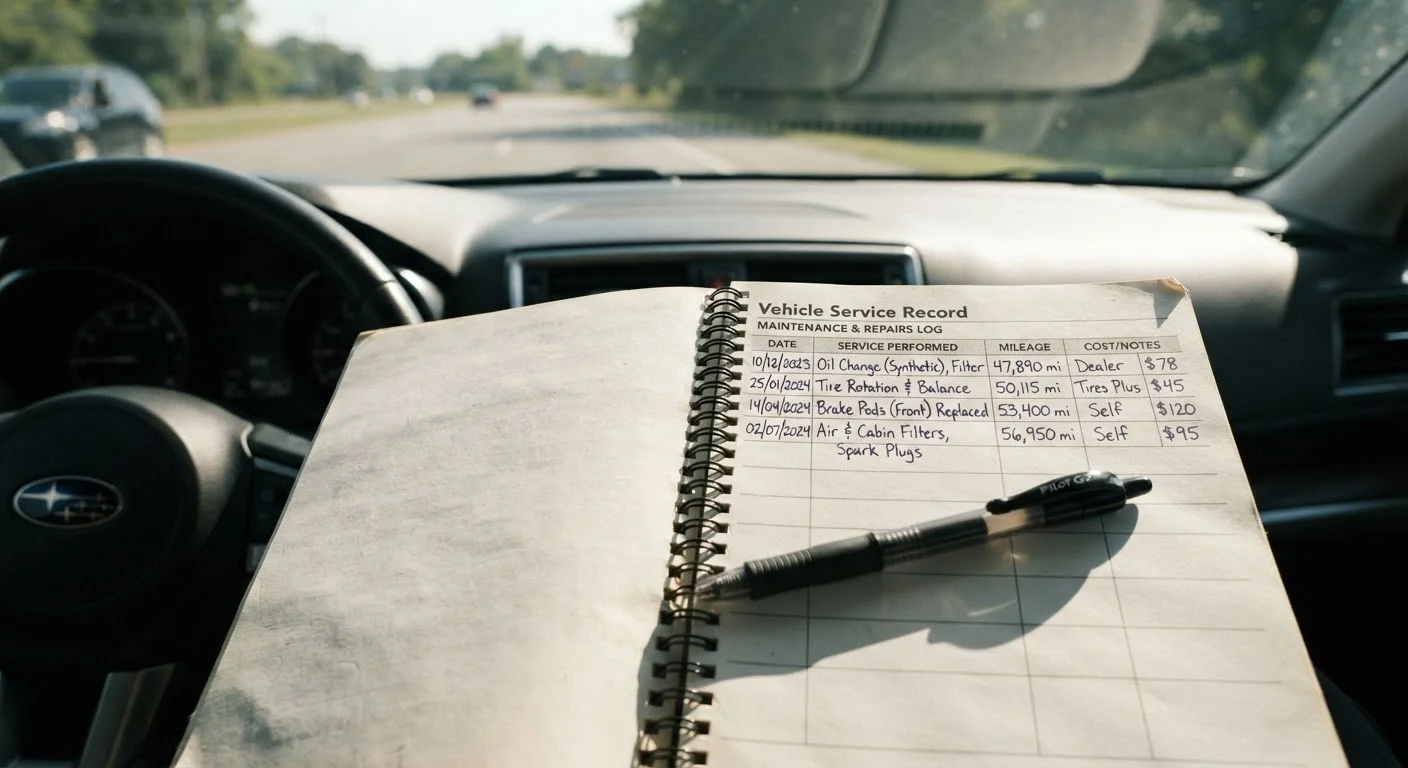
Photo: AskSpecialist.net editorial
Key Takeaways
- A maintenance log prevents duplicate services and helps mechanics diagnose problems faster.
- Recording mileage, date, and work done is all you need to get started.
- A documented service history can support resale value when it's time to sell.
- Digital apps and a simple notebook both work - consistency matters more than format.
- Mechanics can spot patterns in a log that aren't visible during a single inspection.
What a Maintenance Log Actually Is
A maintenance log is a running record of every service your vehicle has received - oil changes, tire rotations, brake jobs, fluid top-offs, filter replacements, and anything else done to keep the car running. It can be a small spiral notebook kept in the glove box, a spreadsheet on your phone, or a dedicated app. The format is less important than the habit of using it.
At minimum, each entry should include the date, the mileage at the time of service, what was done, and where (shop name or DIY). That's it. Four fields of information that take under a minute to record but can save hours of diagnostic guesswork later.
If you're already using a seasonal maintenance checklist, your log is the natural companion to it - one tells you what to check, the other records what you did.
Why Mechanics Value a Complete Service History
When you bring your car in with a symptom - a noise, a warning light, a vibration - a mechanic is essentially solving a puzzle with limited information. Your maintenance log is a cheat sheet. It tells them what's been replaced recently (so they don't re-diagnose something already addressed), what's overdue (which narrows the suspect list fast), and whether a problem is recurring.
Without a log, a mechanic has to rely on the car's onboard data, visual inspection, and whatever you can remember - which is rarely precise. "I think I had an oil change last year" is far less useful than "oil changed at 47,200 miles, six months ago."
Log every service immediately after it's completed - not a week later.
Include the mileage for every single entry, not just the date.
Note who did the work - shop name or 'DIY' - and save any receipts digitally.
Flag anything that was flagged by a mechanic but deferred.
Transfer your log when you change your tracking method.
Shops that see a well-kept log also tend to trust the owner more. It signals that the car has been cared for, which can affect how a service advisor approaches the conversation - and in some cases, how aggressively they push add-on services you may not need.
Practices That Make the Log Actually Useful
A log that's half-complete or inconsistently maintained loses most of its value. These habits keep it working for you over the long term.
One overlooked habit: note any warranty work or recall repairs. These are often covered at no cost and should be in the record so future owners - or future mechanics - know the work was done by an authorized shop under specific conditions.
Deferred maintenance compounds quickly - and a log makes it harder to accidentally let something slip. When you can see that your cabin air filter was last replaced 28,000 miles ago, the decision to address it becomes straightforward rather than a vague worry.
How a Log Supports Resale Value
Buyers - whether private party or dealerships - are buying risk as much as they're buying a car. A documented service history reduces their perceived risk, because they can see the car was maintained on schedule rather than guessing. This is especially meaningful for higher-mileage vehicles, where maintenance discipline matters most.
You don't need receipts for every single quart of oil, but having a log that shows consistent oil changes, brake work when needed, and major services done at reasonable intervals tells a clear story. It's the difference between "trust me, it's been taken care of" and showing them the actual record.
This is part of what makes the log a long-term investment. For a broader look at how maintenance decisions fit into full vehicle ownership, this comprehensive maintenance guide covers the full picture for everyday drivers.
Digital vs. Paper: Both Work
The content on this site is provided for informational purposes only and should not be considered a substitute for professional advice. While we strive to provide accurate and up-to-date information, we make no guarantees regarding its completeness or accuracy. Always consult a qualified professional for advice specific to your circumstances before making any decisions.