
Washing Your Scalp vs. Washing Your Hair: They're Not the Same Thing

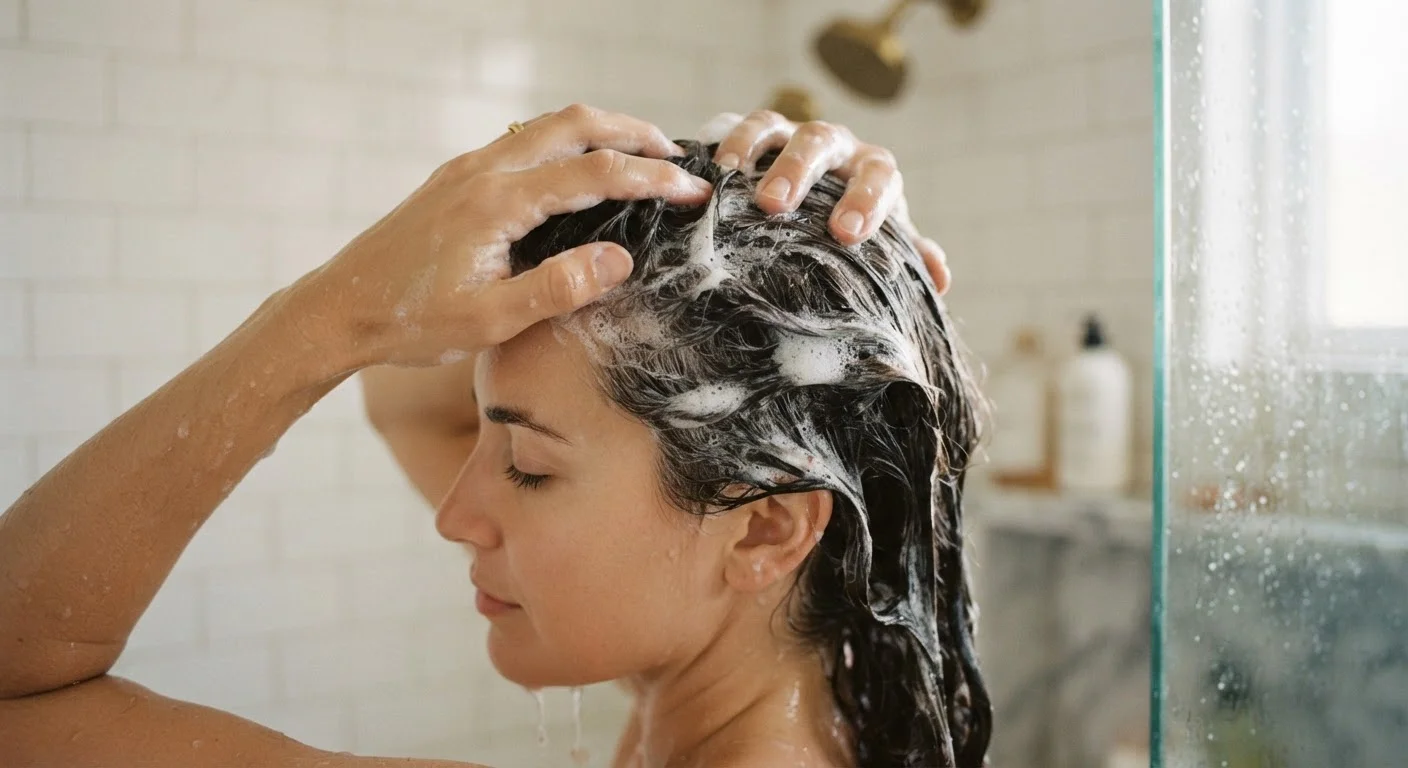
Photo: AskSpecialist.net editorial
Key Takeaways
- Your scalp is skin - it needs cleansing focused on removing oil and buildup, not just rinsing through your lengths.
- The hair strand itself is dead tissue; what it needs is moisture protection and gentle cleansing, not vigorous scrubbing.
- Using shampoo the same way on your scalp and your ends can leave one under-cleaned and the other over-stripped.
- Scalp issues like flaking, itching, or oiliness are often linked to technique, not just product choice.
- Conditioner generally belongs on mid-lengths to ends - applying it to the scalp can contribute to buildup.
Why the Distinction Matters
Most people treat shampooing as a single, uniform action: apply product, work it through, rinse. But the scalp and the hair strand are biologically different surfaces with different needs - and conflating them is one of the most common reasons people struggle with persistent scalp problems, dry ends, or hair that never quite looks its best.
Your scalp is living skin. It contains sebaceous (oil-producing) glands, sweat glands, hair follicles, and a microbiome that influences its overall health. Like the skin on your face, it accumulates oil, dead cells, environmental debris, and product residue. Without proper cleansing targeted at that surface, buildup can clog follicles, create an environment for irritation, and dull your hair at the roots.
The hair strand, by contrast, is composed of dead keratin cells. It produces nothing on its own. What it accumulates - dryness, damage, product coating - requires a completely different approach: gentle cleansing to avoid stripping the cuticle layer, and moisture to keep strands supple and resistant to breakage. For more on what happens when scalp care is neglected as a distinct step, see our guide to scalp health as the foundation of hair care.
Head-to-Head: Scalp vs. Hair Washing
The table below breaks down the key differences in how each area should be approached during a typical wash.
| Criterion | Scalp Washing | Hair Washing |
|---|---|---|
| Primary surface | Living skin with glands and follicles | Dead keratin strands |
| Main goal | Remove oil, sweat, dead cells, buildup | Cleanse gently; restore and retain moisture |
| Technique | Fingertip massage, focused pressure | Light lather or rinse-through; minimal friction |
| Shampoo application | Direct application, work into roots | Rinse-through from scalp; avoid heavy lathering ends |
| Conditioner use | Generally avoid - can cause buildup | Apply mid-length to ends; leave on briefly |
| Frequency driver | Sebum production rate, sweat, activity | Dryness, damage level, styling product use |
| Common mistakes | Under-cleansing; skipping mechanical action | Over-shampooing; applying conditioner at roots |
One practical implication: if you have a very oily scalp paired with dry ends - a common combination - you may need to shampoo your roots more frequently than you lather your lengths. This isn't a complicated two-product system; it's simply applying the same shampoo with different intentions and intensity depending on where you are on your head.
Technique: How to Actually Do Both
For the scalp: Dilute your shampoo slightly with water in your palm before applying, then use the pads of your fingers (not your nails) to massage the product into your scalp in small circular motions. Work section by section - front hairline, crown, nape, and sides. The goal is mechanical action against the skin surface, not just coating the hair. Give yourself at least 60 seconds. This massage also supports circulation, which is one factor associated with follicle health - though the relationship between scalp circulation and hair growth is more nuanced than some popular claims suggest. For a grounded look at that topic, see what the research actually shows about scalp health and hair growth.
For the hair strand: Let the shampoo rinse from your scalp run through your lengths rather than rubbing product aggressively into the mid-shaft and ends. If your ends are particularly dry or damaged, skip shampoo on them entirely. Apply conditioner from mid-length downward, let it sit for two to three minutes, then rinse thoroughly. Avoid applying conditioner directly to the scalp, where it can contribute to the very buildup you just cleared.
~100,000
Average number of follicles on the human scalp
Each follicle is embedded in scalp skin that requires regular cleansing to stay clear of sebum and debris, according to general dermatological anatomy references.
1-2 min
Recommended scalp massage duration per wash
Dermatologists and trichologists commonly recommend at least 60-120 seconds of fingertip massage to adequately work shampoo into the scalp surface.
Adjusting for Your Hair and Scalp Type
How often you perform each step - and how intensively - depends on your individual biology and habits. Scalp oiliness is largely driven by sebaceous gland activity, which varies by genetics, hormones, and environment. Hair texture affects how quickly sebum travels down the strand: straight hair gets coated faster; tightly coiled hair may remain dry at the ends even when the scalp is oily.
If you're considering alternatives to standard shampooing - such as co-washing - it's worth understanding that these methods clean the hair strand reasonably well but often don't provide the mechanical and surfactant action the scalp skin needs to stay clear. Our comparison of co-washing and shampooing covers which hair textures tend to benefit from each approach.
To figure out your personal wash frequency - separate from technique - this guide on how often you should actually shampoo walks through the key variables: scalp type, activity level, styling habits, and hair texture combined.
Once you've got technique and frequency sorted, a periodic check-in can help you catch when things drift. A weekly hair care audit gives you a framework for reading what your scalp and strands are telling you before problems escalate.
When Scalp Symptoms Persist
The content on this site is provided for informational purposes only and should not be considered a substitute for professional advice. While we strive to provide accurate and up-to-date information, we make no guarantees regarding its completeness or accuracy. Always consult a qualified professional for advice specific to your circumstances before making any decisions.