
Morning vs. Evening Skincare Routines: What Changes and What Stays the Same

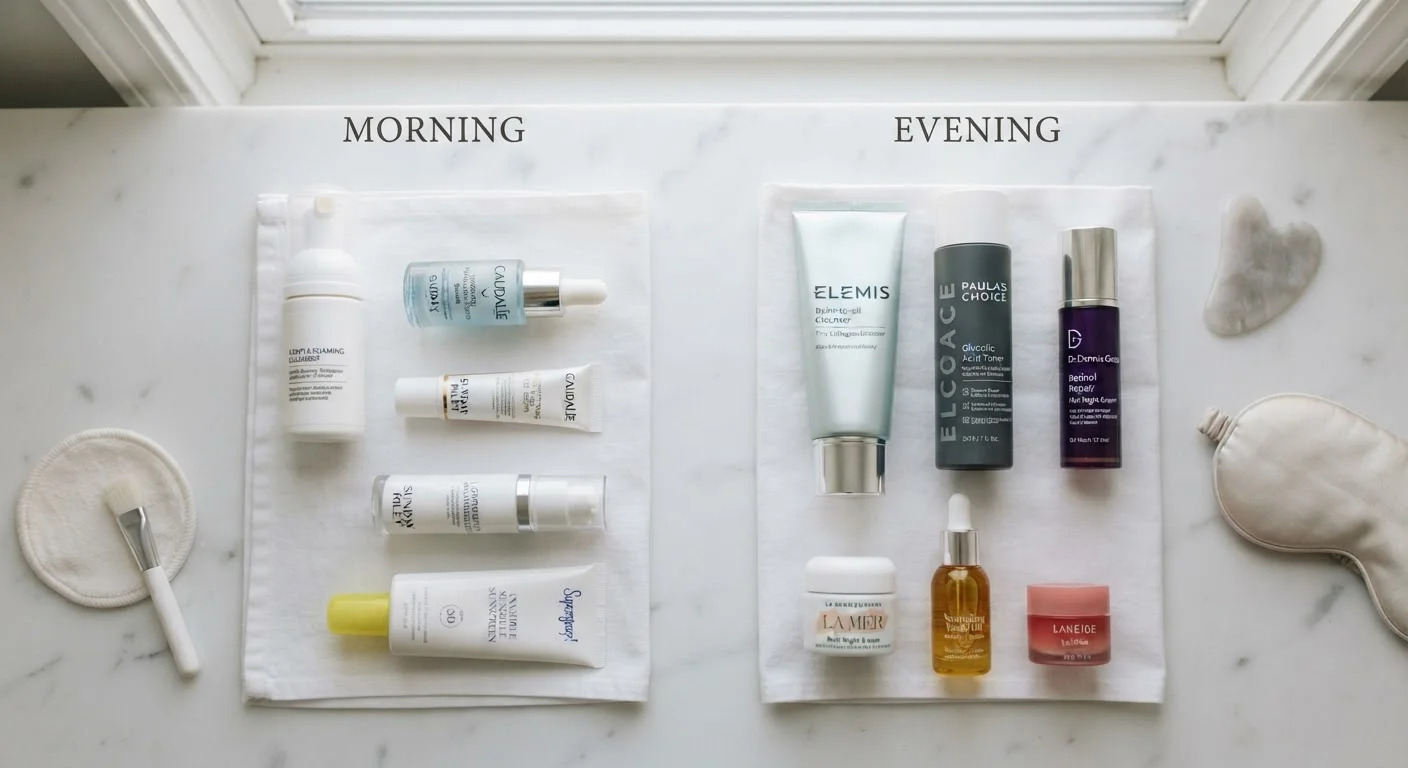
Photo: AskSpecialist.net editorial
Key Takeaways
- Morning routines prioritize protection; evening routines prioritize repair and treatment.
- Certain active ingredients like retinoids and AHAs should only be used at night due to photosensitivity.
- Cleansing, toning, and moisturizing remain consistent steps in both routines.
- Sunscreen is non-negotiable in the morning and has no role in a PM routine.
- Overnight, skin cell turnover naturally accelerates, making evening the ideal time for potent actives.
- Layering order - lightest to heaviest texture - applies equally in both AM and PM routines.
Why Your Skin Has Different Needs at Different Times
Skin isn't passive. It follows a roughly 24-hour biological rhythm that shifts its priorities between day and night. During daylight hours, skin acts as a barrier - defending against UV radiation, airborne pollutants, and moisture loss. After dark, it shifts into recovery mode, ramping up cell turnover and repair processes that are most active during sleep.
Understanding this rhythm is the foundation of an effective routine. If you use the same products morning and night without adjusting for these biological shifts, you're likely under-protecting during the day and under-treating at night. For readers building a routine from scratch, our complete first-timer's roadmap explains the core categories of products before you add timing into the equation.
| Criterion | Morning Routine | Evening Routine |
|---|---|---|
| Primary purpose | Protection and prevention | Repair and treatment |
| Sunscreen | Required - final step | Not used |
| Retinoids / AHAs / BHAs | Not recommended | Ideal time to apply |
| Antioxidant serums | Highly beneficial | Optional, less critical |
| Moisturizer texture | Lighter, non-greasy | Richer, more occlusive |
| Cleansing style | Single, gentle cleanse | Double cleanse if needed |
| Layering order | Thinnest to thickest | Thinnest to thickest |
What Stays the Same: The Consistent Foundation
Both routines share three structural steps that don't change based on the time of day.
- Cleansing: In the morning, a gentle cleanser removes overnight sweat and sebum. In the evening, cleansing - often double cleansing if you wear SPF or makeup - clears the day's accumulation of pollutants and product residue. The goal in both cases is a clean, receptive surface.
- Moisturizing: Hydration is a constant need. A moisturizer in the AM locks in hydration before environmental exposure; a PM moisturizer supports the skin barrier during overnight repair. Formulas may differ in texture or richness, but the step itself is universal.
- Layering order: Whether morning or evening, products go on from thinnest to thickest - water-based serums before creams, creams before oils. Applying in the wrong order reduces ingredient absorption and can interfere with how each product performs.
These three pillars provide stability. Everything else is timing and intention. For a closer look at steps that routinely get skipped, see the overlooked steps in a proper skincare routine.
80%
Of visible skin aging attributed to UV exposure
Research published in dermatology literature consistently attributes the majority of photoaging - wrinkles, uneven tone, and texture changes - to cumulative UV exposure rather than intrinsic aging.
2-3x
Faster overnight cell turnover rate
Skin cell renewal is known to peak during sleep hours, which is why dermatologists recommend applying treatment actives in the evening for maximum efficacy.
SPF 30+
Minimum recommended broad-spectrum protection
The American Academy of Dermatology recommends daily broad-spectrum sunscreen of SPF 30 or higher as a core element of any skincare routine.
What Changes: Protection in the Morning, Treatment at Night
The most important morning-only step is sunscreen. Broad-spectrum SPF - typically SPF 30 or higher - goes on as the final skincare step before makeup. UV exposure contributes significantly to premature skin aging and skin cancer risk, and no other product substitutes for it. Antioxidant serums (commonly containing vitamin C, vitamin E, or niacinamide) pair well with morning routines because they help neutralize free radicals generated by UV and pollution exposure throughout the day.
Evening is the time for treatment-focused ingredients that either degrade in sunlight or increase the skin's sensitivity to it. These include:
- Retinoids (retinol, retinaldehyde, tretinoin): Accelerate cell turnover and collagen production but break down with UV exposure and make skin more sun-sensitive.
- AHAs and BHAs (glycolic acid, lactic acid, salicylic acid): Exfoliate the skin surface and can increase photosensitivity, making nighttime use the standard recommendation.
- Richer, occlusive moisturizers: Thicker creams and facial oils that would feel heavy under makeup are ideal for overnight use, when they can work without being wiped away or layered under SPF.
If you're noticing your skin reacting poorly despite a structured routine, signs your skincare routine is doing more harm than good can help you identify where timing or overuse may be the issue.
Building Each Routine in Practice
A simple morning sequence: Gentle cleanser → antioxidant serum (optional) → moisturizer → broad-spectrum SPF. That's it. Complexity doesn't improve outcomes - consistency does. If you're short on time, our morning grooming routine for people with twenty minutes shows how to keep everything efficient.
A simple evening sequence: Oil or micellar cleanser (if wearing SPF or makeup) → gentle foaming cleanser → treatment serum or active (retinoid, exfoliant, or targeted serum) → moisturizer or overnight cream.
Not every step needs a separate product, and not every active needs to be used nightly. Retinoids and exfoliating acids are typically started two to three nights per week and increased gradually based on tolerance. Skin with sensitivity requires extra care around these ingredients - building a routine around sensitive skin covers how to approach actives without provoking irritation.
This article is for general informational purposes only and does not constitute medical or dermatological advice. Consult a licensed dermatologist for concerns about your specific skin health.
The content on this site is provided for informational purposes only and should not be considered a substitute for professional advice. While we strive to provide accurate and up-to-date information, we make no guarantees regarding its completeness or accuracy. Always consult a qualified professional for advice specific to your circumstances before making any decisions.