
Managing a Home Renovation While Living in the House

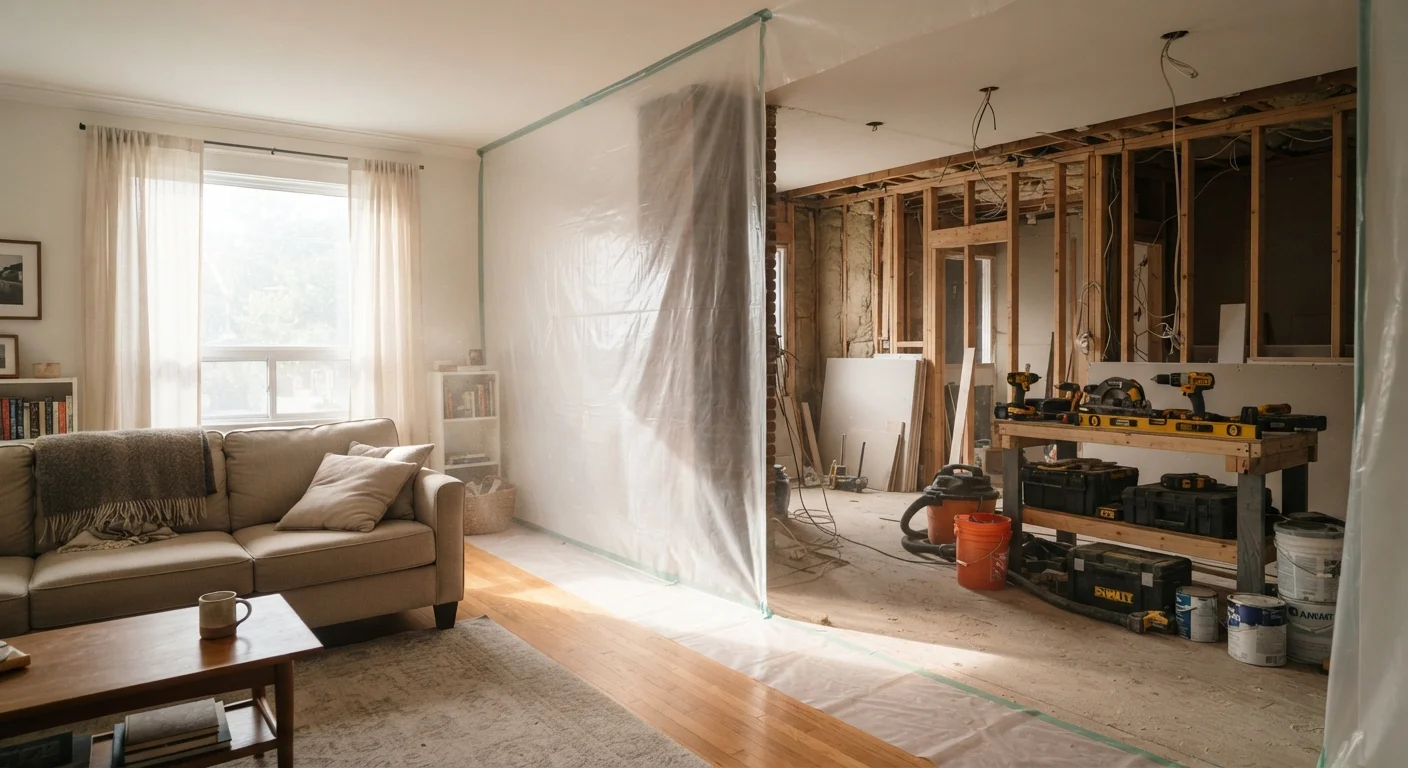
Photo: AskSpecialist.net editorial
Key Takeaways
- Establish a dedicated livable zone before work begins and keep it off-limits to contractors.
- Clear, written communication with your contractor prevents most scheduling and scope misunderstandings.
- Budget at least 15-20% extra for unexpected costs - living-in renovations often surface hidden issues.
- Protect air quality and manage dust carefully, especially in homes with children, pets, or allergy sufferers.
- Sequence renovation phases to preserve access to essential rooms like bathrooms and the kitchen.
- Set realistic daily expectations; disruption is normal, but it should be planned and temporary.
Plan Your Livable Zones Before Demolition Day
The single most important step you can take before any work begins is deciding which parts of your home stay livable - and enforcing that boundary. Walk through the project scope with your contractor and identify which rooms will be active construction zones versus which will remain your daily living space. Get this documented in your contract.
If you're tackling a kitchen remodel, set up a temporary kitchen with a mini-fridge, microwave, and a utility table in a nearby room. If a bathroom is being gutted, confirm that a second bathroom remains fully functional throughout. The goal is ensuring that basic daily functions - cooking, bathing, sleeping - never become impossible. See our kitchen renovation roadmap for a detailed look at how to sequence a kitchen project around household needs.
Use plastic sheeting, temporary walls, or zip-up dust barriers at zone boundaries. These aren't just dust control measures - they're psychological ones. A defined "clean" side of the house gives everyone in the household a place to decompress away from the chaos.
Communicate With Your Contractor Like a Project Manager
Living in the house while work is underway means you're essentially co-habitating with a construction crew. That proximity makes structured communication essential. Establish a daily or weekly check-in rhythm with your contractor - even a brief 10-minute walkthrough each morning sets expectations, surfaces problems early, and keeps the project moving.
Document Every Change Order in Writing
Put everything in writing. Changes to scope, timeline shifts, material substitutions - all of it should be confirmed via email or a written change order before work proceeds. Verbal agreements made on a job site are notoriously difficult to enforce later. If you're still in the contractor-selection phase, our guide on hiring a general contractor explains how to structure a contract that protects you from the start.
Also agree on working hours upfront. Knowing that crew will arrive at 7:30 a.m. and leave by 5:00 p.m. lets your household plan around the disruption rather than react to it every day.
Best Practices for Staying Sane and Safe
The following practices reflect what experienced renovation homeowners consistently find most valuable when living through a remodel.
Create a written daily schedule that accounts for contractor hours and crew access.
Relocate valuables, fragile items, and irreplaceable objects before work begins.
Build a contingency budget of at least 15-20% above your project estimate.
Establish a no-work zone that remains consistently clean and organized throughout the project.
Walk the job site at the end of each workday before the crew leaves.
Before work begins, also make sure you understand what permits are required for your project. Many renovation tasks - electrical work, structural changes, plumbing alterations - require permits and inspections in most U.S. jurisdictions. Working without them can create problems when you sell. If you're new to renovation entirely, our beginner's renovation guide covers permitting basics in plain language.
Managing Dust, Noise, and Air Quality
Renovation work - especially drywall sanding, tile cutting, or demolition - generates significant dust and particulates. In a lived-in home, this is a health and comfort concern, not just a cleanliness issue. Ask your contractor to use dust barriers and HEPA-equipped vacuums, and confirm they're sealing HVAC vents in the work zone to prevent dust from spreading through ductwork.
Run a standalone air purifier with a HEPA filter in your primary living area during active construction phases. Change your HVAC filter more frequently than usual - monthly during heavy work is reasonable. If anyone in the household has asthma, allergies, or respiratory sensitivities, discuss this with your contractor before work begins and plan for it explicitly.
Older Homes May Have Hazardous Materials
For noise, especially if you work from home, identify your contractor's loudest work periods (typically demolition and framing) and schedule calls, meetings, or focused work outside those windows. Earplugs or noise-canceling headphones are a practical investment for anyone staying home during the day.
Quick Wins to Start With Today
Whether your renovation is weeks away or starting Monday, these immediate actions will make a measurable difference in how smoothly the project goes.
Once your project wraps, consider folding what you've learned into a longer-term approach to home upkeep. Our guide to building a home maintenance routine can help you stay ahead of the next project before it becomes urgent.
The content on this site is provided for informational purposes only and should not be considered a substitute for professional advice. While we strive to provide accurate and up-to-date information, we make no guarantees regarding its completeness or accuracy. Always consult a qualified professional for advice specific to your circumstances before making any decisions.